
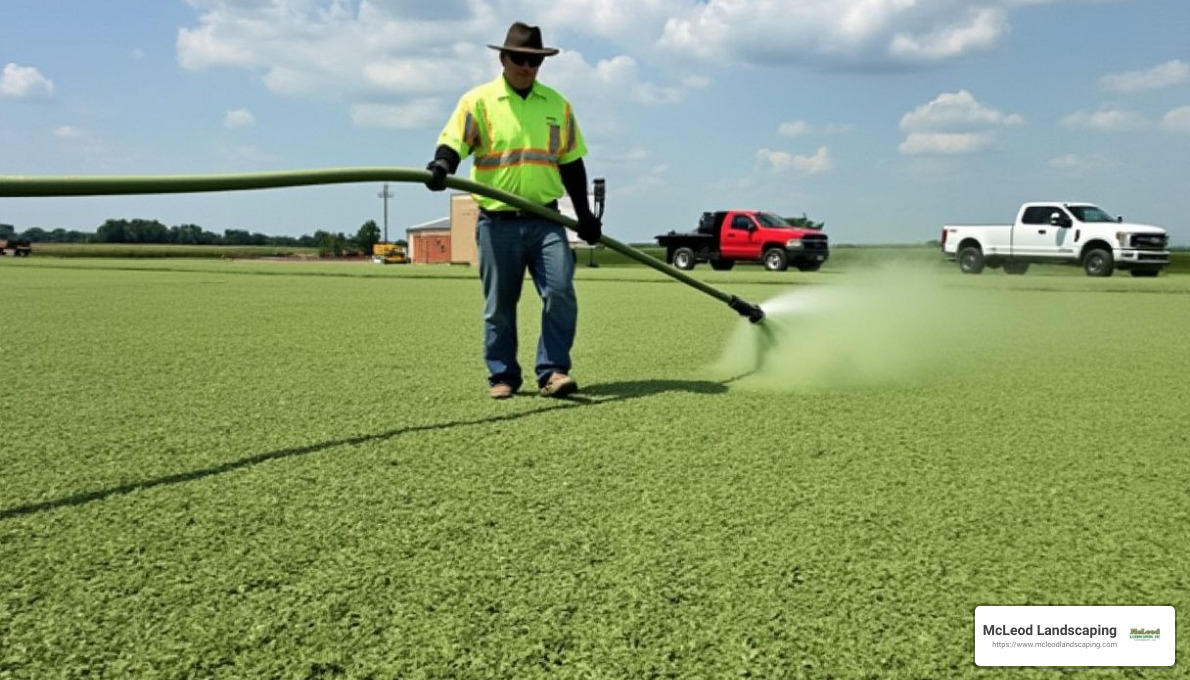
Commercial hydroseeding is a cost-effective and efficient method for establishing vegetation, controlling erosion, and creating lush, green ground cover quickly. This innovative process mixes seed, water, fertilizer, and mulch to form a slurry that is sprayed evenly over large areas. Hydroseeding benefits include rapid growth, significant cost savings compared to traditional sod, and excellent soil stabilization. Here’s a quick look at why commercial hydroseeding might be the perfect solution for your landscaping needs:
I’m Scott McLeod, owner of McLeod Landscaping, with over three decades of experience in the field. My team and I specialize in commercial hydroseeding, offering innovative solutions for maintaining beautiful landscapes. Stay tuned as we dig deeper into the process and benefits of hydroseeding.
Basic commercial hydroseeding glossary:
– hydromulching near me
– hydroseeding services near me
– professional spray grass seed
Commercial hydroseeding is a modern and effective way to plant grass, ground cover, or other vegetation over large areas. This method involves spraying a specially prepared slurry mixture onto the ground, which helps seeds take root quickly and thrive.
The slurry used in hydroseeding is a carefully crafted blend of several key ingredients:

The concept of hydroseeding dates back to the 1940s. It was initially developed as an experiment to improve planting methods. The technique gained significant traction during the construction of the interstate highway system, where it was used to quickly establish vegetation on large stretches of land, preventing erosion and stabilizing the soil.
Over the decades, hydroseeding has evolved into a staple in the landscaping industry. Its efficiency and cost-effectiveness have made it a preferred choice for both commercial and residential projects. Today, it’s not just about grass; hydroseeding is used for wildflowers, ground covers, and erosion control blends as well.
This evolution reflects the industry’s shift towards more sustainable and efficient landscaping practices, offering a versatile solution for various environmental challenges.
We’ll explore the many benefits of commercial hydroseeding and why it’s a preferred choice for large-scale projects.
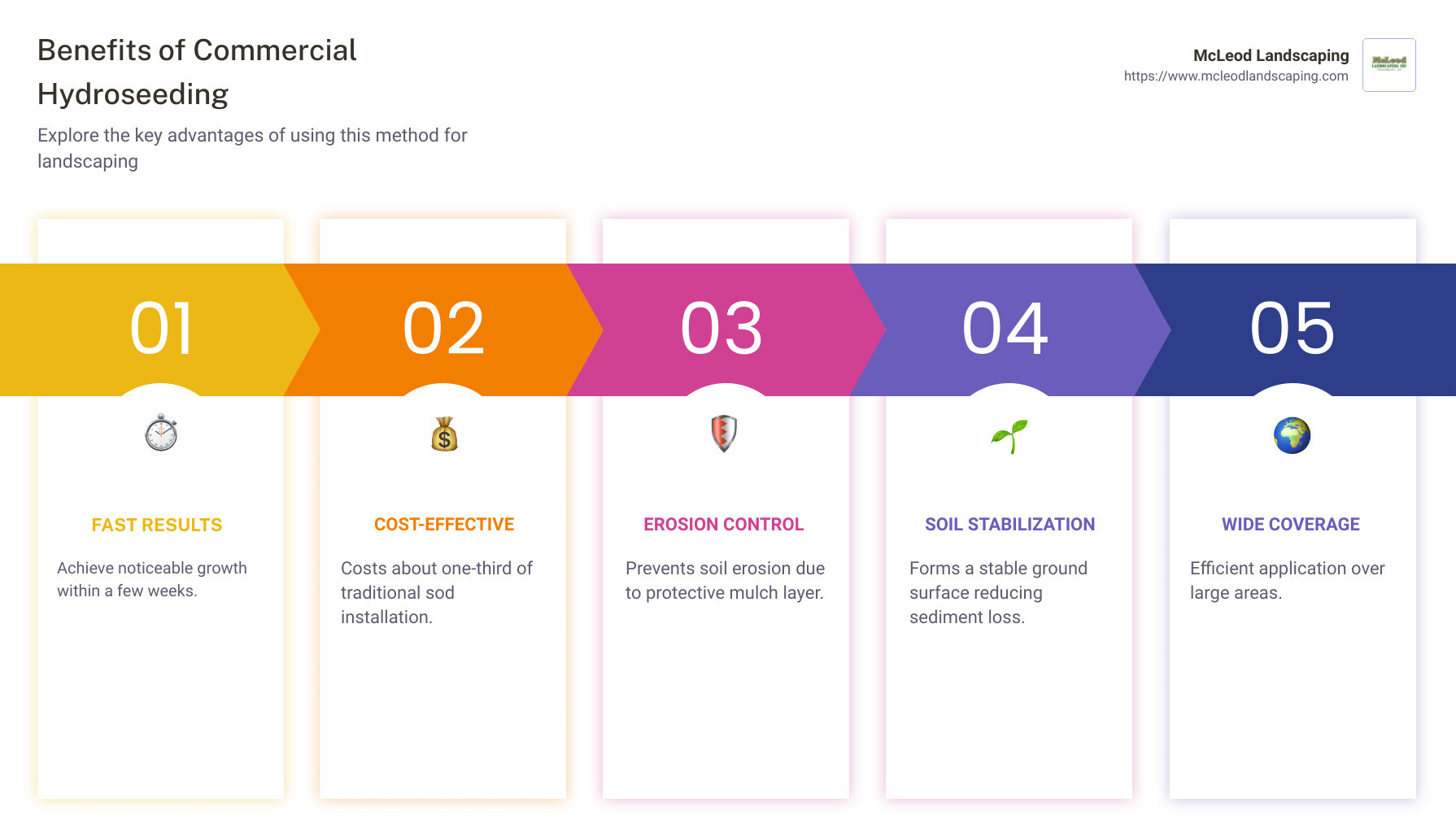
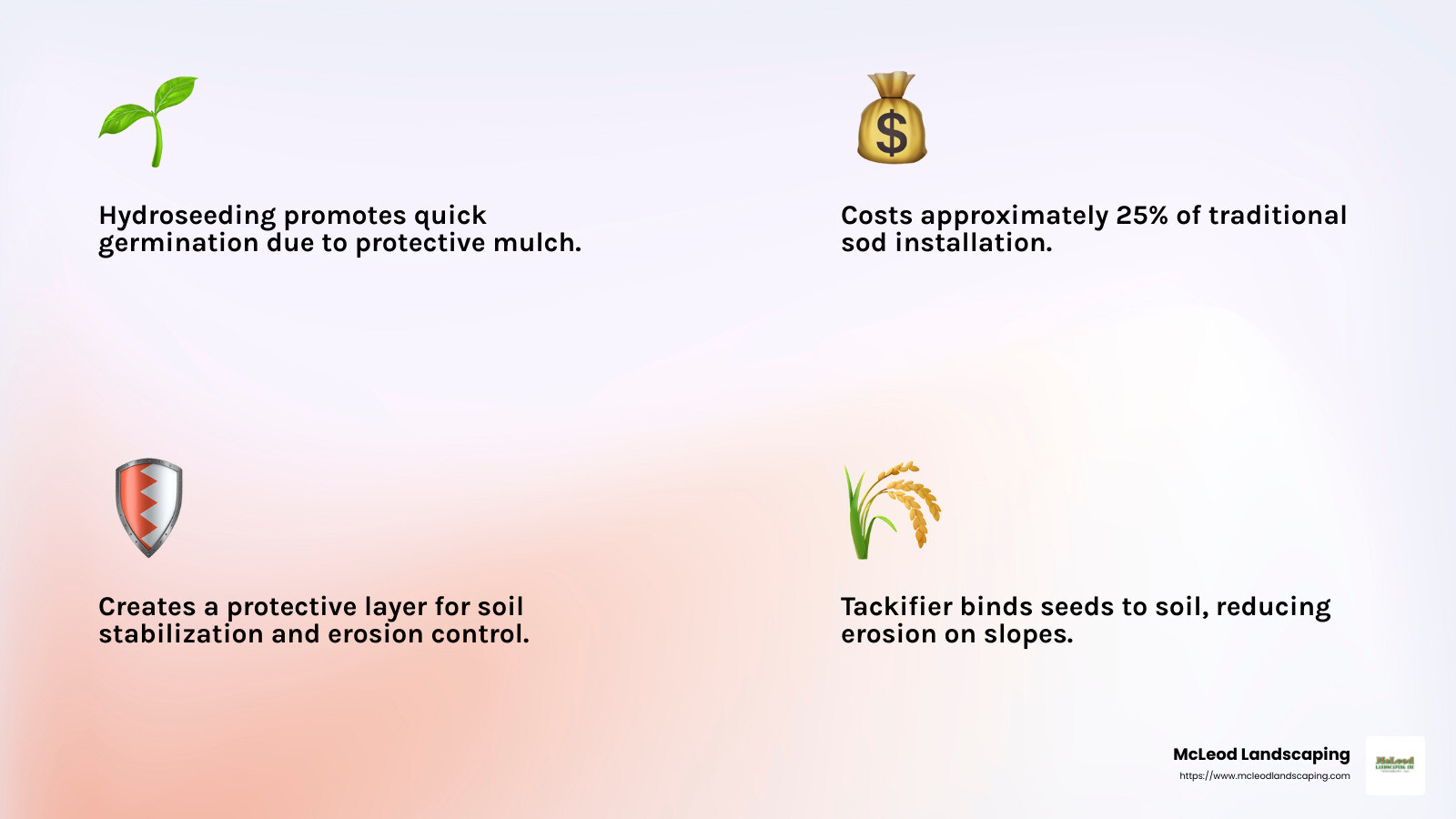
One of the standout benefits of commercial hydroseeding is its ability to deliver fast results. Unlike traditional seeding, which can take weeks to show signs of growth, hydroseeding promotes quick germination. This is largely due to the mulch in the mixture. Mulch not only retains moisture but also protects the seeds from harsh weather conditions, allowing them to sprout faster.
You can expect to see the first signs of green in just a few days. Within a couple of weeks, the area will begin to transform into a lush, vibrant lawn. This rapid development is ideal for projects that require immediate aesthetic or functional improvements.
Hydroseeding is highly economical compared to other methods, such as laying sod. On average, it costs about one quarter to one-third of the price of sod, making it a budget-friendly option for covering large areas.
For instance, the average cost of hydroseeding in 2021 was approximately $3,500 per acre, which could range from $3,000 to $5,000 depending on the seed mixture and site conditions. This economical process can lead to significant savings, especially when dealing with expansive commercial properties.
Another key advantage of commercial hydroseeding is its effectiveness in soil stabilization and erosion control. The slurry creates a protective layer over the soil, which helps retain sediment and control dust. This is crucial for areas prone to erosion due to wind or water.
The tackifier in the mixture acts as a glue, binding the mulch and seeds to the ground. This reduces the risk of the seeds washing away and ensures they remain in place to germinate and grow. This sediment retention is particularly beneficial for sloped terrains, where erosion can be a significant challenge.
By choosing hydroseeding, businesses not only achieve a beautiful landscape but also invest in long-term soil health and stability, protecting their investment from the forces of nature.
These benefits make commercial hydroseeding an attractive option for businesses looking to quickly and economically establish a durable and healthy lawn. Let’s dig into the process of commercial hydroseeding and understand how each step contributes to these remarkable outcomes.
Before commercial hydroseeding can begin, proper site preparation is crucial. This involves several key steps to ensure the seeds have the best chance to thrive.
Ground Preparation: Start by clearing the area of any debris, rocks, or existing vegetation. The goal is to create a clean slate for the seeds to germinate. This might involve tilling the soil to loosen it up, which helps the slurry adhere better and ensures even coverage.
Soil Testing: Conduct soil tests to identify any deficiencies or pH imbalances. Knowing the soil’s condition allows for adjustments in the hydroseeding mixture, such as adding specific fertilizers to address nutrient gaps. This step ensures that the grass will have the nutrients it needs to grow strong and healthy.
Area Measurement: Accurate measurement of the area to be covered is essential. This determines the amount of seed, mulch, and other components needed for the slurry. Proper measurements prevent wastage and ensure the entire area is evenly covered.
Once the site is prepared, it’s time for the application process, which involves creating and spraying the slurry.
Slurry Spraying: The hydroseeding mixture is a blend of seed, water, fertilizer, mulch, and a tackifier. This mixture is loaded into a hydroseeder machine, which agitates the slurry to ensure even distribution of components. The slurry is then sprayed over the prepared area using specialized equipment. This equipment can vary in size, with options like jet agitated hydroseeders for smaller areas and mechanically agitated models for larger projects.
Equipment Used: The choice of equipment depends on the project’s scale and complexity. Jet agitated hydroseeders are user-friendly and suitable for small to medium areas. For larger areas, mechanically agitated hydroseeders are preferred as they handle thicker slurries and provide more powerful coverage.
Coverage Area: Careful spraying ensures the slurry reaches every part of the prepared site. The goal is to apply an even layer that covers the ground thoroughly, providing a uniform appearance once the grass begins to grow.
After the slurry is applied, post-application maintenance plays a critical role in the success of commercial hydroseeding.
Watering: Keeping the newly seeded area moist is vital for seed germination. Regular watering, sometimes multiple times a day, is necessary, especially in the first few weeks. This helps the seeds establish roots and promotes healthy growth. Adjust watering based on weather conditions; more in dry periods, less if rain is frequent.
Fertilizing: After the initial growth phase, additional fertilization may be required to support continued grass development. This involves applying a balanced fertilizer that complements the nutrients already in the soil.
Staying Off the Lawn: It’s important to avoid walking on the freshly seeded area. Foot traffic can damage the delicate seedlings and disrupt the germination process. Keep pets and people off the grass until it’s well-established, usually after about two months.
By following these steps, businesses can ensure a successful hydroseeding project. Proper preparation, precise application, and diligent maintenance all contribute to creating a lush, healthy lawn that improves the landscape and provides long-lasting benefits.
In the next section, we’ll explore the various types of hydroseeding equipment available and how they cater to different project needs.
When it comes to commercial hydroseeding, the equipment you choose can make all the difference. Let’s explore the various types of hydroseeding equipment and their unique features.
Jet agitated hydroseeders are known for their simplicity and ease of use. They are ideal for small to medium-sized projects due to their lightweight and low-maintenance design. These machines use water jets to mix the slurry, which includes seed, mulch, fertilizer, and water.
Key Features:
– Ease of Use: Simple operation, making them accessible for beginners.
– Low Maintenance: Fewer moving parts mean less upkeep and longer lifespan.
– Size Options: Available in a range of sizes, from compact models for small areas to larger units for more extensive coverage.
These hydroseeders are perfect for landscapers who need a reliable machine for frequent use without the hassle of complex maintenance.
For larger projects, mechanically agitated hydroseeders are the go-to choice. These machines use paddles to mix the slurry, allowing for a thicker and more robust mixture. They are particularly effective for tough terrain and large coverage areas.
Key Features:
– Plastic Tank: Unlike metal tanks, plastic tanks resist rust, reducing maintenance issues.
– Thick Slurry Handling: Capable of mixing and spraying dense slurries, which is essential for erosion control.
– Hydraulic Drive Models: Offer reversible pumps and paddles, making it easier to clear clogs and ensuring continuous operation.
Mechanically agitated hydroseeders are built for durability and power, making them ideal for demanding commercial projects that require heavy-duty equipment.
In addition to hydroseeders, other equipment can improve the efficiency and scope of hydroseeding projects.
Brine Sprayers: These are versatile tools that can be converted from jet agitated hydroseeders. They are used for anti-icing and can be a valuable addition for businesses in colder climates.
Straw Blowers: Turbo Turf’s straw blowers are efficient for spreading straw mulch over large areas, providing additional protection against erosion.
Watering Units: Essential for maintaining the moisture levels needed for seed germination, these units come in various sizes and can be skid or pull-type for easy transport.
These additional tools expand the capabilities of a landscaping business, ensuring they can tackle a wide range of projects with confidence and efficiency.
In the next section, we’ll address some frequently asked questions about commercial hydroseeding, helping you make informed decisions for your landscaping needs.
Hydroseeding 10,000 square feet generally costs between $1,000 and $2,000. This range varies based on several factors, including the type of seed mixture, the complexity of the terrain, and the equipment used.
Factors Affecting Cost:
– Seed Mixture: Specialized grass blends or erosion control mixtures can increase costs.
– Terrain Complexity: Sloped or uneven areas may require additional materials or labor.
– Location: Regional differences in labor and material costs can affect pricing.
The average pricing can fluctuate, so it’s wise to get a detailed quote from a professional service provider before starting your project.
While commercial hydroseeding offers many benefits, there are some downsides to consider:
These factors mean that while hydroseeding is economical, it demands attention to detail during the initial growth phase.
Hydroseeding can indeed be a profitable venture, especially for landscapers looking to expand their services.
Equipment Profitability: Investing in quality hydroseeding equipment can yield high returns. Machines like jet and mechanically agitated hydroseeders offer durability and efficiency, reducing long-term costs.
Landscaper’s Toolkit: Adding hydroseeding to your services can attract a broader client base, from homeowners to large commercial projects.
Business Expansion: Offering hydroseeding can differentiate your business in a competitive market, allowing for growth and increased revenue streams.
By understanding the investment in equipment and the demand for this service, businesses can effectively expand their offerings and capitalize on the growing interest in sustainable landscaping solutions.
Commercial hydroseeding stands out as a versatile and cost-effective solution for establishing lush, green landscapes. From quick germination to effective soil stabilization, hydroseeding offers numerous benefits that make it an attractive choice for businesses looking to improve their outdoor spaces.
At McLeod Landscaping, we take pride in offering comprehensive landscaping services custom to meet the needs of our clients in the Merrimack Valley and beyond. With over 30 years of experience, we specialize in landscape design, installation, and maintenance, ensuring that every project is executed with precision and care. Our team is committed to delivering high-quality results, whether it’s for commercial properties or residential hardscaping projects.
By choosing McLeod Landscaping, you partner with a team that understands the importance of creating sustainable and beautiful landscapes. Our expertise in commercial hydroseeding and other landscaping services ensures that your property not only looks great but also stands the test of time.
Ready to transform your outdoor space? Contact us today to learn more about our hydroseeding services and how we can help bring your landscaping vision to life. Let McLeod Landscaping be your trusted partner in crafting an outdoor environment that you and your community will enjoy for years to come.
Contact McLeod Landscaping today at (978) 640-0957 or click here to schedule a consultation for retaining wall installation. Let our experienced team design and install a functional and visually appealing retaining wall that enhances your landscape.


1881 Main St Unit 1, Tewksbury, MA 01876