
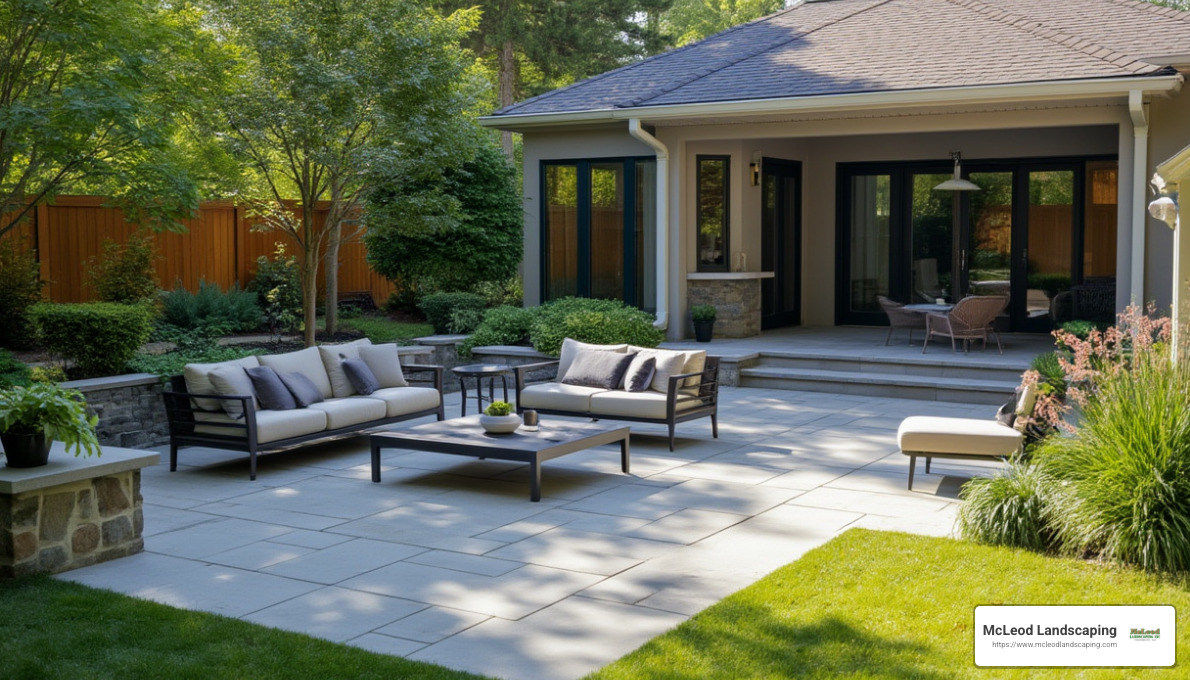
A concrete patio is a popular choice for outdoor spaces due to its durability, versatility, and ease of maintenance. Whether you’re considering a sleek modern design or a rustic look, a concrete patio can be custom to meet your aesthetic and functional needs. Here’s why it’s a solid option:
My name is Scott McLeod, owner of McLeod Landscaping. With over three decades of experience in crafting exceptional outdoor spaces, I’ve seen the transformative power of a well-designed concrete patio in enhancing property value and enjoyment for our clients in Merrimack Valley. Now, let’s dig deeper into understanding concrete patios and how they can benefit your outdoor area.

Quick concrete patio definitions:
– backyard patio ideas
– patio extension ideas
– backyard outdoor patio ideas
Concrete patios are a versatile and popular choice for homeowners looking to improve their outdoor spaces. They offer a blend of durability, affordability, and aesthetic flexibility. Let’s explore the different types of concrete patios, their costs, and the materials used to create them.
Concrete patios come in various styles, each offering unique visual and functional benefits. Here are some popular types:
The cost of installing a concrete patio can vary widely based on several factors. However, it’s generally considered an affordable option compared to other materials like flagstone or tile.
By understanding these aspects of concrete patios, homeowners can make informed decisions that align with their budget and design preferences. Whether you aim for a simple, understated look or a more elaborate design, concrete offers the flexibility to achieve your vision.

Next, we’ll explore the process of building a concrete patio, including the necessary tools, materials, and steps involved in creating your ideal outdoor space.
Creating a concrete patio can transform your outdoor space into a functional and beautiful area. Here’s a step-by-step guide on how to prepare the site and pour and finish the concrete.
1. Gather Tools and Materials
You’ll need the right tools and materials to get started. Essential tools include a rope, carpenter’s square, hand maul, tape measure, mason’s string, line level, spade, sod cutter, straightedge, level, wheelbarrow, shovel, hand tamper, circular saw, drill, paintbrush, and concrete finishing tools. For materials, gather 2 × 4 lumber, 3″ screws, compactible gravel, concrete mix or crack-resistant concrete mix, and an acrylic cure & seal.
2. Measure and Grade
First, measure the slope of your planned patio area. Drive stakes at each end and attach a mason’s string between them. Use a line level to ensure it’s level. Measure the ground from the string to determine the slope. If it’s greater than 1″ per foot, regrading might be necessary.
3. Evaluate Soil Conditions
Dig a test hole to assess soil conditions. Sandy or loose soil may need amending. Consult a landscape engineer if needed.
4. Add a Gravel Subbase
To ensure a stable foundation, add a compactible gravel layer about 5″ thick. Use a hand tamper to compress it to 4″. This layer improves drainage, especially in clay-heavy soils.
5. Layout
Outline your project with a rope or hose, then drive wood stakes near each corner. Connect these stakes with mason’s strings. Use the 3-4-5 triangle method to ensure the strings are square and adjust as necessary.
1. Mixing Concrete
Consider renting a power concrete mixer for larger projects. Mix the concrete according to the manufacturer’s instructions. For a more durable finish, use a crack-resistant concrete mix.
2. Pouring Concrete
When pouring, ensure the concrete is evenly distributed. If pouring next to structures, glue a 1⁄2″-thick piece of asphalt-impregnated fiberboard to the structure to prevent bonding and create an isolation joint.
3. Reinforcement
For added strength, especially in larger patios, incorporate reinforcement like rebar or wire mesh before pouring.
4. Finishing Techniques
Once poured, use concrete finishing tools to smooth the surface. Consider adding decorative finishes such as stamped designs or acid staining for visual appeal.
5. Curing
After finishing, apply an acrylic cure & seal to protect the surface. This step ensures durability and longevity.
Building a concrete patio requires careful planning and execution, but the result is a durable and attractive outdoor space. Next, we’ll dive into design ideas and decorative finishes to lift your patio’s aesthetics.
A concrete patio offers endless possibilities for design, allowing you to create a unique and inviting outdoor space. Let’s explore some creative ideas and decorative finishes to make your patio stand out.
Modern concrete patios often feature clean lines and minimalist aesthetics. A popular choice is the smooth finish concrete patio, which provides a sleek and uncluttered look. This style pairs well with contemporary furniture and can be improved by adding elements like glass and metal accents. The combination of concrete and grass edges, as seen in some designs, creates a seamless transition that blends beautifully with the natural surroundings.
For those who prefer simplicity, a barely there paver patio might be the way to go. This design uses closely spaced pavers, making the grout lines almost invisible. It’s a perfect choice for small spaces, creating a cozy and inviting atmosphere without overwhelming the area. Simple gray tones can complement a range of outdoor décor, from rustic to modern.
If you’re a DIY enthusiast, consider a painted rug concrete patio. This involves painting a bold pattern directly onto the concrete surface. For instance, a kilim-style pattern in vibrant colors can add a pop of personality and contrast against neutral furnishings. Another DIY option is the checkerboard painted concrete patio, which uses large squares in varying shades of gray for a personalized touch.
Stamped concrete is a versatile option that can mimic the appearance of natural stone, brick, or tile at a fraction of the cost. This technique involves pressing patterns into the wet concrete before it sets. The result is a textured surface that adds depth and interest to your patio. Popular patterns include cobblestone, slate, and even wood grain.
Etching is another technique that can lift the look of your concrete patio. By using acid or a special etching tool, intricate designs can be carved into the concrete surface. This method allows for detailed patterns and can be combined with colored stains for a dramatic effect.
Concrete doesn’t have to be gray. With the use of dyes and stains, you can achieve a wide range of colors to suit your style. From earthy tones to vibrant hues, coloring your concrete patio can improve its visual appeal and complement your home’s exterior. For a cohesive look, consider matching the patio color with other outdoor elements like furniture or garden accents.
By exploring these design ideas and decorative finishes, you can transform your concrete patio into a stunning outdoor retreat. Whether you opt for a modern, simple, or DIY approach, the possibilities are limitless. Next, we’ll address some frequently asked questions about concrete patios to help you make informed decisions.
The cost of a concrete patio can vary widely, but on average, it falls between $850 to $2,300 for a 12-by-12 foot area. Several factors influence this range, including the materials used, labor costs, and any additional features like stamping or staining. A larger patio, such as a 20-by-20 foot one, can cost between $2,400 and $6,400.
Factors Affecting Cost:
Keeping your concrete patio in top shape is not as daunting as it might seem. Regular maintenance can extend its lifespan and keep it looking fresh.
Maintenance Tips:

Building a concrete patio yourself is possible but requires careful planning and the right tools. It’s best suited for those with some DIY experience, as the process can be labor-intensive and requires attention to detail.
Tools Needed:
Skill Level:
Before you begin, ensure you have a clear plan and understand the steps involved, from site preparation to finishing. If you’re unsure, consulting a professional can save you time and potential headaches.
By addressing these common questions, you can better understand the costs, maintenance, and DIY potential of a concrete patio. Up next, we’ll summarize the key points and highlight how McLeod Landscaping can help bring your patio vision to life.
In summary, a concrete patio offers a versatile and durable solution for enhancing your outdoor living space. Whether you’re looking to create a modern retreat or a simple, functional area, concrete provides a range of design options. From stamped and stained finishes to neat exposed aggregates, the possibilities are vast. Keeping your patio well-maintained with regular cleaning and occasional sealing will ensure it remains beautiful and functional for years to come.
When it comes to building or upgrading a concrete patio, the decision to DIY or hire professionals depends on your experience and the complexity of the project. While a DIY approach can be rewarding, enlisting expert help ensures precision and quality, especially for larger or more intricate designs.
At McLeod Landscaping, we pride ourselves on delivering exceptional patio design and installation services. With over 30 years of experience, our team is dedicated to changing your outdoor space into a stunning oasis. We offer customized designs custom to your needs, using only the highest quality materials to ensure durability and beauty.
Ready to bring your patio dreams to life? Contact McLeod Landscaping today to schedule a consultation. Let us help you create the perfect outdoor retreat, turning your backyard into a haven of relaxation and enjoyment.
Contact McLeod Landscaping today at (978) 640-0957 or click here to schedule a consultation for retaining wall installation. Let our experienced team design and install a functional and visually appealing retaining wall that enhances your landscape.


1881 Main St Unit 1, Tewksbury, MA 01876