
Concrete retaining wall blocks are essential for creating strong, reliable, and visually appealing retaining walls. Whether you’re looking to prevent soil erosion, manage your landscape’s slope, or simply add a touch of elegance to your property, concrete retaining wall blocks offer a versatile and durable solution.
Quick Answers:
I’m Scott McLeod, and I have over three decades of experience in landscaping, including the installation of concrete retaining wall blocks. My team and I at McLeod Landscaping have installed countless retaining walls, ensuring they stand the test of time while enhancing the beauty and functionality of properties.
Let’s dive into the details to help you make the best choice for your needs.
When it comes to concrete retaining wall blocks, making the right choice can significantly impact the durability, aesthetics, and cost-effectiveness of your project. Let’s break down the key aspects to consider.
Concrete retaining wall blocks come in various types, each with unique benefits:
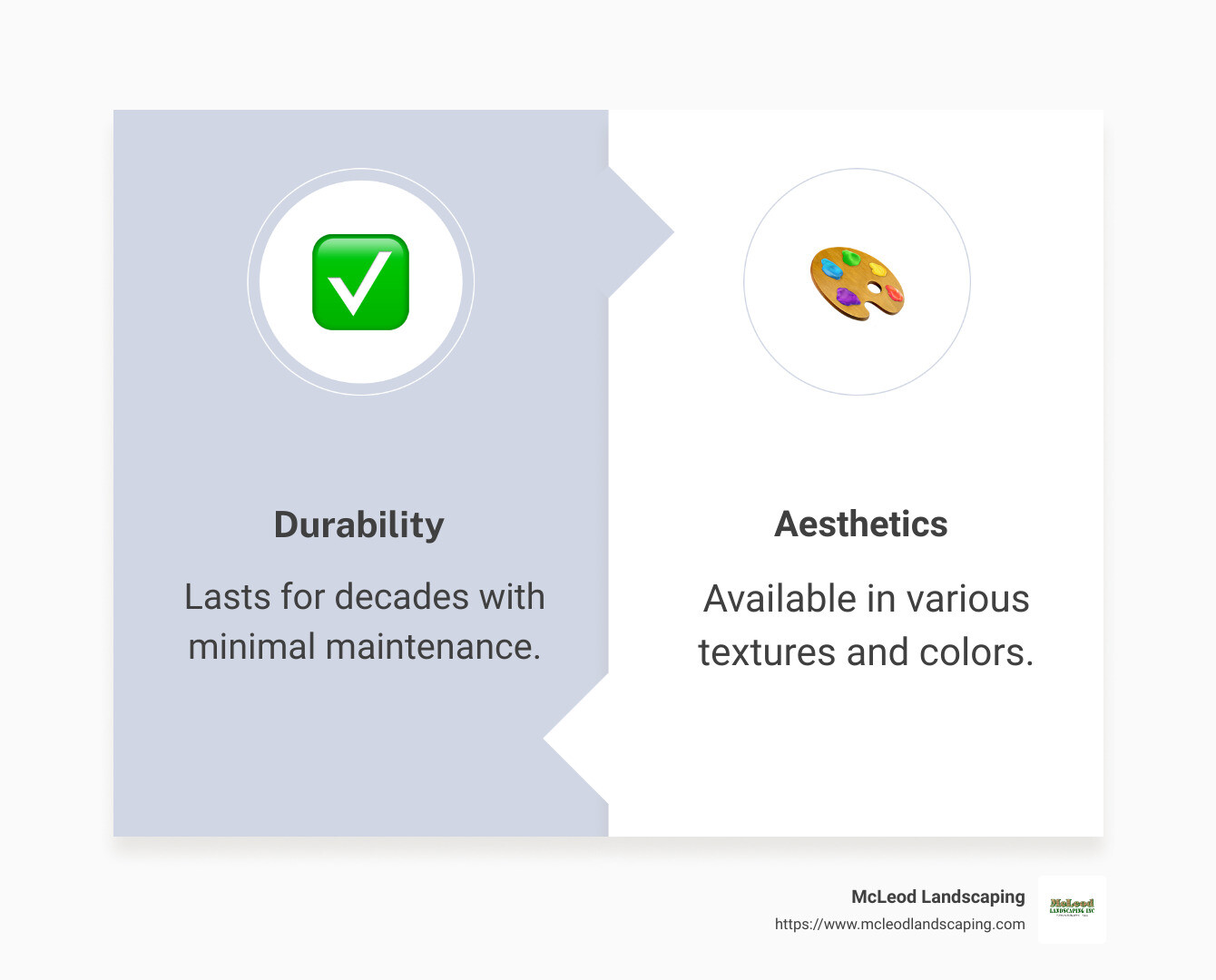
Durability is a crucial factor, especially for retaining walls that must withstand soil pressure and environmental conditions. Concrete blocks are known for their strength and longevity, offering better insulation and easier handling, which makes the construction process faster and more efficient.
Your retaining wall should not only be functional but also improve the beauty of your landscape. Architectural concrete blocks come in various textures and colors, allowing for customization to match your design preferences. Blocks with finishes that mimic natural stone can add a sophisticated touch to your garden landscape.
Concrete retaining wall blocks are generally more cost-effective than poured concrete walls. They offer a balance between affordability and durability, often being more budget-friendly and easier to install, reducing labor costs.
| Aspect | Standard Blocks | Architectural Blocks | Segmental Blocks |
|---|---|---|---|
| Cost | Low | Medium to High | Medium |
| Durability | High | High | High |
| Aesthetics | Basic | High (various textures/colors) | Medium to High |
| Ease of Installation | Easy | Moderate | Very Easy (interlocking system) |
Choosing the right concrete retaining wall blocks involves balancing these factors to meet your specific needs. Whether you’re prioritizing cost, durability, or aesthetics, there are options available to suit every project.
When planning your retaining wall project, understanding costs is crucial. Let’s break down the main factors: budgeting, DIY vs. professional installation, and price range.
Start by determining your budget. Retaining walls can be a significant investment, but they add value to your property and prevent soil erosion. Consider all aspects including materials, labor, and any additional features like drainage systems.
DIY Installation:
– Pros: Lower labor costs, personal satisfaction.
– Cons: Requires time, effort, and some expertise. Mistakes can be costly.
Professional Installation:
– Pros: Expertise, quicker completion, and often better results.
– Cons: Higher labor costs.
For small projects or if you’re handy, DIY might be feasible. However, for larger, more complex walls, hiring professionals is often worth the investment.
The cost of concrete retaining wall blocks varies widely based on size, type, and design. Here’s a general idea:
Concrete blocks are more cost-effective than materials like natural stone but offer similar durability and aesthetics.
Understanding these cost considerations will help you plan and budget your retaining wall project effectively.
Before starting, planning is crucial. Determine the exact location, height, and length of your retaining wall. Check local building codes and get any necessary permits.
Excavation is the next step. Dig a trench that’s wider than the blocks and deep enough for a gravel base and multiple block layers. A good rule of thumb is to dig about 6 inches deep for the gravel base.
Start with a solid base. Use crushed gravel or stone to ensure proper drainage and stability. The base should be at least 6 inches deep and well-leveled. Compact the gravel using a tamper.
For the first course, lay the blocks directly on the prepared base. Use a level to ensure they are even. Apply masonry adhesive to hold the blocks in place.
Continue with additional courses, staggering the joints for added strength. Use adhesive as needed. Always check each course with a level to keep the wall straight and even.
Backfilling is essential. Fill the space behind the wall with gravel or stone, compacting it as you go. This improves drainage and stability.
Here’s a list of tools you’ll need:
Safety should never be overlooked. Always wear gloves and goggles to protect your hands and eyes. If you’re using heavy machinery, make sure you’re trained or hire a professional.
Ensure the area is clear of any underground utilities before digging. Call your local utility company if you’re unsure.
By following these installation tips, you can build a durable and aesthetically pleasing retaining wall.
Next, we’ll explore the advantages of concrete retaining wall blocks and why they might be the best choice for your project.
Concrete retaining wall blocks offer numerous benefits, making them a popular choice for many landscaping projects. Let’s dive into the key advantages: strength, versatility, maintenance, and water resistance.
Concrete retaining wall blocks are known for their exceptional strength. This makes them ideal for holding back soil and preventing erosion on sloped areas. According to Belgard, their concrete wall blocks are strong and durable, providing both structural support and aesthetic appeal.
These blocks can withstand heavy loads and extreme weather conditions, ensuring your wall remains intact for years. For instance, poured concrete walls with rebar are often stronger than block walls, but concrete blocks can also be reinforced with rebar for added strength.
One of the standout features of concrete retaining wall blocks is their versatility. They come in various shapes, sizes, and colors, allowing you to create unique designs that match your landscape’s aesthetic. Whether you want a natural stone look or a modern finish, there’s a concrete block to suit your needs.
Concrete blocks are also easy to customize. You can use them to build retaining walls, garden walls, outdoor kitchens, seating areas, and more. This flexibility makes them a great choice for both residential and commercial projects.
Concrete retaining wall blocks are low maintenance. Once installed, they require minimal upkeep. Unlike wood, which can rot, or stone, which can shift, concrete blocks remain stable and durable.
They don’t need painting, staining, or sealing, saving you time and money in the long run. Plus, if a block gets damaged, you can easily replace it without disturbing the entire wall.
Water can be a significant issue for retaining walls, but concrete blocks excel in water resistance. They can be designed with proper drainage systems to prevent water buildup behind the wall, which can cause pressure and potential failure.
Using crushed gravel or stone behind the wall and installing perforated pipes can improve drainage, as recommended by experts on Quora. This ensures that water flows away from the wall, reducing the risk of erosion and maintaining the wall’s integrity.
In summary, concrete retaining wall blocks provide strength, versatility, low maintenance, and water resistance, making them an excellent choice for your landscaping project.
Next, we’ll address some common questions about concrete retaining wall blocks to help you make an informed decision.
When it comes to affordability, wood is usually the cheapest option for retaining walls. However, it’s not as durable as other materials and can succumb to rot and pests over time.
Masonry blocks are another cost-effective choice. Although they are more expensive than wood, they offer better durability and require less maintenance.
For those looking at concrete retaining wall blocks, the initial cost might be higher, but their longevity and low maintenance can make them more cost-effective in the long run.
The cost comparison between poured concrete walls and concrete retaining wall blocks can vary based on several factors:
Strength: Poured concrete walls generally offer better lateral strength than block walls. This makes them more resistant to pressure from soil and water, which is crucial in areas with heavy rainfall or unstable soil.
Climate Resistance: Both poured concrete walls and concrete retaining wall blocks can withstand various weather conditions. However, poured concrete walls have no joints, making them easier to waterproof and less susceptible to water infiltration.
Durability: Both types are durable, but poured concrete walls might have an edge in extreme conditions. Concrete blocks, especially when reinforced with rebar and filled with concrete, can also be very strong and durable.
In summary, the choice between poured concrete walls and concrete retaining wall blocks depends on your specific needs, budget, and the local climate. Both have their advantages, but understanding these factors will help you make an informed decision.
Concrete retaining wall blocks offer numerous benefits that make them an excellent choice for your landscaping needs. Let’s recap the key advantages and why partnering with McLeod Landscaping is a wise decision.
1. Strength and Durability:
Concrete blocks are incredibly strong and can withstand extreme conditions. Whether you’re dealing with heavy rainfall, strong winds, or soil erosion, these blocks provide the necessary support and stability.
2. Versatility:
Concrete blocks come in various shapes, sizes, and finishes. This allows for creative design options, enabling you to customize your landscape to match your aesthetic preferences. From terraced gardens to built-in seating, the possibilities are endless.
3. Low Maintenance:
One of the best features of concrete retaining wall blocks is their low maintenance. They resist pests, rot, and weather damage, requiring minimal upkeep. This makes them a cost-effective long-term solution.
4. Water Resistance:
Properly installed concrete blocks offer excellent water resistance, helping to manage drainage and prevent soil erosion. This is particularly important for sloped areas where water runoff can be an issue.
5. Cost-Effectiveness:
While the initial investment might be higher than other materials, the longevity and minimal maintenance costs make concrete blocks a budget-friendly option in the long run.
At McLeod Landscaping, we specialize in changing outdoor spaces with beautifully designed and expertly constructed concrete retaining walls. Here’s why you should choose us:
1. Expert Design and Installation:
Our team of skilled professionals will work closely with you to design a retaining wall that meets your specific needs and complements your property’s aesthetics. We use high-quality materials and innovative techniques to ensure durability and beauty.
2. Comprehensive Services:
We offer a range of services for both residential and commercial customers. Whether you need a retaining wall for erosion control, a terraced garden, or a decorative feature, we have the expertise to deliver exceptional results.
3. Professionalism and Reliability:
From the initial consultation to the final installation, we pride ourselves on our professionalism and reliability. We understand the importance of your outdoor space and work tirelessly to ensure your project is completed on time and to your satisfaction.
4. Attention to Detail:
We pay meticulous attention to every aspect of your retaining wall installation. From precise measurements to proper drainage, we ensure that your wall is built with precision and meets your specific requirements.
Ready to transform your landscape with a stunning concrete retaining wall?
Contact McLeod Landscaping today to get started on your project. Let us help you create a beautiful and functional outdoor space that you will enjoy for years to come.
Contact McLeod Landscaping today at (978) 640-0957 or click here to schedule a consultation for retaining wall installation. Let our experienced team design and install a functional and visually appealing retaining wall that enhances your landscape.


1881 Main St Unit 1, Tewksbury, MA 01876