
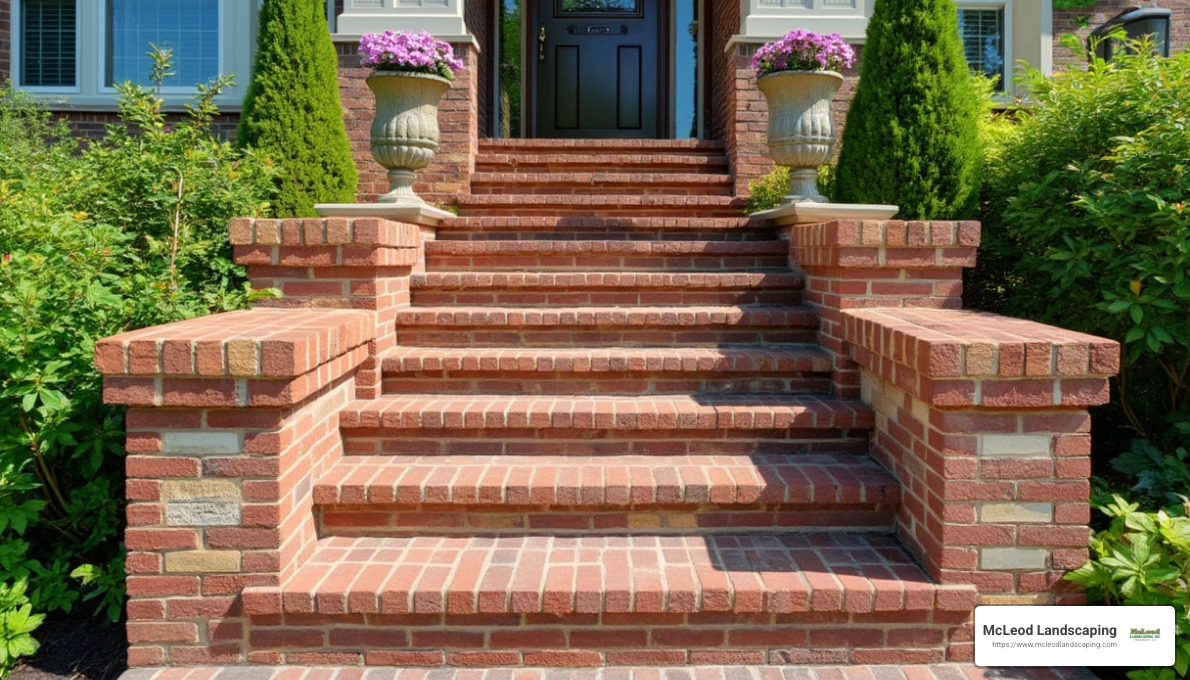
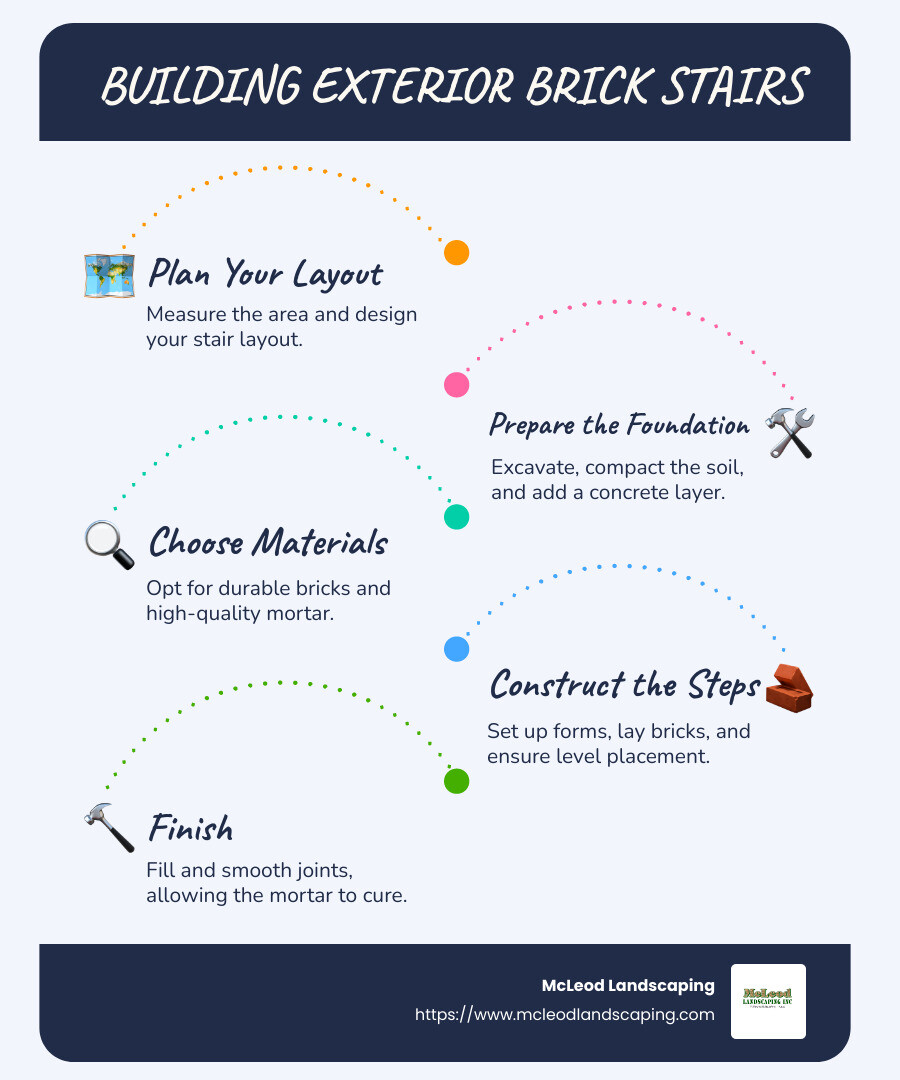
Exterior brick stairs can transform your property’s entrance, adding both style and functionality. If you’re looking for a quick answer on how to build these captivating structures, here’s a straightforward checklist:
When it comes to landscape design and hardscaping services, adding exterior brick stairs is a timeless choice. Not only do they improve the curb appeal of your property, but they also ensure safe and easy access.
I’m Scott McLeod, owner of McLeod Landscaping. With over 30 years of experience, my team and I have built countless exterior brick stairs, focusing on both beauty and durability for properties in the Merrimack Valley area. Let’s dig deeper into brick stairs and how they can uplift your property’s exterior.
Exterior brick stairs vocabulary:
– brick stair repair
– how to build brick stairs outside
– interlocking brick stairs
Exterior brick stairs are a fantastic way to improve your home’s curb appeal. They offer a blend of durability, aesthetic appeal, and a variety of designs that can complement any architectural style.
One of the standout features of brick stairs is their durability. Bricks are known for their ability to withstand harsh weather conditions, making them ideal for outdoor use. They are resistant to wear and can handle heavy foot traffic without showing signs of damage. This longevity means that investing in brick stairs is a decision that will pay off for many years.
Beyond their durability, brick stairs offer significant aesthetic appeal. They bring a timeless charm to any property. Whether your home has a rustic, modern, or classic design, brick stairs can seamlessly integrate into the existing style. The natural look of bricks adds warmth and character, creating an inviting entrance to your home.
The variety of designs available for brick stairs is impressive. You can choose from different patterns, such as herringbone or basketweave, to create a unique look. Additionally, bricks come in various colors, from traditional reds to more contemporary greys and browns, allowing for creative expression. This flexibility means you can tailor the design to fit your personal taste and the overall look of your property.
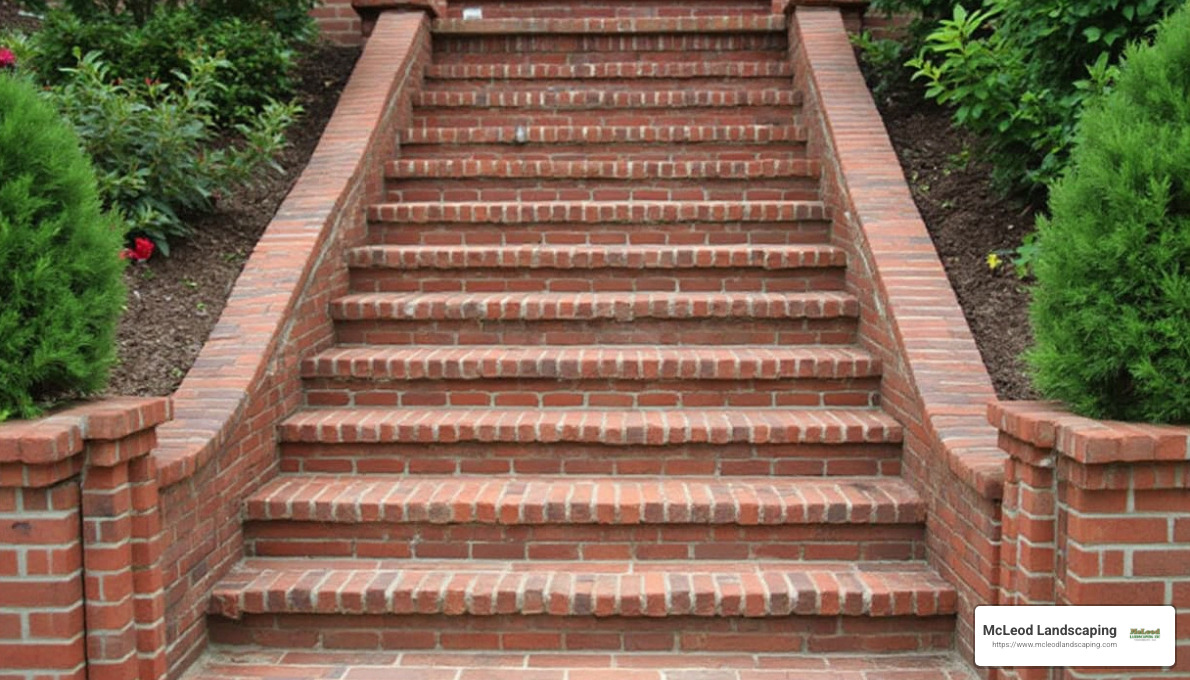
Consider a homeowner in North Carolina who transformed their backyard with brick stairs leading to a new porch. These stairs not only provided functional access but also became a focal point for the outdoor space, making it a favorite spot for family gatherings.
By choosing exterior brick stairs, you’re not just improving the look of your home; you’re also investing in a structure that offers both beauty and strength. Whether you’re aiming for a simple design or something more ornate, brick stairs are a solid choice.
Next, we’ll explore the key considerations for building these stylish stairs, focusing on creating a solid foundation and using effective construction techniques.
When it comes to constructing exterior brick stairs, laying a solid foundation is crucial. A well-prepared base not only ensures the stairs’ stability but also extends their lifespan. Let’s dive into the essential steps and techniques to get it right.
The first step in building durable brick stairs is ensuring a strong foundation. Begin by marking the area with stakes and string to outline where your stairs will be. Excavate the marked area to a depth of at least 10 cm (about 4 inches) to accommodate the sub-base. This depth is vital for supporting the stairs and preventing future settling.
Tip: Remove all grass, roots, and debris from the area to ensure a clean and stable base.
The sub-base is the backbone of your stairs. It provides a solid layer that supports the weight and prevents shifting. MOT Type 1 is a popular choice for sub-base material. This mixture of crushed rock and fines compacts well, forming a stable base. Depending on your project size, you might need between 1 to 5 bags of this material.
Pro Tip: You can find MOT Type 1 at most building supply stores.
After spreading the MOT Type 1 evenly, compact it thoroughly. Proper compaction is essential to prevent future shifting and settling. Use a tamp, tamper, or rammer for this task. If you lack specialized tools, a flat heavy weight, like a sleeper offcut with a broom handle, can do the job.
Remember: Compact the sub-base multiple times for a firm foundation.
Once the foundation is ready, it’s time to lay the bricks. Here are some construction techniques to ensure a successful build:
By following these steps, you ensure a strong and durable foundation for your brick stairs. Proper preparation and construction techniques contribute to the overall success and longevity of your project.
Next, we’ll dive into the costs associated with building exterior brick stairs, including factors that influence pricing and design considerations.
When planning to add exterior brick stairs to your home, understanding the cost factors is essential. Let’s explore what influences the pricing of this project.
The cost of materials like bricks, mortar, concrete, and sub-base materials typically ranges from $4 to $6 per square foot. This estimate covers the basic materials needed to create a sturdy and attractive set of stairs.
If you’re aiming for a more ornate design, expect the costs to rise. Intricate patterns and details can increase both material and labor expenses. For instance, a herringbone or basketweave pattern may require more time and skill to execute, thus increasing labor costs.
For a small set of stairs, such as two steps about two feet wide, the total cost—including materials and labor—might range from $200 to $500. Larger or more complex projects will naturally cost more due to the increased materials and labor required.
Several factors can influence the final cost of your brick stairs:
By understanding these cost factors, you can better plan and budget for your exterior brick stairs project. Investing in quality materials and skilled labor ensures a durable and aesthetically pleasing result.
Next, we will explore design ideas for exterior brick stairs, including landing designs, color schemes, and how to integrate them with your landscape.
Designing exterior brick stairs is not just about function; it’s about enhancing your home’s curb appeal and blending seamlessly with your landscape. Let’s explore some creative ideas.
A well-designed landing can transform simple brick stairs into a grand entrance. Consider incorporating a spacious landing area if space allows. This not only adds a touch of elegance but also serves a practical purpose by providing a resting spot between flights of stairs. A landing can be square or rectangular, depending on your space and design preference.
For a more dynamic look, think about adding curves or angles to your landing. Curved landings can create a gentle transition to the rest of your landscape, making the stairs feel like a natural extension of your home.
Brick stairs do not have to be a uniform red. Explore various color schemes to match your home’s exterior and personal style. Bricks come in a range of colors, from classic reds and browns to more modern grays and whites.
Consider the color of your home’s exterior when choosing your bricks. For example, a white or light-colored home might benefit from the warmth of red bricks, while a darker exterior could be complemented by lighter, gray-toned bricks.
Integrating your brick stairs with the surrounding landscape improves the overall aesthetic of your property. Here are some ideas to consider:
By thoughtfully considering landing designs, color schemes, and how your stairs integrate with the landscape, you can create a stunning entryway that improves your home’s exterior.
Next, we’ll address common questions about building exterior brick stairs, such as foundation requirements and cost factors.
Yes, brick steps absolutely need a solid foundation. A stable base is essential to prevent shifting and ensure longevity. Without a proper foundation, your stairs may become uneven or even unsafe over time.
To create a solid base, start with a sub-base. This involves excavating the area and laying down a layer of compacted MOT sub-base material. This layer should be about 10cm thick to provide stability. On top of this, add a concrete layer to create a level surface for your bricks.
A well-prepared foundation not only supports the weight of the stairs but also prevents water from pooling, which can cause damage. The foundation is the backbone of your exterior brick stairs.
The cost of brick front steps can vary widely based on several factors. While we can’t provide specific pricing, understanding the elements that influence cost can help you plan your project.
While the initial investment might seem significant, well-constructed brick steps are durable and can add value to your home.
No, brick steps should not be laid directly on dirt. Doing so can lead to instability and uneven settling. Without a proper foundation, your steps may crack or shift over time, creating safety hazards.
Instead, follow these steps:
These steps ensure that your brick steps are built on a solid base, providing stability and longevity. Proper construction techniques are crucial to prevent future issues and to maintain the beauty and safety of your exterior brick stairs.
By addressing these common questions, you can better prepare for your brick stair project and ensure a successful outcome. Next, we will wrap up our discussion by highlighting the comprehensive services offered by McLeod Landscaping in the Merrimack Valley area.
At McLeod Landscaping, we specialize in changing outdoor spaces with our comprehensive services. With over 30 years of experience, we have become a trusted name in the Merrimack Valley for both commercial and residential landscaping needs.
Our expertise in exterior brick stairs is best. We understand that these features are not just functional but also improve the aesthetic appeal of your home. By choosing high-quality materials and employing skilled craftsmanship, we ensure that your brick stairs are both durable and beautiful.
Whether you’re looking to create a welcoming entryway or a stunning garden feature, our team is ready to bring your vision to life. We offer a full range of hardscaping services, including patios, walkways, and retaining walls, all custom to complement your landscape design.
For those in Andover, Billerica, Burlington, and surrounding areas, we provide personalized solutions that meet your unique needs. Our commitment to quality and customer satisfaction sets us apart as the premier provider for all your landscaping projects in the Merrimack Valley.
If you’re ready to improve your property’s curb appeal with stylish and sturdy brick stairs, contact us today to schedule a consultation. Let us help you create a space that is as functional as it is beautiful.
Contact McLeod Landscaping today at (978) 640-0957 or click here to schedule a consultation for retaining wall installation. Let our experienced team design and install a functional and visually appealing retaining wall that enhances your landscape.


1881 Main St Unit 1, Tewksbury, MA 01876