
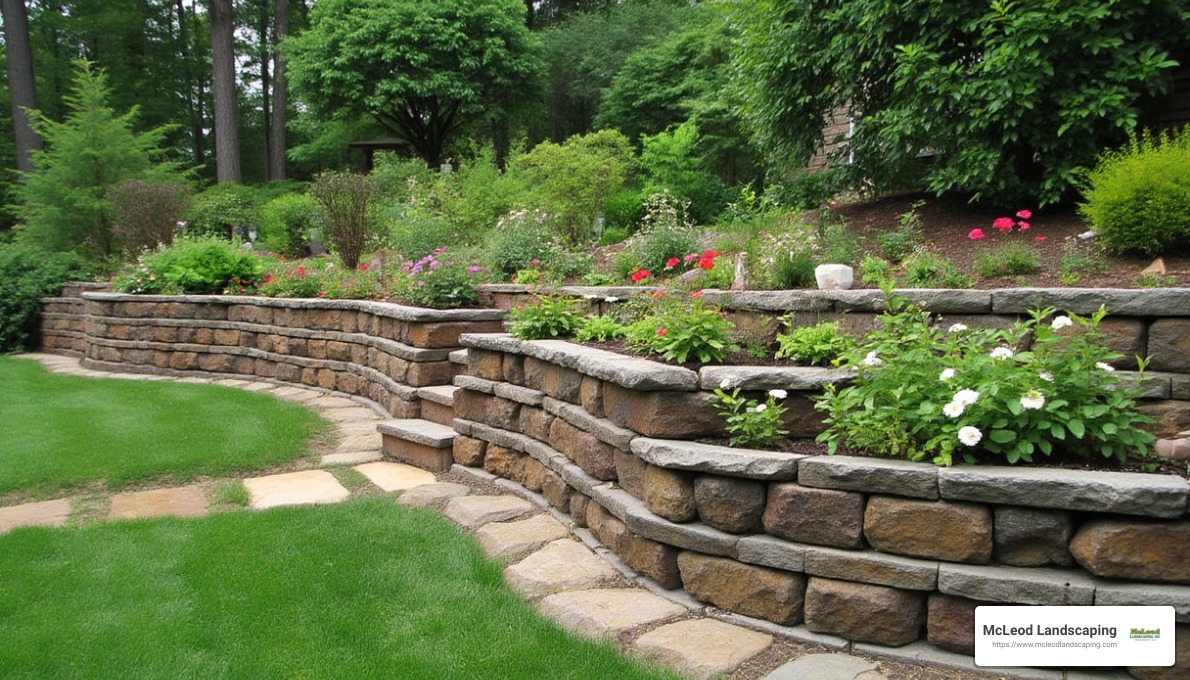
Garden wall retaining is a crucial element in landscape design that not only prevents soil erosion but also adds functionality and beauty to your property. If you’re looking for a quick understanding, here’s what you need to know:
Garden wall retaining is functional and beautiful, making it a perfect fit for commercial and residential landscapes in the Merrimack Valley area.
I’m Scott McLeod, owner of McLeod Landscaping, with over three decades of experience in changing landscapes into reliable and aesthetic spaces. We expertly handle garden wall retaining, emphasizing both functionality and visual appeal.
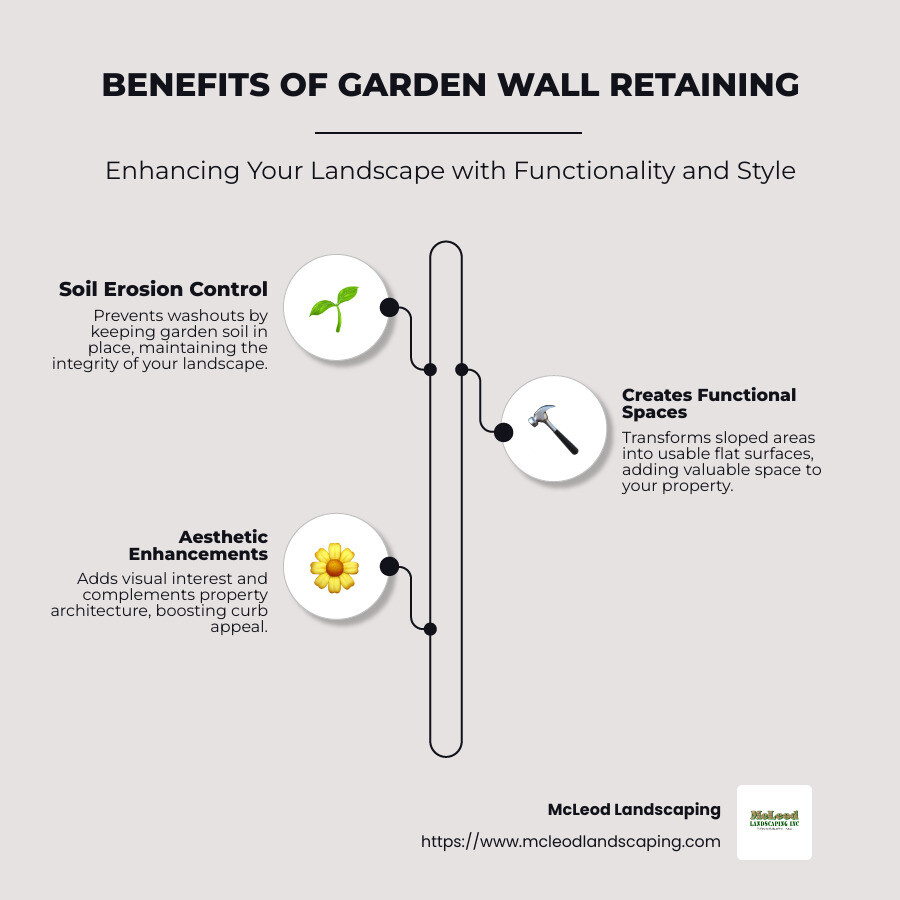
Garden wall retaining word list:
– retaining wall design
– retaining wall drainage
– retaining wall ideas
Retaining walls are more than just a decorative element; they’re a vital part of landscape engineering. Let’s break down why they’re so important:
At its core, a retaining wall is designed to hold back soil. This is crucial in landscapes with slopes, where soil can easily shift or erode. Imagine a sloped garden without a retaining wall—after heavy rain, you might find half your garden washed away! By keeping the soil in place, retaining walls help maintain the integrity of your landscape.
Retaining walls transform sloped areas into stable, flat spaces. This not only makes your yard more usable but also prevents landslides. For instance, in areas like the Merrimack Valley, where hilly terrains are common, retaining walls are essential. They provide the structural support needed to stabilize slopes and create safe, level areas for gardens, patios, or play spaces.
Proper drainage is key to a successful retaining wall. Without it, water can build up behind the wall, increasing pressure and risking collapse. Retaining walls often incorporate drainage pipes or gravel to channel water away efficiently. This prevents waterlogging and keeps your wall—and your garden—intact during seasonal rains.

In short, retaining walls are indispensable for soil retention, slope stabilization, and effective drainage. They ensure your landscape remains both beautiful and functional, even in challenging terrains.
When it comes to landscaping, garden wall retaining offers both aesthetic appeal and practical benefits. Let’s explore how these structures can improve your outdoor space.
Garden retaining walls are perfect for creating raised beds. These liftd plant areas not only add dimension to your garden but also make gardening more accessible. Raised beds can improve soil quality and drainage, allowing your plants to thrive. Plus, they’re easier on your back—no more bending over to tend to your garden!
Retaining walls can transform an ordinary yard into a stunning landscape. By incorporating different levels, you can create distinct areas for various activities or plant types. Imagine a multi-tiered garden with flowers cascading down each level, or a terraced vegetable patch that maximizes space and sunlight.
These walls are more than just functional; they add visual interest to your yard. With a variety of materials like natural stone, bricks, or concrete blocks, you can choose a style that complements your home. A well-designed retaining wall can serve as a backdrop for your garden, highlighting your plants and creating a cohesive look.
By integrating garden wall retaining into your landscape, you not only solve practical issues like soil erosion but also lift the visual appeal of your outdoor space. Whether you want to create raised beds or add dynamic landscape features, retaining walls are a versatile solution that blends functionality with beauty.
Next, we’ll dive into the key differences between retaining and garden walls, helping you choose the right one for your landscape needs.
When planning your landscape, it’s important to understand the differences between retaining walls and garden walls. Each serves unique purposes, affecting both the structure and appearance of your outdoor space.
Retaining walls are designed for heavy-duty tasks. They hold back soil, preventing erosion and managing slopes. These walls are essential for creating flat, usable spaces on uneven terrain. They need to be sturdy and are often built with materials like concrete blocks or large stones. This ensures they can withstand the pressure from the soil they support.
In contrast, garden walls are more about aesthetics and creating boundaries. They don’t need to support large amounts of soil. Instead, they define areas within your garden, like separating flower beds from walkways. Because they don’t bear heavy loads, garden walls can be made from lighter materials such as bricks or wood.
Aesthetic appeal plays a major role in choosing between these walls. Garden walls are typically more decorative. They can be crafted in various styles and materials to match your garden’s theme. Whether you prefer the rustic charm of bricks or the sleek look of modern concrete, garden walls offer plenty of options to express your style.
Retaining walls, while functional, can also improve your garden’s beauty. They provide a backdrop for plants and can be integrated with features like steps or terraces. Materials like natural stone can give retaining walls a timeless look, blending seamlessly with the landscape.
Material choices differ significantly between the two. Retaining walls require durable materials to ensure stability. Concrete blocks, interlocking stones, or reinforced masonry are common choices. These materials provide the strength needed to support soil and withstand weather conditions.
Garden walls, on the other hand, offer more flexibility in materials. You can use bricks, wood, or even decorative stones. These materials are chosen more for their visual appeal than their structural capabilities. This allows for creativity in design, making garden walls a versatile option for enhancing your landscape.
Understanding these key differences helps you choose the right type of wall for your landscape needs. Whether you’re looking to manage slopes or simply add charm to your garden, knowing the roles of retaining and garden walls will guide you in making the best decision for your outdoor space.
Next, we’ll explore how to build your own retaining wall with a DIY guide, covering everything from material selection to drainage solutions.
Creating a retaining wall on your own can be a rewarding project, changing your landscape while saving on labor costs. This guide will walk you through the essentials, focusing on concrete blocks, interlocking blocks, and drainage solutions.
Concrete blocks are a popular choice for building retaining walls due to their durability and strength. They provide the necessary support to hold back soil and can withstand various weather conditions. When selecting concrete blocks, look for ones specifically designed for retaining wall construction. These often have a textured finish that blends well with natural surroundings.
For those looking to simplify the building process, interlocking blocks offer an excellent solution. These blocks are designed to fit together easily, much like pieces of a puzzle, making the construction process straightforward. The interlocking feature ensures stability and reduces the need for mortar, which can speed up your project. Plus, they come in various colors and finishes, allowing you to customize the look of your wall.
Proper drainage is crucial for the longevity of your retaining wall. Without it, water can build up behind the wall, leading to pressure that may cause damage or failure. Here’s how to incorporate effective drainage solutions:

Building a retaining wall is a labor-intensive task, but with the right materials and techniques, it can be a successful DIY project. Next, we’ll tackle some frequently asked questions to help you steer common concerns about retaining and garden walls.
When it comes to building a cost-effective retaining wall, poured concrete and pressure-treated pine are popular choices.
Yes, proper drainage is essential for garden retaining walls, especially in areas with seasonal rains. Without it, water can accumulate behind the wall, leading to increased pressure and potential failure.
To achieve good drainage, consider using gravel and a perforated drain pipe behind the wall, as well as landscape fabric to keep the system clear of sediment.
Retaining walls and garden walls serve different purposes and have distinct characteristics:
Understanding these differences can help you choose the right type of wall for your landscape needs, ensuring both functionality and beauty.
Next, let’s explore the comprehensive services offered by McLeod Landscaping to bring your vision to life in the Merrimack Valley.
At McLeod Landscaping, we bring over 30 years of expertise to transform your outdoor space into a stunning and functional landscape. Whether you’re looking to add a retaining wall for structural support or a garden wall for aesthetic charm, our comprehensive services cover all your needs.
We specialize in designing and installing walls that not only prevent soil erosion but also improve the beauty and functionality of your property. Our team is skilled in creating retaining walls that stabilize slopes and garden walls that define spaces and add visual interest. We ensure that every project is custom to fit your specific landscape and aesthetic preferences.
Located in the heart of the Merrimack Valley, we proudly serve residential and commercial clients across Tewksbury, Andover, Billerica, and surrounding areas. Our commitment to quality craftsmanship and sustainable practices sets us apart. We use high-quality materials and innovative techniques to deliver durable and beautiful landscapes that stand the test of time.
If you’re ready to lift your outdoor space, contact us today for a consultation. Let McLeod Landscaping help you create a landscape that you and your family will enjoy for years to come. We’re not just building walls; we’re crafting the backdrop for your best memories.
Contact McLeod Landscaping today at (978) 640-0957 or click here to schedule a consultation for retaining wall installation. Let our experienced team design and install a functional and visually appealing retaining wall that enhances your landscape.


1881 Main St Unit 1, Tewksbury, MA 01876