

Installing a lawn irrigation system can transform your yard into a lush oasis and reduce the time you spend on manual watering. Whether you’re considering a DIY installation or hiring a professional, the right system offers numerous benefits, including water conservation, cost savings, and improved convenience. For those tackling installation on their own, it’s important to understand the basics of planning and assembling the system, from evaluating your yard’s needs to choosing the appropriate components.
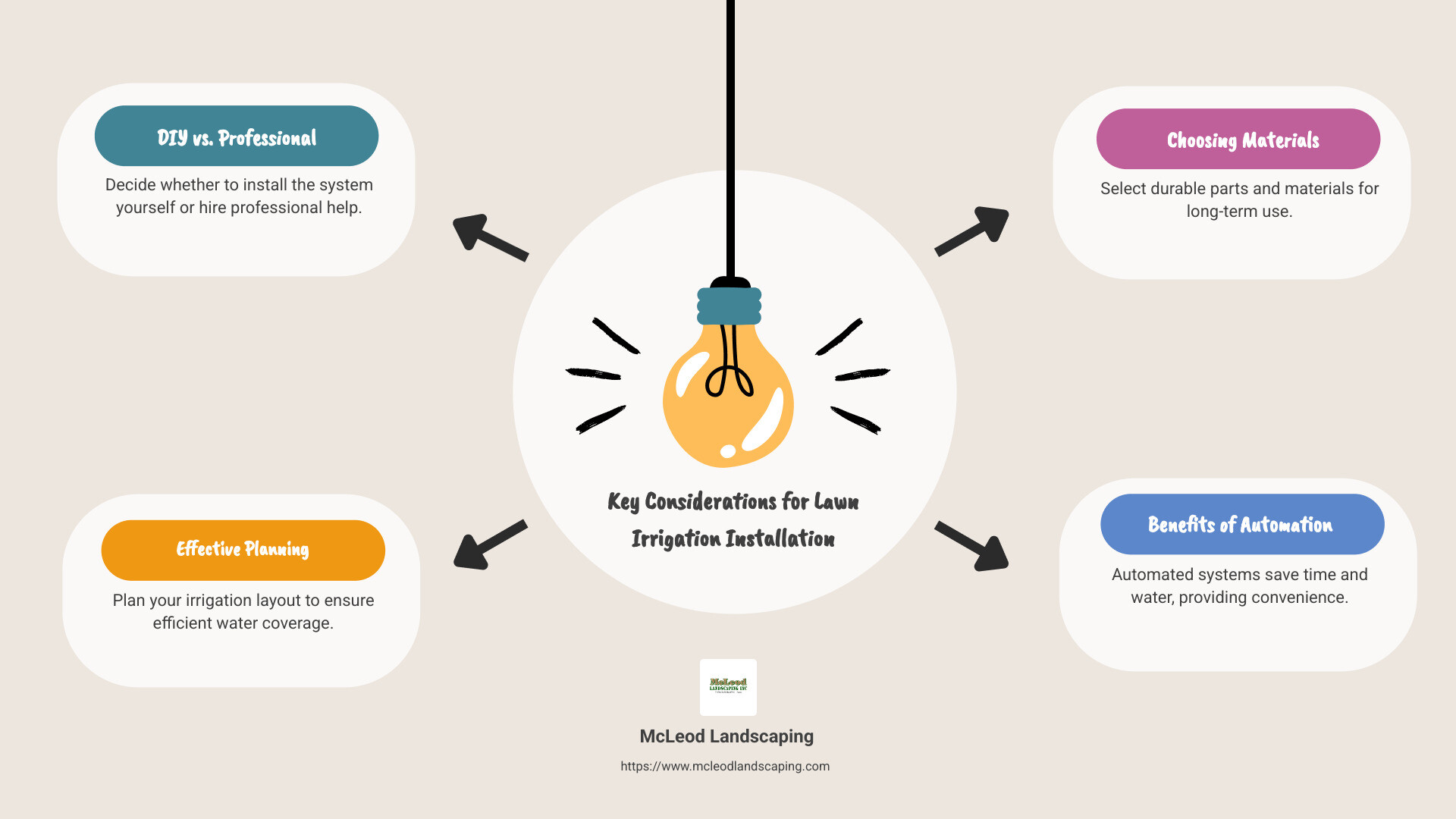
Key Considerations:
I’m Scott McLeod, owner of McLeod Landscaping with over 30 years of experience helping clients install lawn irrigation system across the Merrimack Valley area. From selecting the right parts to seamless installation, our team ensures your landscape gets the hydration it needs efficiently and sustainably.
When planning to install a lawn irrigation system, understanding your yard’s specific needs is crucial. Let’s explore the essentials, starting with determining water pressure and flow rate.
Water Pressure: Knowing your water pressure is the first step. It’s measured in pounds per square inch (PSI). You can measure it using a pressure gauge attached to an outdoor faucet. Ensure all other faucets are off to get an accurate reading. Most systems need at least 30 to 35 PSI for optimal performance.
Flow Rate: This tells you how much water your system can deliver, measured in gallons per minute (GPM). To find it, fill a container with a known volume of water using an outdoor spigot, record the time it takes, and do a quick calculation:
Knowing your flow rate helps you plan how many zones your system can support.
With your water pressure and flow rate in mind, it’s time to map out your irrigation plan.
Property Layout: Start with a map of your property. You can use tools like Google Maps for an aerial view. Mark key features such as your house, trees, flower beds, and pathways. This helps in determining where the sprinkler heads should go.
Watering Zones: Divide your yard into zones. Each zone will have its own control valve and will operate independently. Zones are based on the landscape features and the capacity of your water supply. For example, sunny areas might need more water than shaded ones.
Sprinkler Head Placement: For even coverage, place sprinkler heads so their spray patterns overlap. This prevents dry spots. Different areas might need different types of sprinkler heads, like pop-up heads for lawns and shrub heads for flower beds.
Proper planning ensures efficient water use and keeps your landscape lush and healthy.

Before starting, check local regulations. Some areas require permits or professional installation. Also, ensure your service line size matches your irrigation needs. This involves measuring the circumference of your water service line to determine its diameter.
By following these steps, you’ll lay a strong foundation for a successful irrigation system that keeps your yard green and thriving.
When planning to install a lawn irrigation system, selecting the right components is key. Let’s explore how to choose the best sprinkler heads, pipes, and valves for your project.
Sprinkler heads are the heart of your irrigation system. They determine how water is distributed across your lawn. Here are some common types:
Choosing the right sprinkler head type ensures efficient water use and healthy plant growth.
Choosing the right pipes and valves is crucial for a reliable irrigation system. Here’s a breakdown:
Selecting the right combination of pipes, valves, and sprinkler heads ensures your irrigation system runs smoothly and efficiently, keeping your lawn lush and green.
Installing a lawn irrigation system might seem like a daunting task, but breaking it down into manageable steps makes it achievable. Let’s explore the process of trenching, connecting the water supply, and assembling the system.
Before you start digging, it’s crucial to mark any underground utilities. Call 811 to have your utility lines marked. This step ensures you avoid hitting any electrical, gas, or sewer lines.
Once the utilities are marked, you can begin trenching. Use a trenching shovel or rent a gas-powered trenching machine for larger projects. Trenches should be 6 to 12 inches deep, depending on your area’s frost line. This depth protects the pipes from freezing in colder climates.
Tip: Most rental dealers offer delivery and pickup services for trenching machines, saving you time and effort.
Connecting your irrigation system to a water source is a critical step. You have two main options: connecting to a spigot or the main water line.
Spigot Connection:
Main Line Connection:
If you’re not comfortable with plumbing, consider hiring a professional for this step.
With the trenches dug and the water supply connected, it’s time to assemble the irrigation system.
By following these steps, you’ll have a well-installed irrigation system ready to keep your lawn lush and vibrant. Now, let’s move on to maintaining your system to ensure it operates efficiently all year round.
Once your lawn irrigation system is installed, keeping it in top shape requires regular maintenance. This involves winterizing the system, performing pressure checks, and detecting leaks. Let’s explore these essential steps to ensure your system runs smoothly year-round.
Winterizing your irrigation system is crucial, especially in colder climates, to prevent damage from freezing temperatures. Here’s how you can do it:

Regular maintenance is key to extending the life of your irrigation system. Here are some simple tips to keep everything running smoothly:
By following these maintenance tips, you can ensure your lawn irrigation system operates efficiently, keeping your landscape lush and healthy. Let’s move on to answering some frequently asked questions about lawn irrigation systems.
Yes, you can install your own lawn sprinkler system, but it requires careful planning and the right tools. DIY installation can save you money, with average parts costing around $1,500, compared to the higher costs of professional installations. However, it is labor-intensive and requires you to troubleshoot any issues on your own.
Planning is crucial. You’ll need to evaluate your yard, measure water pressure and flow rate, and sketch out a detailed irrigation plan. Make sure to mark any utility lines before digging by calling 811.
Essential tools include a trenching shovel, PVC pipes, connectors, and a pressure gauge. With these in hand, you can confidently tackle the installation.
When installing irrigation lines, digging the trenches to the correct depth is vital for system longevity and freeze protection. Typically, trenches should be 6 to 8 inches deep. This depth helps protect pipes from surface damage and, in colder climates, minimizes the risk of freezing.
If your yard has slopes, dig slightly deeper at higher points to ensure water doesn’t pool at the surface. Always line your trenches with landscape fabric to prevent soil from clogging the system.
Installing an irrigation system can be a wise investment for several reasons:
Overall, an irrigation system not only saves money but also keeps your lawn healthy and vibrant with minimal effort. This makes it a worthwhile addition to any home landscape.
Now that we’ve covered these common questions, let’s explore how McLeod Landscaping can help you with your irrigation needs.
At McLeod Landscaping, we take pride in offering comprehensive services custom to both residential and commercial clients throughout the Merrimack Valley. With over 30 years of experience, we understand the unique needs of our local landscapes and are committed to providing top-notch solutions for every project.
Our expertise extends beyond just installing irrigation systems. We offer a full range of services, including landscape design, maintenance, and even commercial snow management. This means you can count on us for all your landscaping needs, ensuring your property remains beautiful and functional year-round.
Our team of professionals is dedicated to delivering high-quality service and craftsmanship. We work closely with our clients to design and install lawn irrigation systems that are efficient, effective, and custom to your specific landscape. From planning to installation and maintenance, we’ve got you covered.
If you’re ready to transform your landscape and enjoy the benefits of a well-maintained lawn, contact McLeod Landscaping today. Let us help you bring your outdoor vision to life with our expertise and dedication to excellence.
Contact McLeod Landscaping today at (978) 640-0957 or click here to schedule a consultation for retaining wall installation. Let our experienced team design and install a functional and visually appealing retaining wall that enhances your landscape.


1881 Main St Unit 1, Tewksbury, MA 01876