
A Landscape Designer is a professional who plans and develops beautiful, functional outdoor spaces. They combine horticultural knowledge with design skills to create everything from residential yards to commercial properties, selecting appropriate plants and materials, creating detailed plans with CAD software, and often overseeing the final installation.
If you’re a new homeowner dreaming about overhauling your outdoor space or a busy property manager, you might be wondering if hiring an online landscape designer could solve your problems. The digital revolution has reached the landscaping industry, offering convenient alternatives to traditional in-person design services.
Online landscape design services are becoming increasingly popular, providing homeowners with professional design expertise without the need for site visits. These services typically offer design packages ranging from basic plant selection guidance to comprehensive 3D renderings with detailed installation plans.
The appeal is clear: faster turnaround times, often lower costs, and the convenience of working from home. However, the effectiveness of online design depends heavily on your project’s complexity and your specific needs.
As Scott McLeod, owner of McLeod Landscaping with over 30 years of experience in the Merrimack Valley, I’ve worked with countless clients who’ve explored both online and traditional Landscape Designer services. My team has seen how digital design tools can complement professional landscaping while also understanding their limitations for complex projects.

Landscape Designer terms to know:
A Landscape Designer is an artist and planner who crafts outdoor areas that are both beautiful and practical. Their main job is to transform land into inviting, functional environments by finding the sweet spot between a creative vision and what truly works. You can dive deeper into What is Landscape Design.
A great designer considers how you’ll use the space—for parties, relaxation, or family play. They arrange elements like pathways, planting beds, water features, and seating areas to create a space that flows beautifully. While aesthetics like color and texture are key, functionality is paramount. A designer ensures proper drainage, easy movement, and the right materials. They balance the living plants (softscape) with built features like patios (hardscape). At McLeod Landscaping, we believe in the power of both Landscape and Hardscape Design to create integrated outdoor spaces.
A deep understanding of plants, or horticultural knowledge, is essential. A skilled Landscape Designer knows which species will thrive in your local climate and soil, ensuring the design is sustainable and easy to maintain. Their work often involves site analysis, client meetings to understand your vision and budget, creating plans with CAD software, and overseeing the installation to ensure the design is executed perfectly.
While the terms are often used interchangeably, a “landscape architect” and a “Landscape Designer” have different training, legal permissions, and project focuses. Understanding these distinctions can help you hire the right professional. If you’re looking for a Landscape Architect Near Me, knowing the difference is key.
Let’s break down the key differences:
| Feature | Landscape Designer | Landscape Architect |
|---|---|---|
| Education | Often holds certifications or degrees in design, horticulture, or a related field. | Requires a Bachelor’s or Master’s degree from an accredited university program. |
| Licensing | Generally not required for residential or non-structural projects. | Usually requires state licensure, which involves passing the rigorous LARE (Landscape Architect Registration Examination), a process overseen by organizations like the American Society of Landscape Architects (ASLA). |
| Scope of Work | Focuses on aesthetic and horticultural design for smaller-scale residential projects. | Has a broader scope, including large-scale urban planning, public parks, and complex projects needing permits and engineering oversight. |
| Structural Elements | Designs typically do not include major structural features or complex engineering. | Is legally qualified to design complex structural elements, large-scale retaining walls, and sophisticated drainage systems. |
| Project Type | Mostly works on residential gardens, smaller commercial spaces, and decorative hardscapes. | Handles large commercial developments, municipal projects, and complex residential estates with significant site changes. |
A successful Landscape Designer needs a mix of artistic talent, scientific knowledge, and people skills to bring a complete vision to life.
Creativity and Artistic Vision: This is the ability to see the hidden potential in a yard and imagine how plants, hardscapes, and lighting will form a unified space. This artistic spark is what allows for The Art of Landscape Design: Balancing Form, Function, and Beauty.
Horticultural Knowledge: Understanding plants—their growth habits, care needs, and suitability for your climate—is crucial for a landscape to thrive long-term.
Technical and Engineering Skills: Designers create detailed plans that require an understanding of grading, drainage, and structural integrity for elements like patios. Proficiency with CAD software is key.
Environmental Awareness: Modern design often incorporates eco-friendly practices like xeriscaping (water-wise landscaping), rainwater harvesting, and using native plants to create sustainable landscapes.
Project Management Skills: A designer often coordinates with other professionals, keeping projects on time and on budget.
Strong Communication and Collaboration: A great designer is an excellent listener who can understand your needs and clearly communicate their ideas, ensuring the final project is a success.
Attention to Detail: The difference between a good and a great design is often in the details, from the placement of a single tree to the choice of stone for a pathway.
The digital age has made landscape design more accessible, allowing clients to collaborate with professionals regardless of location. This has become a legitimate alternative to traditional Landscape Designer consultations, especially for homeowners seeking convenience.
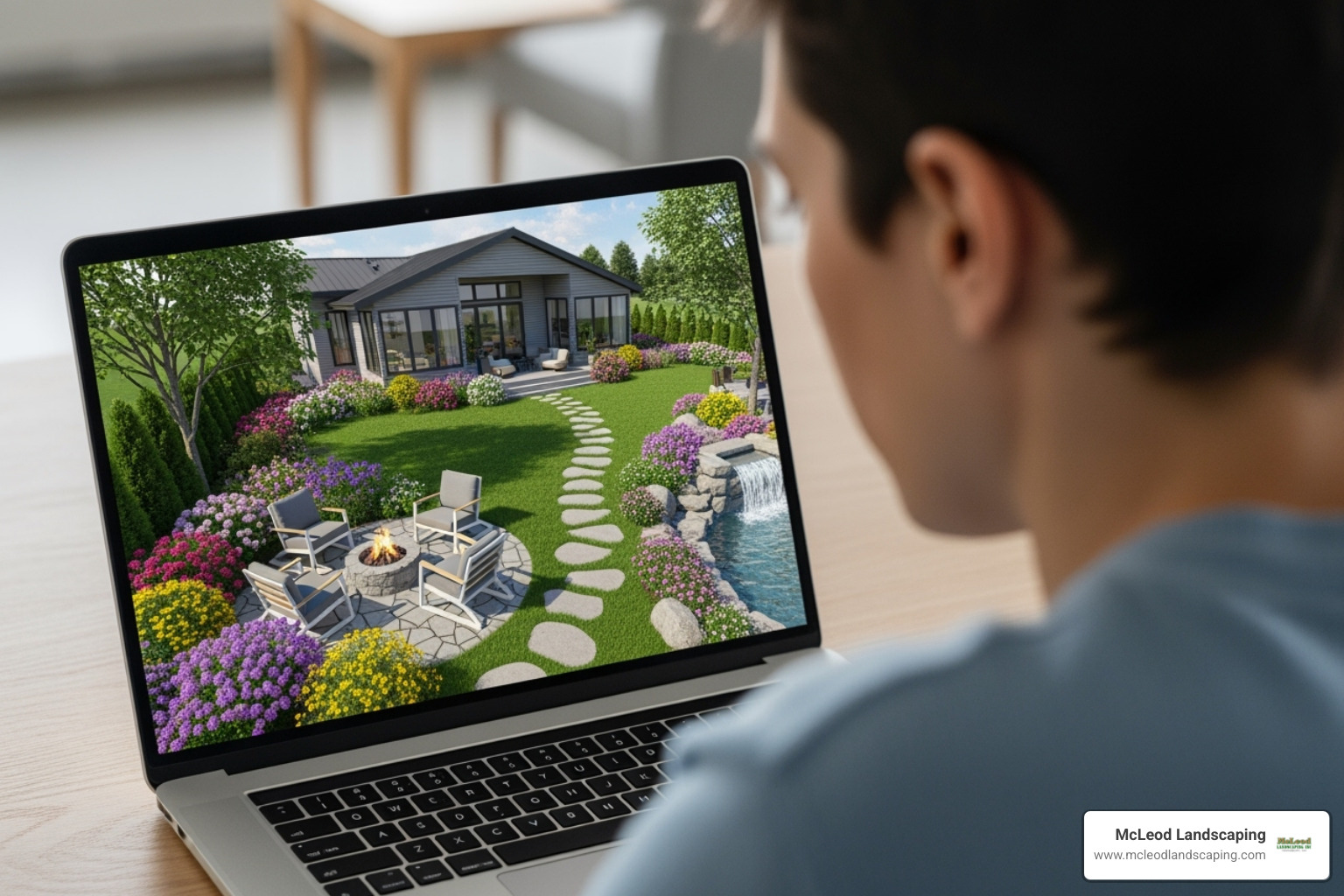
For many homeowners, online landscape design offers a compelling solution, especially for finding Landscape Design Ideas or a basic plan.
The biggest draw is convenience. You can connect with designers from anywhere, fitting consultations into your schedule. This also provides accessibility to a wider pool of talent, allowing you to find a designer whose style perfectly matches your vision.
For smaller projects, online design can be more cost-effective, offering a budget-friendly starting point for DIY homeowners. The speed is also appealing, as digital tools can lead to faster turnaround times for design concepts and final plans.
While online design has perks, it’s not a one-size-fits-all solution. The most significant drawback is no physical site visits. A designer’s ability to understand a site’s microclimates, subtle slopes, and drainage issues is limited. Photos and videos can’t replace the sensory experience of being on the property.
Soil testing limitations are another challenge, as designers rely on client-provided information that may be inaccurate. Sun and shade analysis is also tricky remotely, as an in-person visit reveals how light changes throughout the day and seasons.
There’s also the potential for generic designs that don’t feel site-specific, especially with complex topography. Finally, communication challenges can arise when trying to convey complex ideas or on-site issues that a quick walk-through could easily resolve.
Online landscape design shines for specific projects and clients:
For many homeowners, especially in areas like Andover or Tewksbury, MA, a local professional is the gold standard. Complex projects with intricate hardscaping or a complete property overhaul require hands-on analysis.
Large properties demand detailed site analysis that goes beyond photos. A local Landscape Designer can understand the flow, scale, and environmental factors of an extensive space.
Significant grading or drainage issues are critical challenges that demand on-site assessment to prevent costly problems. Our team at McLeod Landscaping specializes in addressing these complex issues.
If you desire project management, a local firm offers comprehensive service from design to installation, which is invaluable for projects involving complex Hardscape Design Services.
Custom features like a Backyard Custom Patio or outdoor kitchen require precise on-site measurements. Finally, many clients prefer a long-term relationship with a local designer for ongoing advice and adaptations.
So, you’ve decided an online Landscape Designer is the right fit for your project. Great! Now comes the exciting part: finding the perfect professional to bring your digital garden dreams to life.
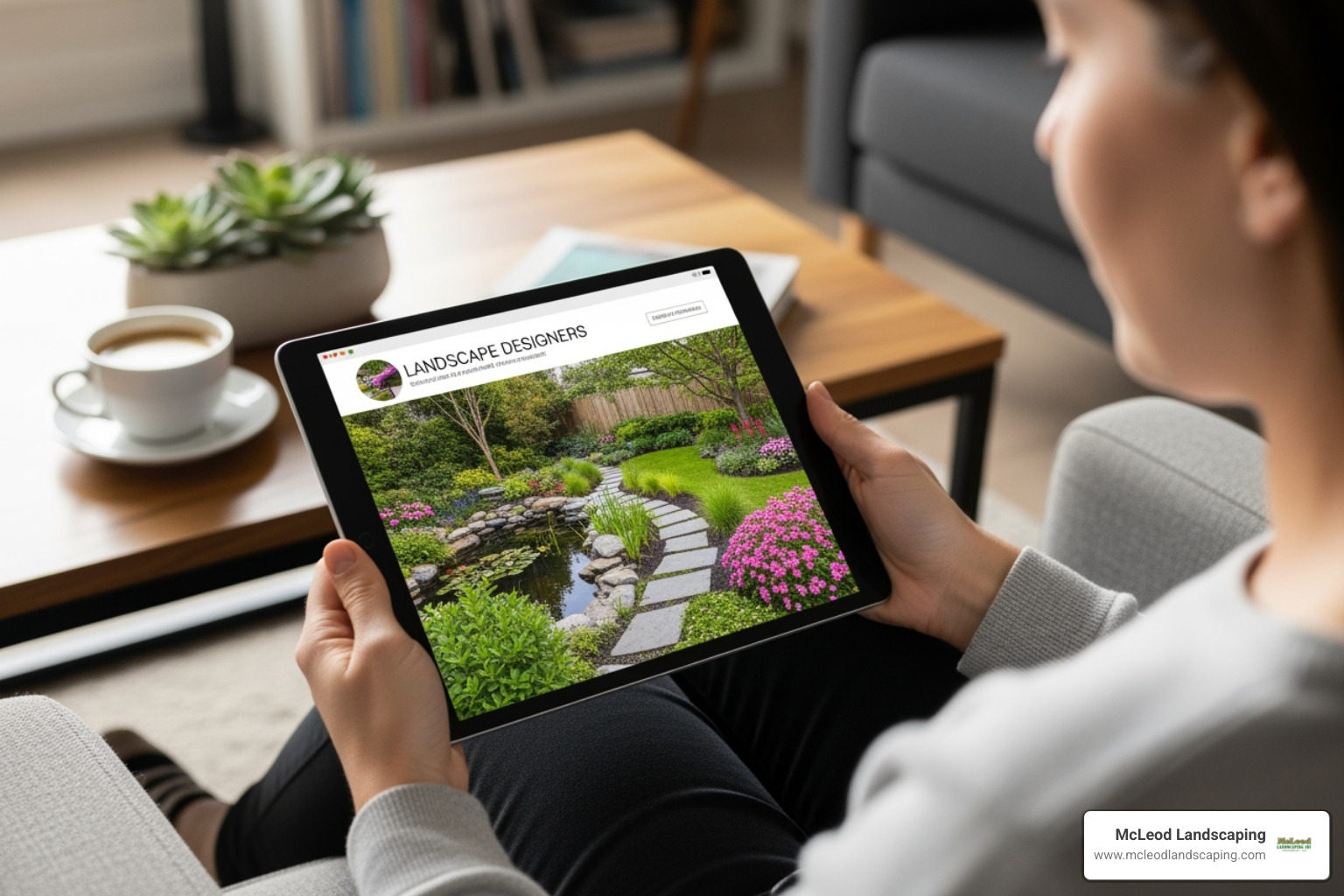
Professional organizations and industry associations are great starting points, as they often have directories of certified members. Freelance platforms like Upwork also offer a wide range of talent and pricing. Be cautious with social media; while great for inspiration, a pretty Instagram feed doesn’t guarantee a smooth design process or client experience.
Once you have a shortlist, it’s time for due diligence.
Asking the right questions upfront can prevent surprises later.
Sidestep these common pitfalls when hiring a Landscape Designer.
Let’s talk money – because understanding what you’ll pay for online landscape design is crucial for planning your project budget. The cost depends on what you’re getting.

Most online Landscape Designers use one of three pricing models:
Key cost factors include project complexity, the designer’s experience, and the deliverables. Detailed 3D renderings and multiple revisions will increase the price.
Disclaimer: The following prices are based on general data from online sources and do not reflect the pricing of McLeod Landscaping. Costs can vary significantly based on scope and location.
Here’s a realistic look at what you might invest in online landscape design services.
Costs trend higher for large properties, complex hardscaping (patios, retaining walls), and multiple revisions beyond what’s included in a package. The design fee is separate from your actual installation costs—it’s the blueprint for your project.
The world of landscape design is evolving, and online Landscape Designers offer a fantastic, accessible option for many homeowners. Digital tools provide convenience, speed, and a budget-friendly way to get professional guidance for simpler projects, DIY enthusiasts, or those just seeking inspiration.
However, it’s crucial to recognize the limitations. Without physical site visits, designers can miss key details like soil conditions, drainage patterns, and microclimates. Complex topography, significant grading, or intricate hardscaping projects require the hands-on expertise that only an in-person professional can provide.
For complex projects, or for clients who desire a comprehensive approach from design through installation and maintenance, a full-service local team is essential. This is where the value of working with experienced professionals who understand your specific region becomes invaluable.
At McLeod Landscaping, we understand that every property, whether in Lowell or Wilmington, MA, has unique challenges. With over 30 years of experience serving the Merrimack Valley, including communities like Concord and Chelmsford, our team brings unparalleled local expertise to every project. We provide a comprehensive range of services, from landscape design and installation to maintenance and commercial snow management.
While online tools can help you dream, our team can help you build and maintain that dream. We’re here to turn your vision into a functional, sustainable, and lasting reality.
For complex projects requiring a hands-on approach, our experts are ready to transform your outdoor living space. Contact us for your residential landscaping needs in the Merrimack Valley today.
Contact McLeod Landscaping today at (978) 640-0957 or click here to schedule a consultation for retaining wall installation. Let our experienced team design and install a functional and visually appealing retaining wall that enhances your landscape.


1881 Main St Unit 1, Tewksbury, MA 01876