
Residential landscape design is more than just arranging plants in your yard. It’s about creating beautiful and functional outdoor spaces that improve your home’s curb appeal and provide a relaxing retreat for your family. Whether you’re dreaming of a complete backyard overhaul or a simple front yard refresh, getting the design right can transform your property.
If you’re here for a quick answer, here are the key points:
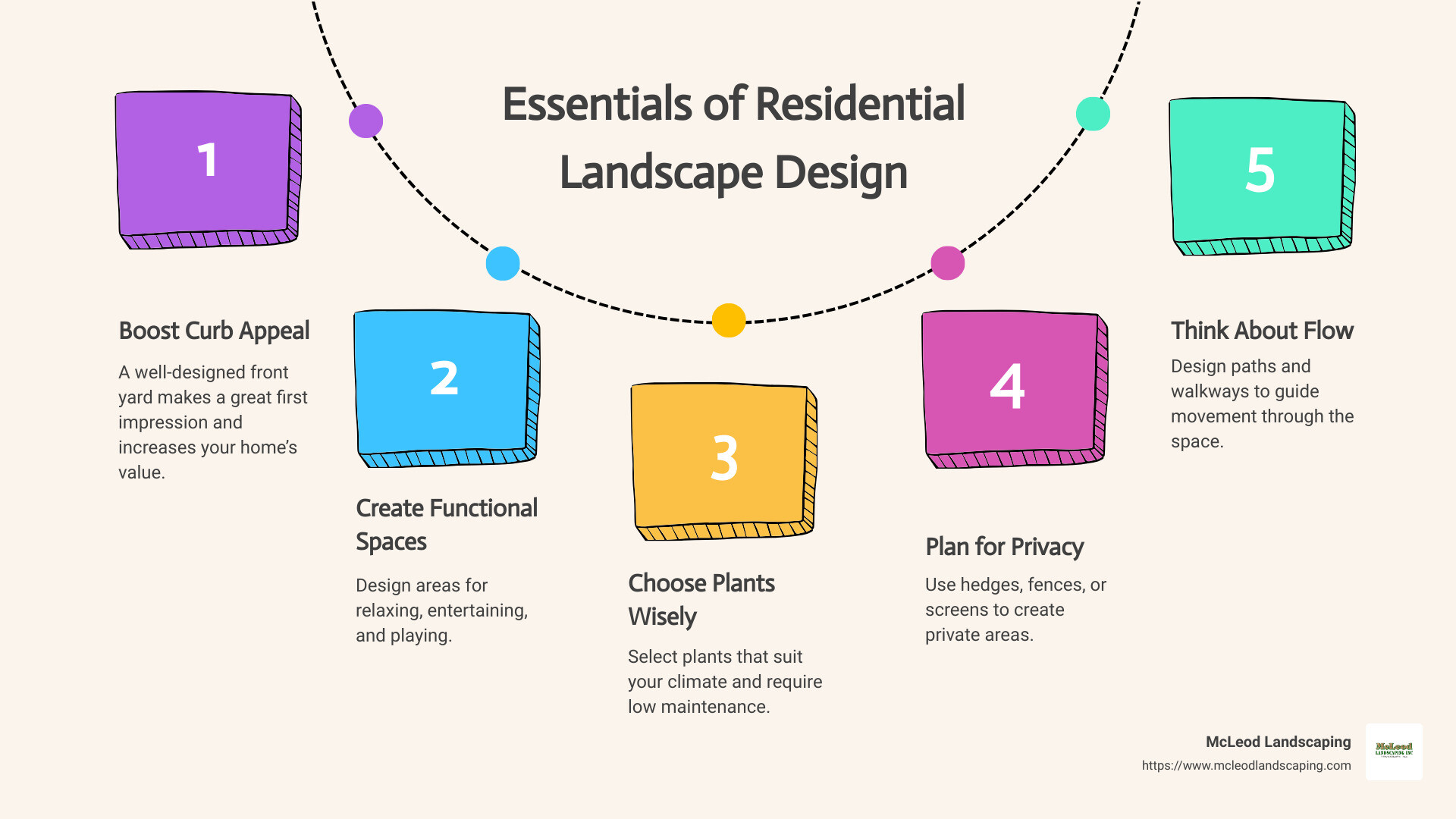
1. Boost Curb Appeal: A well-designed front yard makes a great first impression and increases your home’s value.
2. Create Functional Spaces: Design areas for relaxing, entertaining, and playing.
3. Choose Plants Wisely: Select plants that suit your climate and require low maintenance.
4. Plan for Privacy: Use hedges, fences, or screens to create private areas.
5. Think About Flow: Design paths and walkways to guide movement through the space.
As the owner of McLeod Landscaping, I’ve spent over three decades perfecting the art of residential landscape design. Our team specializes in changing outdoor areas into beautiful, functional spaces custom to your needs. Whether it’s adding hardscaping elements like patios or creating lush garden beds, we ensure your landscape looks stunning and serves a purpose.
Similar topics to residential landscape design:
– landscape and design near me
– landscape companies near me
– landscaper near me
When it comes to residential landscape design, understanding the basic principles is key to creating an outdoor space that’s both beautiful and functional. These principles guide you to design spaces that are visually appealing and harmonious.
1. Balance: Balance in landscape design can be either symmetrical or asymmetrical. Symmetrical balance creates a formal look, with both sides mirroring each other. Asymmetrical balance, on the other hand, uses different elements with similar visual weight to create a more dynamic and interesting space. For example, a large tree on one side can be balanced by a group of smaller shrubs on the other.
2. Focalization: Focalization directs attention to a specific point in your landscape. This could be a striking plant, a sculpture, or a water feature. The key is to use lines, shapes, and textures to lead the eye to these focal points. Think of it as highlighting a sentence in a book; it draws attention and creates interest.
3. Simplicity: Simplicity is about avoiding overcomplication. Too many different colors, textures, and forms can create visual confusion. Achieve simplicity by using a limited range of plant species and repeating elements. This doesn’t mean your design has to be boring—just that it should be easy on the eyes.
4. Rhythm/Line: Rhythm in landscaping is achieved through repetition and the strategic placement of elements. This guides the eye and creates a sense of movement. For instance, repeating a pattern of bushes followed by a row of flowers can create a flow that leads the observer through the garden.
5. Proportion: Proportion is all about the size relationship between elements in your landscape. Imagine a giant tree next to a tiny bench—it feels off because the proportion is skewed. Keep things in scale by ensuring that your outdoor furniture, plants, and decorative features fit comfortably with each other and the overall size of your yard.
6. Unity: Unity is about creating harmony in your landscape. Every piece in your garden should look like it belongs. This can be achieved by using similar colors, textures, or shapes to tie different areas together. Think of it like a puzzle where each piece is different, but together, they create a complete picture.
The Rule of Three is a handy guideline in residential landscape design that helps create balance and visual interest.
Balance: The Rule of Three often involves using an equilateral triangle to place plants. This creates a balanced and natural look. For example, you could place three shrubs at the corners of an imaginary triangle.
Equilateral Triangle: This method ensures that plants are spaced evenly, giving them room to grow while maintaining a cohesive look. It’s a simple trick that can make a big difference in the overall feel of your landscape.
Mounding Plants: Use mounding plants to create layers and depth. These plants can add texture and interest to your garden, making it look more dynamic.
Vertical Plants: Incorporate vertical plants to draw the eye upward and add height to your landscape. This can be especially effective in smaller spaces where you want to create the illusion of more room.
By applying these principles and the Rule of Three, you can transform your outdoor space into a well-composed and inviting area that improves your home and lifestyle.

Next, we’ll explore how to plan your landscape project effectively, from site analysis to creating a master plan.
Planning your residential landscape design is a critical step in changing your outdoor space into a functional and beautiful environment. Let’s explore the essential steps and techniques to ensure your project is a success.
Before you start, perform a detailed site analysis. This involves understanding the existing conditions of your property, including sunlight patterns, soil type, and existing features like trees and buildings.
With your base plan ready, start sketching your ideas. Think about how you want to use the space. Do you need a play area for kids, a vegetable garden, or a serene retreat?
If your plan involves reducing lawn space, start by removing the existing grass. This can be done using various methods such as solarization, sheet mulching, or sod removal.
Hardscape elements like patios, walkways, and retaining walls should be installed first. These structures form the backbone of your landscape and need a solid foundation.
Healthy soil is the foundation of a thriving garden. Improve your soil by adding organic matter like compost.
Efficient irrigation is key to maintaining your landscape with minimal water waste.
Choose plants that are suited to your climate and soil conditions. Native plants are often the best choice as they require less water and maintenance.
Proper watering techniques can save water and keep your plants healthy.
A master plan is your roadmap to a successful landscape project. Here’s how to create one:
Start by outlining the boundaries of your property and the location of your house and other structures.
Accurately measure your property and transfer these measurements to your base plan. Include all existing features and note any changes in elevation.
Transfer your sketched ideas onto the base plan. Use tracing paper to experiment with different layouts without altering the original plan.
Once you’re happy with the layout, trace the final design onto a clean sheet. This will be your master plan.
By following these steps, you can create a detailed and practical plan for your residential landscape design. Next, we’ll explore different landscape design styles to inspire your project.
When it comes to residential landscape design, choosing the right style can make all the difference. Here are some popular styles to consider for your home:
Look and Feel: Timeless and symmetrical, often mirroring the architectural lines of the home.
Key Elements: Manicured lawns, neatly trimmed hedges, and symmetrical plantings.
Why Choose It: Ideal for those aiming for a traditional look that complements a variety of home styles.
Look and Feel: Sleek and simple with clean lines and minimal clutter.
Key Elements: Geometric shapes, hardscaping, and a limited color palette focused on greens and whites.
Why Choose It: Perfect for those who prefer a low-maintenance yard that emphasizes architectural features.
Look and Feel: Cozy and informal, filled with a mix of flowers, herbs, and vegetables.
Key Elements: Dense plantings, traditional materials like brick or stone, and a variety of colors and textures.
Why Choose It: Great for those who love a natural, whimsical outdoor space that attracts wildlife.
Look and Feel: Peaceful and contemplative, drawing on Buddhist, Shinto, and Taoist philosophies.
Key Elements: Rocks, water, plants, and ornaments, with design principles of asymmetry, enclosure, and balance.
Why Choose It: Ideal for creating a spiritual haven for relaxation and meditation.
Look and Feel: Evokes the beauty and serenity of far-off destinations with a focus on drought-tolerant plants.
Key Elements: Succulents, native plants, and decorative rocks or gravel instead of a traditional lawn.
Why Choose It: Excellent for conserving water and reducing maintenance in dry climates.
Look and Feel: Lush and vibrant, reminiscent of tropical destinations.
Key Elements: Exotic plants, water features, and bold colors.
Why Choose It: Perfect for creating a backyard oasis that feels like a getaway.
Look and Feel: Natural and serene, mimicking the beauty of a forest.
Key Elements: Shade-loving plants, trees, and a variety of textures and colors.
Why Choose It: Great for creating a lush, shaded retreat in your yard.
For busy homeowners, low-maintenance landscaping can offer a beautiful yard without the constant upkeep. Here are some ideas to make your landscape easier to manage:
Start with a well-thought-out landscape plan. This will save time and money in the long run.
Reducing lawn space can cut down on maintenance significantly.
Opt for plants that are indigenous to your area.
Choose plants that fit the space available.
Perennials come back year after year, reducing the need for replanting.
Group plants together for maximum impact and easier care.
By incorporating these low-maintenance landscaping ideas, you can enjoy a beautiful yard with less effort. Up next, we’ll dig into the hardscape and softscape elements that can improve your landscape design.
When it comes to residential landscape design, balancing hardscape and softscape elements is key. Hardscape refers to the non-living features like patios and walkways, while softscape includes the living elements such as plants and trees. Let’s dive into both.
Patios
Patios serve as the heart of your outdoor living space. They’re perfect for hosting gatherings or relaxing in solitude. Choose durable materials like concrete, pavers, or natural stone. These materials not only look great but also require minimal maintenance.
Fire Pits
Fire pits are fantastic for creating a cozy atmosphere. They extend the usability of your outdoor space into cooler evenings and seasons. Whether you choose a built-in or portable fire pit, it becomes a natural gathering spot. You can fuel it with wood, propane, or natural gas.
Outdoor Kitchens
If you love to cook and entertain, an outdoor kitchen is a must. Equip it with a grill, refrigerator, and seating to make outdoor dining convenient and enjoyable. A well-designed outdoor kitchen extends your living space and allows you to host memorable gatherings under the sky.
Walkways
Walkways ensure safe passage through your outdoor areas and improve visual appeal. Materials like flagstone or pavers can be laid out in unique patterns to create a captivating path. A well-placed walkway can guide guests through different zones of your garden.
Retaining Walls
Retaining walls are both functional and decorative. They help manage soil erosion and create usable flat spaces on slopes. Materials like stone, concrete blocks, and treated timbers are commonly used. These walls need to be well-constructed to withstand pressure and weather conditions.
Drought-Tolerant Plants
Opting for drought-tolerant plants can significantly reduce water consumption. These plants are not only eco-friendly but also save you effort and expense. Examples include succulents, lavender, and yarrow.
Native Plants
Native plants are well-adapted to your local climate and soil conditions. They require less water and maintenance. Plus, they support local wildlife and ecosystems. Incorporating native plants can make your yard more resilient and sustainable.
Low-Maintenance Plants
For a yard that looks great with minimal effort, choose low-maintenance plants. These plants require less pruning, watering, and pest control. Examples include ornamental grasses, hostas, and daylilies.
Ornamental Grasses
Ornamental grasses add texture and movement to your landscape. They are low-maintenance and thrive in various conditions. Popular choices include feather reed grass, blue fescue, and switchgrass.
Trees
Trees are sustainability powerhouses and valuable real estate assets. They provide shade, improve air quality, and improve the aesthetic appeal of your yard. Choose trees that fit the space available and match the mature size to avoid overcrowding.
By thoughtfully integrating hardscape and softscape elements like patios, fire pits, and drought-tolerant plants, you can create a beautiful and functional outdoor space. Up next, we’ll explore how to improve your landscape with color theory, water features, and more.
Enhancing your landscape goes beyond planting and paving. It’s about creating a space that is visually appealing, functional, and inviting. Let’s explore some key elements that can transform your yard.
Water features bring both beauty and tranquility to your landscape. They can serve as focal points, drawing the eye and providing soothing sounds that improve the ambiance.

Pathways are essential for both function and beauty. They guide movement through your garden and can highlight key areas.
Proper lighting extends the usability of your outdoor space into the evening and adds a magical touch.
Vertical gardens are perfect for small spaces or adding interest to blank walls.
Using color theory in your landscape design can make your garden more visually appealing.
By thoughtfully integrating these elements, you can create a landscape that is not only beautiful but also functional and inviting. Next, we’ll dive into some frequently asked questions about residential landscape design.
The six fundamental rules of landscape design are balance, focalization, simplicity, rhythm/line, proportion, and unity. Each plays a crucial role in creating a harmonious and visually appealing outdoor space.
Balance ensures that no part of your garden feels heavier than another. It can be symmetrical (mirror image) or asymmetrical (different elements with similar visual weight).
Focalization directs attention to a specific point, like a beautiful tree or a water feature. This creates a natural flow and draws the eye to key areas.
Simplicity avoids clutter by using a limited range of plant species and materials. This makes the design easy to maintain and visually pleasing.
Rhythm/Line uses repeating patterns or colors to guide the eye through the landscape. This creates a sense of movement and cohesion.
Proportion is about the size relationship between elements. Everything should fit comfortably together, respecting the scale of the space and structures.
Unity ties everything together through a consistent theme, whether it’s color, texture, or form. This creates a sense of harmony across the entire landscape.
Yes, there are several free apps that can help you design your landscape:
These apps are great for getting started and can help you visualize your ideas before making any physical changes to your yard.
Designing your landscape can be broken down into seven manageable steps:
By following these steps, you can create a landscape that is not only beautiful but also sustainable and easy to maintain.
Next, we’ll explore popular landscape design styles to inspire your next project.
At McLeod Landscaping, we understand the significance of changing your outdoor space into a stunning and functional extension of your home. Our comprehensive services cover every aspect of residential and commercial landscaping, ensuring that we meet and exceed your expectations.
Our team brings a wealth of knowledge and skill to each project. From simple garden makeovers to complex hardscaping, we offer personalized solutions custom to your specific needs. Whether you’re looking to create a serene garden retreat or a functional outdoor living area, we can help bring your vision to life.
We take pride in serving the Merrimack Valley with high-quality landscaping services. Our deep understanding of the local environment and materials ensures that every project is both durable and sustainable. From selecting native plants that thrive in local conditions to employing water-efficient techniques, we strive to create landscapes that are not only beautiful but also environmentally responsible.
Hardscaping elements like patios, fire pits, and outdoor kitchens can transform your yard into an inviting outdoor living space. We provide expert design and installation services, ensuring that each element complements your overall landscape design. Our hardscaping projects are crafted with quality materials and expert craftsmanship, ensuring they stand the test of time.
For businesses, a well-designed landscape can improve curb appeal and create a welcoming environment for customers and employees. Our commercial landscaping services include everything from routine maintenance to complete landscape overhauls. We work closely with you to create a landscape that reflects your brand and meets your business needs.
Choosing McLeod Landscaping means opting for a partner who values your vision and strives to exceed your expectations. Our reputation for professionalism, reliability, and exceptional quality speaks for itself. We invite you to find our residential landscaping services and take the first step towards making your landscape vision come to life.
Let us help you create an outdoor space that you and your family will enjoy for years to come. Contact us today to schedule a consultation and start your journey from concept to creation. At McLeod Landscaping, we’re not just building landscapes; we’re crafting the backdrop for your family’s best memories.
Contact McLeod Landscaping today at (978) 640-0957 or click here to schedule a consultation for retaining wall installation. Let our experienced team design and install a functional and visually appealing retaining wall that enhances your landscape.


1881 Main St Unit 1, Tewksbury, MA 01876