
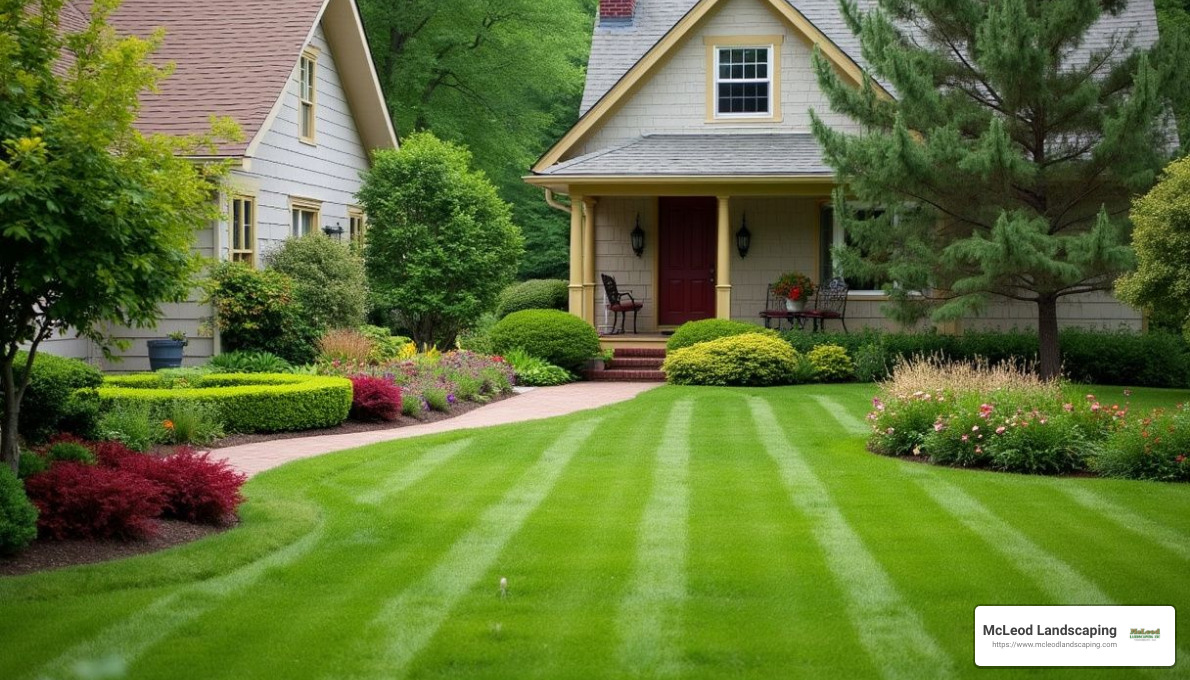
Residential landscape maintenance is a crucial aspect of keeping your home’s outdoor space healthy, vibrant, and aesthetically appealing. Whether you’re aiming to boost curb appeal or create a tranquil sanctuary in your yard, understanding its importance can make a world of difference.
My name is Scott McLeod, and I’ve been in the residential landscape maintenance industry for over three decades. With extensive experience managing and maintaining over 200 properties, I understand the intricacies of keeping landscapes pristine and beautiful.
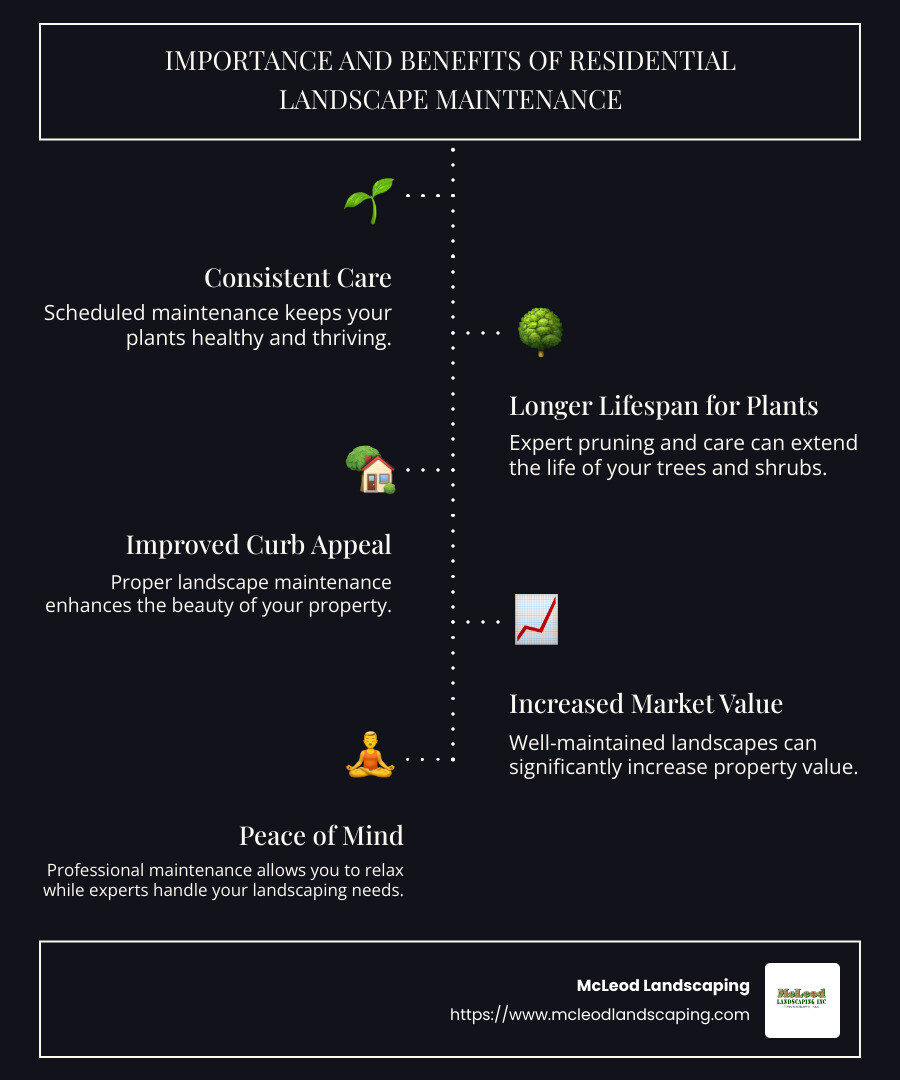
In the following sections, we’ll dig deeper into the essential tasks and monthly planning to keep your landscape in top shape all year round.
Handy residential landscape maintenance terms:
– residential landscape architects
– residential landscape contractor
– residential landscape design
Residential landscape maintenance involves a variety of tasks aimed at keeping your home’s outdoor space looking its best. It goes beyond just mowing the lawn or trimming hedges. Let’s break down what it involves and how it differs from landscape management.
At its core, residential landscape maintenance refers to the regular care and upkeep of a home’s outdoor areas. This includes:
The scope of residential landscape maintenance can be broad, covering everything from basic lawn care to more specialized tasks like soil health evaluation and irrigation system maintenance. Here’s a quick overview:
While often used interchangeably, landscape management and landscape maintenance are not the same.
Landscape Maintenance focuses on the day-to-day tasks that keep your yard looking good. Think of it as the routine care that keeps everything in check.
Landscape Management, on the other hand, involves a more strategic approach. It includes planning and implementing long-term goals for the landscape. This might involve:
Example: Imagine you have a beautiful rose garden. Maintenance would involve regular pruning, fertilizing, and weeding. Management would include planning where to plant new roses, selecting the best varieties for your climate, and designing the layout for optimal growth and aesthetics.
Scott McLeod, a seasoned professional in the field, emphasizes the importance of both aspects. “While maintenance keeps your landscape looking good day-to-day, management ensures it will continue to thrive and evolve beautifully over the years,” he says.
Proper residential landscape maintenance not only keeps your yard attractive but also increases property value, reduces the need for costly replacements, and provides a relaxing outdoor space for you and your family.
In the next section, we’ll explore a monthly landscaping calendar to help you stay on track year-round.
Keeping your landscape beautiful year-round requires careful planning and timely execution of seasonal tasks. Here’s a month-by-month guide to help you stay on track with your residential landscape maintenance.
Year-round planning is essential for a thriving landscape. It helps you anticipate what needs to be done and ensures that all tasks are completed on time. By breaking down the year into manageable monthly tasks, you can maintain a beautiful and healthy yard without feeling overwhelmed.
Each season brings unique challenges and opportunities. Let’s break it down:
In colder climates, winter is a time for preparation rather than active maintenance.
Spring is a busy season as you prepare for the growing months ahead.
Summer is all about maintenance and enjoying your outdoor space.
Autumn prepares your landscape for winter dormancy.
Here’s a more detailed monthly guide to keep you organized:
| Month | Tasks |
|---|---|
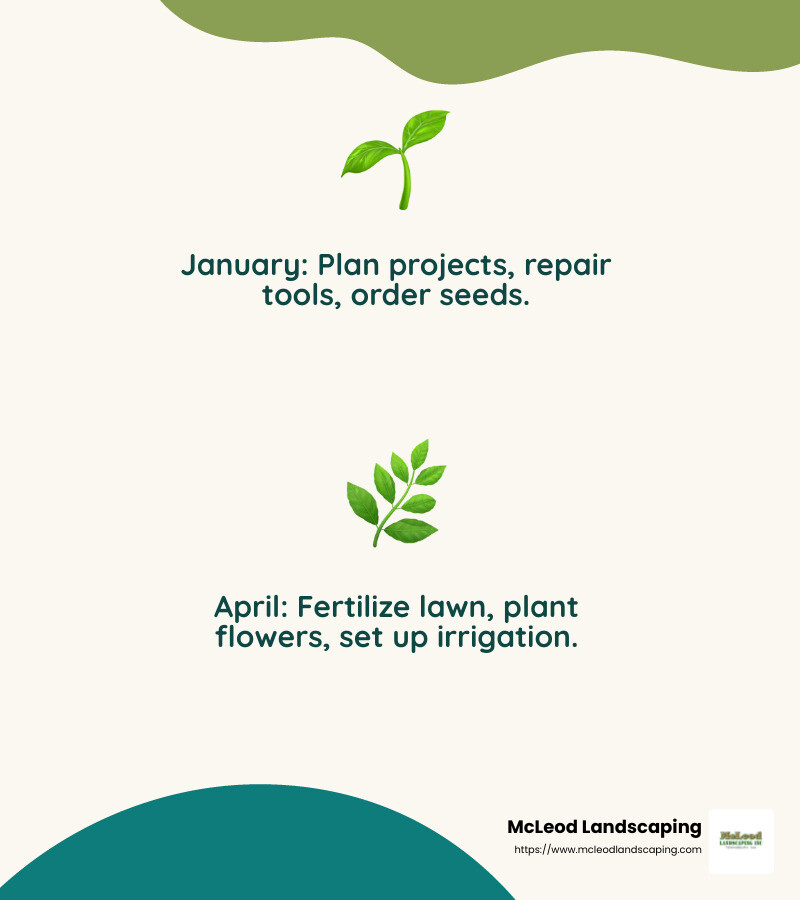
| January | Plan projects, repair tools, order seeds. |
| February | Start seeds indoors, prune trees and shrubs. |
| March | Clean up garden beds, plant early veggies. |
| April | Fertilize lawn, plant flowers, set up irrigation. |
| May | Mulch beds, check irrigation, plant summer flowers. |
| June | Weed control, mow lawn, water plants regularly. |
| July | Prune hedges, deadhead flowers, monitor pests. |
| August | Harvest early veggies, plant fall crops, maintain lawn. |
| September | Plant trees/shrubs, clean up fallen leaves. |
| October | Over-seed lawn, mulch leaves, prepare cold protections. |
| November | Wrap trees, store tools, clean up remaining leaves. |
| December | Plan for next year, enjoy the winter landscape. |
Following this monthly guide ensures that your landscape remains healthy and beautiful throughout the year.
In the next section, we’ll dive into the essential residential landscape maintenance tasks to keep your yard looking its best.
Maintaining a beautiful landscape involves more than just occasional mowing. Here are the essential residential landscape maintenance tasks that keep your yard healthy and looking its best:
Regular mowing is crucial for a lush, green lawn. It helps maintain the grass at an optimal height, which promotes healthy growth and prevents weeds.
Edging creates clean lines between your lawn and flower beds, walkways, or driveways. It gives your yard a polished look.
Pruning removes dead or overgrown branches, improving plant health and appearance.
Trimming keeps hedges and shrubs neat and encourages healthy growth.
Proper fertilization provides essential nutrients to your plants, promoting robust growth.
Consistent watering is vital for plant health, especially during dry periods.
Weeds compete with your plants for nutrients and water. Effective weed control keeps your landscape healthy.
By following these essential tasks, you ensure that your landscape remains vibrant and well-maintained year-round.
In the next section, we’ll explore smart low-maintenance landscaping ideas to make your yard easier to care for while still looking stunning.
Creating a beautiful yard doesn’t have to mean spending all your free time on maintenance. Here are some smart low-maintenance landscaping ideas that will keep your yard looking great with minimal effort.
Stone and concrete are excellent choices for low-maintenance landscaping. They add a timeless appeal to your yard and require very little upkeep.

Artificial turf is a fantastic option if you love the look of a green lawn but hate the upkeep.
Adding a water feature can bring both visual and auditory appeal to your garden.

By incorporating these low-maintenance landscaping ideas, you can enjoy a beautiful yard without dedicating every weekend to yard work. In the next section, we’ll dive into lawn care services that can further simplify your landscape maintenance.
Maintaining a lush and healthy lawn is crucial for the overall appearance and value of your property. Here are the essential lawn care services that can help keep your lawn in top shape.
Regular lawn maintenance is the backbone of a beautiful yard. This includes:
Lawn aeration involves puncturing holes in the soil to allow air, water, and nutrients to reach the roots. This process, also known as “core aeration,” is vital for:
Lawn seeding is essential for establishing a new lawn or filling in bare patches. It involves:
For an instant lawn, sod installation is a great option. It involves laying down pre-grown grass, which:
Beyond basic maintenance, lawn improvements can make a significant difference in the health and appearance of your lawn. These services include:
By incorporating these lawn care services into your routine, you’ll ensure your lawn remains healthy, vibrant, and a source of pride for years to come. Next, we’ll explore flower bed maintenance to add even more beauty to your landscape.
Flower beds can make your yard look stunning and inviting. Proper flower bed maintenance keeps your plants healthy and your landscape vibrant. Here are the key services involved:
Maintaining your flower beds goes beyond just planting flowers. It includes:
Mulching is a crucial part of flower bed maintenance. It offers several benefits:
Adding seasonal color to your flower beds can make your yard look lively and dynamic all year round. Here’s how to do it:
By focusing on these aspects of flower bed maintenance, you can create a beautiful, thriving garden that improves your home’s curb appeal. Up next, we’ll discuss the importance of hardscaping services to complement your lush landscape.
Hardscaping services add structure and functionality to your outdoor space, complementing your lush landscape. Here are the key hardscaping elements to consider:
A patio is the heart of any backyard. It’s where family and friends gather to relax, eat, and enjoy the outdoors.
Firepits make your outdoor space usable even in cooler weather. They become natural gathering spots for socializing.
Take your outdoor living experience to the next level with a complete outdoor kitchen area.
Walkways improve the functionality and beauty of your landscape.
Front stairs and steps create an inviting and safe entryway to your home.
Retaining walls add dimension, structure, and visual interest to your outdoor space.
By integrating these hardscaping services into your landscape, you can create a functional and beautiful outdoor space that improves your home’s curb appeal. Up next, we’ll discuss the importance of seasonal clean-up services to keep your landscape looking its best year-round.
Keeping your landscape looking pristine requires attention throughout the year. Seasonal clean-up services ensure your property is ready for each new season, maintaining its beauty and health. Here’s what you need to know about spring cleanup, fall cleanup, and seasonal color.
Spring is the time to refresh your landscape after winter’s dormancy.
A thorough spring cleanup sets the stage for a lush and healthy landscape, ready to flourish in the warmer months.
As leaves start to fall and the growing season winds down, it’s crucial to prepare your landscape for winter.
A well-executed fall cleanup ensures your landscape remains healthy and reduces the workload for spring.
Adding seasonal color keeps your landscape vibrant and engaging throughout the year.
Our experts design landscapes with multi-seasonal flowers, ensuring your property remains stunning all year long.
By incorporating seasonal clean-up services, you maintain your landscape’s health and beauty, ensuring it looks its best no matter the time of year. Next, we’ll explore frequently asked questions about residential landscape maintenance to address common concerns and provide further insights.
Landscape management and landscape maintenance are related but distinct concepts.
Management is about the big picture, while maintenance focuses on the regular upkeep and care of your landscape.
Landscape maintenance refers to the ongoing care and upkeep of your outdoor spaces to ensure they remain healthy, functional, and visually appealing. This includes tasks such as:
Effective residential landscape maintenance helps prevent issues like overgrowth, pest infestations, and plant diseases, ensuring your landscape remains beautiful year-round.
In the context of landscaping, the term “landscape” refers to the visible features of an area of land, including:
Landscaping involves modifying these elements to create a functional and aesthetically pleasing outdoor space. Whether it’s designing a new garden, installing an irrigation system, or maintaining existing plants, landscaping improves the overall look and usability of your property.
By understanding these key concepts, you can better appreciate the importance of residential landscape maintenance and make informed decisions about your outdoor space. Next, we’ll dive into the specifics of lawn care services to keep your grass lush and green.
Residential landscape maintenance is more than just mowing the lawn and pulling weeds. It’s about creating a beautiful, functional, and sustainable outdoor space that improves your home’s curb appeal and value. Regular maintenance ensures your landscape remains healthy, vibrant, and free of pests and diseases.
At McLeod Landscaping, we understand the importance of a well-maintained landscape. With over 30 years of experience, our team of experts is dedicated to providing top-quality services custom to meet the unique needs of each client. From landscape design and installation to comprehensive maintenance, we offer a full range of services to keep your outdoor space looking its best year-round.
Our commitment to excellence is reflected in our personalized approach, sustainable practices, and outstanding customer service. We pride ourselves on building strong, enduring relationships with our clients, ensuring their satisfaction every step of the way.
Ready to transform your outdoor space? Contact McLeod Landscaping today to schedule a consultation and take the first step towards a stunning and functional landscape.
By understanding the essentials of residential landscape maintenance, you’re better equipped to make informed decisions about your outdoor space. Whether you need regular lawn care, seasonal clean-up, or a complete landscape overhaul, McLeod Landscaping is here to help. Let us create the backdrop for your family’s best memories.
Contact McLeod Landscaping today at (978) 640-0957 or click here to schedule a consultation for retaining wall installation. Let our experienced team design and install a functional and visually appealing retaining wall that enhances your landscape.


1881 Main St Unit 1, Tewksbury, MA 01876