
Residential sod installation is a swift and efficient way to transform a patchy yard into a lush green lawn. Whether you’re looking to cover bare spots, improve drainage, or just enjoy a vibrant outdoor space, sod offers a fast and reliable solution. Simply put, sod installation involves laying pre-grown grass squares or strips over prepared soil, creating an instant lawn that’s ready to enjoy.
Top Benefits of Residential Sod Installation:
I’m Scott McLeod, and with over three decades of experience in landscaping, I’m here to guide you through the essentials of residential sod installation. My expertise lies in changing spaces precisely and efficiently, ensuring each lawn is as vibrant and healthy as possible.
Sod is a pre-grown layer of grass and soil held together by the roots or a thin layer of biodegradable material. It’s an instant solution for achieving a lush, green lawn. Instead of waiting weeks or months for seeds to grow, residential sod installation provides an immediate lawn that looks great from day one.
Selecting the right type of sod is crucial for the success of your lawn. Different grass types thrive in different climates and conditions. Here’s a quick look at some popular options:
Sod farms play a crucial role in sod production. They carefully cultivate grass to ensure it’s ready for installation. The process involves:
Choosing sod from a reputable farm ensures you get healthy, robust grass that’s ready to thrive in your yard. These farms take the guesswork out of growing grass, providing a reliable product that transforms your outdoor space quickly and efficiently.
In the next section, we’ll explore the benefits of residential sod installation and how it can improve your home’s landscape.
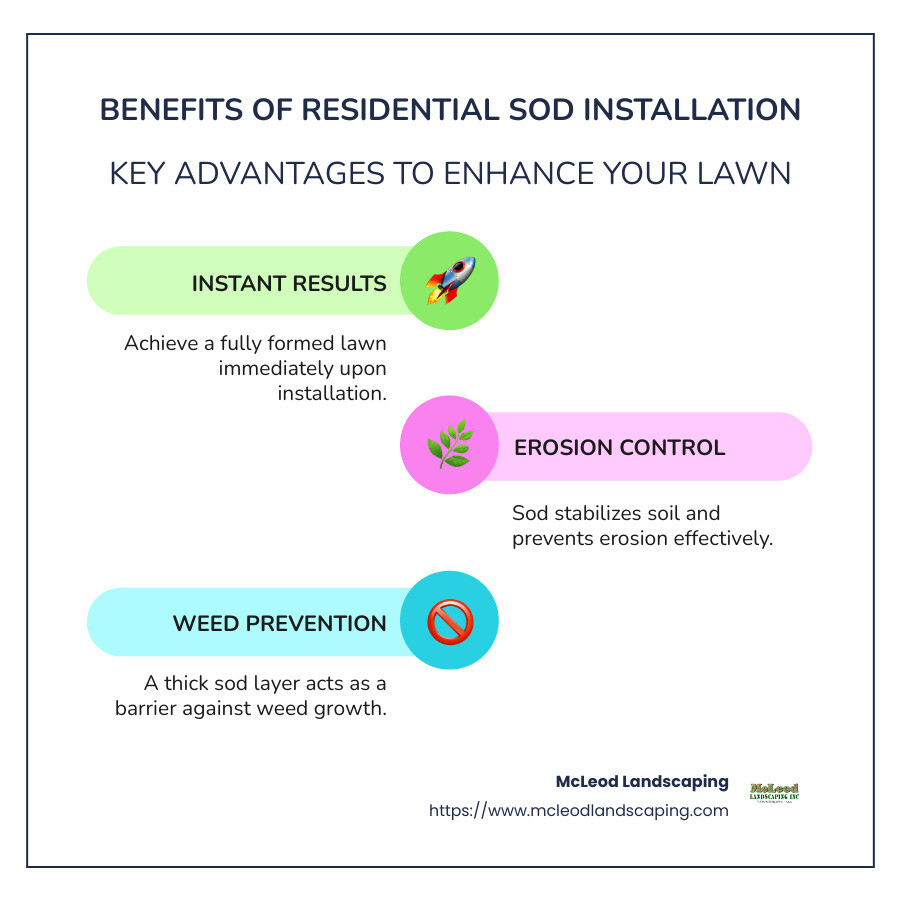
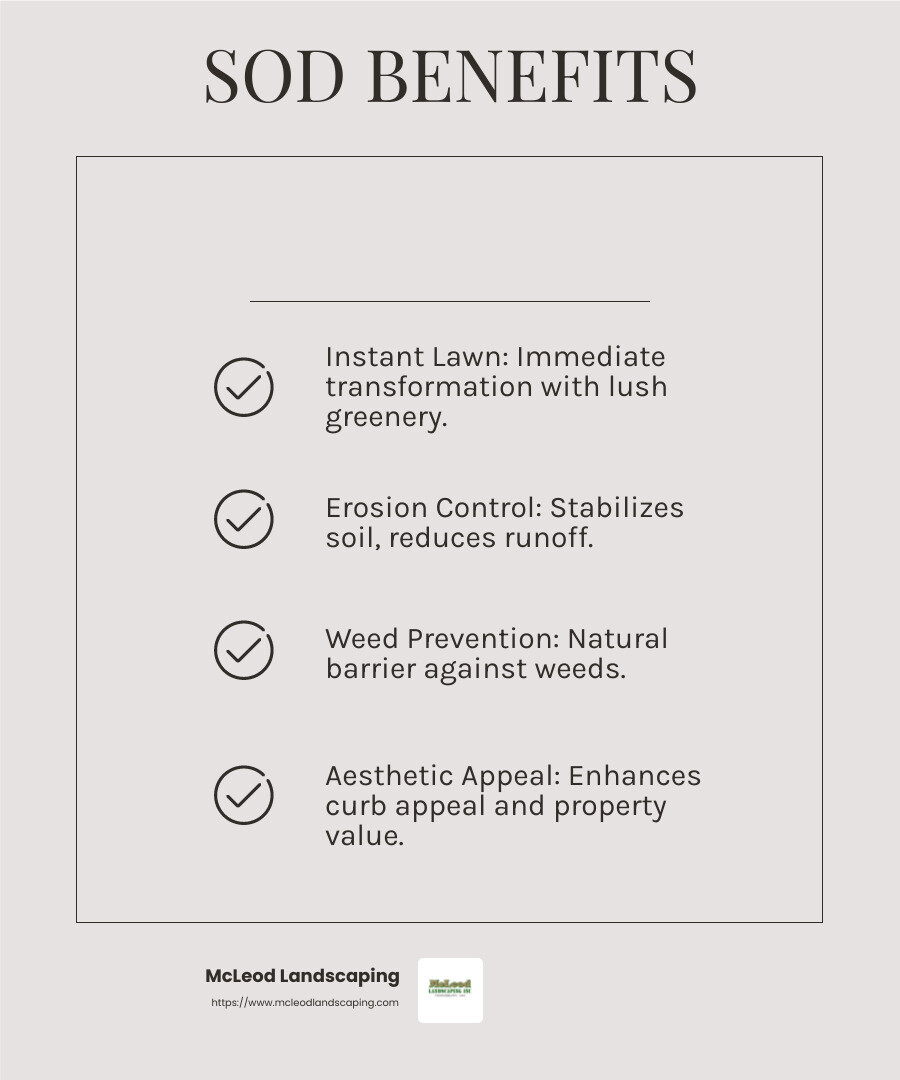
One of the biggest perks of residential sod installation is the immediate change it brings. Imagine waking up to a lush, green lawn without the wait. Unlike seeding, which can take weeks to establish, sod provides an instant carpet of grass. This is perfect for homeowners who want a quick fix for a bare yard or are preparing for an event.
Erosion Control
Sod isn’t just about looks; it’s practical too. When you lay sod, you’re effectively stabilizing the soil beneath it. This makes it an excellent solution for areas prone to erosion. The dense root system of sod holds the soil in place, reducing runoff and preventing soil loss. If your yard is on a slope, sod can be a game-changer in maintaining the integrity of your landscape.
Weed Prevention
Weeds can be a nightmare for any lawn enthusiast. Sod acts as a natural weed barrier. Its thick, healthy growth leaves little room for weeds to take hold. Unlike seeding, where gaps in growth can invite weeds, sod covers the ground completely. This minimizes weed growth and reduces the need for herbicides, keeping your lawn looking pristine with less effort.
Aesthetic Appeal
There’s nothing quite like the look of a freshly sodded lawn. It lifts the aesthetic appeal of your home, making it more inviting and well-kept. A beautiful lawn can boost curb appeal and even increase property value. Plus, it’s a great backdrop for outdoor activities and gatherings, providing a soft, even surface for play and relaxation.
Selecting the right sod for your yard is crucial for a thriving lawn. It’s not just about what looks good; it’s about what will survive and thrive in your specific environment. Let’s explore the factors to consider and explore some popular grass types for residential sod installation.
First, understand your local climate. Chicago, for instance, has hot summers and cold winters. This means you need a grass type that can withstand both extremes. Generally, cool-season grasses are best for areas with harsh winters.
Sun exposure is another key factor. Some grasses need full sun, while others can tolerate shade. Most sod varieties require at least 3-4 hours of sunlight each day. If your yard is mostly shady, consider a grass type like Fine Fescue, known for its shade tolerance.
Water availability affects your choice too. If you live in an area prone to drought or want to conserve water, choose a drought-resistant grass. These types can survive with less water, reducing your lawn maintenance efforts.
Here’s a quick guide to some popular grass types for residential sod installation:

In summary, when choosing sod, consider your local climate, the amount of sun your yard receives, and your watering capabilities. This ensures you select a grass type that will thrive in your environment, providing a beautiful and sustainable lawn.
Next, we’ll guide you through preparing your yard for sod installation, ensuring a smooth and successful process.
Getting your yard ready for residential sod installation is crucial for a healthy, long-lasting lawn. Let’s break down the steps to prepare your soil effectively.
1. Soil Testing
Before you start, test your soil. This helps you understand its pH and nutrient levels. A simple soil test kit can reveal if your soil is too acidic or alkaline and what nutrients it might lack. Ideally, do this at least a month in advance to allow time for any necessary adjustments.
2. Removing Old Grass
Clear away any existing grass and weeds. This is important because new sod needs direct contact with the soil to establish roots. Use a sod cutter or a shovel to remove the old turf. Be sure to also clear out debris like stones and branches.
3. Leveling the Ground
Level the area to ensure even sod installation. The ground should be about 1 inch below any sidewalks or patios. This prevents the edges from degrading over time. If you’re unsure, water the area and fill in any puddles with additional topsoil.
4. Soil Amendments
Based on your soil test results, you might need to amend the soil. Add lime if the soil is too acidic or sulfur if it’s too alkaline. Compost or organic matter can improve soil structure and fertility.
5. Tilling the Soil
Once amendments are added, till the soil to a depth of at least 6 inches. This loosens the soil, making it easier for the new sod to take root. A rototiller can speed up this process, breaking up compacted soil and mixing in amendments.
6. Composting
Layering compost over the area can improve soil quality. It enriches the soil with nutrients and improves its ability to retain moisture. Spread a thin layer and mix it in with the soil using a rake.
7. Fertilizing
Apply a starter fertilizer to give your new sod a nutrient boost. Choose a fertilizer with a balanced ratio of nitrogen, phosphorus, and potassium. This supports strong root development and helps the sod establish quickly.
8. pH Adjustment
If your soil test indicated pH imbalances, adjust accordingly. Most grasses prefer a pH between 6.0 and 7.0. Correcting the pH ensures that nutrients are available to the new sod.
By following these steps, you’ll create a welcoming environment for your new sod. Proper preparation is key to a lush, green lawn that improves your home’s curb appeal.
Installing sod is a straightforward process if you follow the right steps. Here’s a simple guide to help you achieve a lush, green lawn without a hitch.
Tools Needed
To get started, gather these tools:
Step 1: Measuring Your Yard
Accurate measurements are crucial. Begin by measuring the length and width of the area where you’ll lay the sod. Multiply these numbers to find the total square footage. Remember to add 5-10% extra to account for cutting and fitting around obstacles.
Step 2: Laying the Sod
Start laying sod along a straight edge, such as a driveway or sidewalk. Unroll each piece carefully, ensuring the edges are tightly butted together without overlapping. Stagger the seams in a brick-like pattern to prevent lines from forming.
Step 3: Cutting Sod
Use a sod cutter or a sharp knife to trim pieces to fit around trees, flower beds, or other obstacles. Fold the excess sod back and cut from the underside for a clean edge.
Step 4: Pressing the Sod
Once all pieces are laid, it’s time to press them into the soil. Use a lawn roller to ensure good contact between the sod and the soil, eliminating air pockets. If you don’t have a roller, a large piece of plywood can work. Walk over it gently to press the sod down.
Step 5: Watering Schedule
Watering is critical to sod success. Immediately after installation, water the sod thoroughly. The first week requires daily watering to keep the soil moist but not waterlogged. After the first week, reduce watering to every other day for the next two weeks. Gradually decrease frequency as the sod establishes.
By following these steps, you’ll set the foundation for a healthy, vibrant lawn. Up next, we’ll explore how to care for your new sod to ensure it thrives long-term.
Once your sod is laid, the real work begins. Proper post-installation care is essential to ensure your new lawn thrives. Let’s explore the key steps you need to follow.
Initial Watering
Right after your sod is installed, give it a good soak. This helps the roots start bonding with the soil. Use a sprinkler or garden hose to ensure even coverage, but be careful not to overwater — you want the soil to be moist, not soggy.
Daily Schedule
For the first week, water the sod daily. Aim for three to four short watering sessions throughout the day. This keeps the soil consistently moist, helping the roots establish. Avoid watering in the evening to prevent disease.
Long-Term Hydration
After the first week, you can reduce watering to once every other day. By the third week, water only two times a week, allowing the soil to dry slightly between sessions. Long-term, aim for about 1 to 1.5 inches of water per week, including rainfall.
First Mow
Wait until the sod is firmly rooted before your first mow — usually about three weeks after installation. Test by gently tugging on the grass; if it resists, it’s ready. Set your mower blades high, around 3 inches, to avoid stressing the grass.
Mower Height
Always keep the mower blades sharp and set to a high setting. Never cut more than a third of the grass blade at a time. This helps maintain the plant’s health and encourages deep root growth.
Fertilization Schedule
Six weeks after installation, apply a slow-release fertilizer to provide essential nutrients. Follow up with regular feedings every 6-8 weeks during the growing season. A balanced fertilizer will keep your lawn lush and green.
During the first few weeks, minimize foot traffic on your new lawn. This gives the sod time to root deeply without disturbance. After about a month, your lawn will be more resilient to normal use.
Following these steps ensures your residential sod installation thrives, giving you a beautiful, healthy lawn. Next, we’ll compare doing it yourself versus hiring professionals to see which option might be best for you.
When considering residential sod installation, one of the first questions is whether to do it yourself or hire professionals. Both options have their own costs, time investments, and pros and cons.
DIY Costs
If you choose to install sod yourself, you can save on labor costs, which can be significant. However, DIY installation involves expenses for tools and materials. You’ll need a soil test kit, a lawn roller, a sod cutter, and a rototiller, among other tools. Renting equipment like a lawn roller or sod cutter can cost between $60 to $100 per day. Additionally, purchasing the sod itself can range from $0.30 to $0.80 per square foot, depending on the grass type and supplier.
Professional Costs
Hiring professionals for sod installation might seem more expensive initially, but it often includes the cost of materials and labor in one package. On average, professional installation can range from $1,500 to $3,000 for a 1,000-square-foot lawn. This price includes everything from soil preparation to the final placement of sod. Professionals bring expertise and efficiency, potentially saving you time and the hassle of mistakes.
Time Investment
DIY installation can be time-consuming, especially if you’re not familiar with the process. It requires preparation, laying the sod correctly, and ensuring proper aftercare. For a beginner, installing sod on a 500-square-foot area could take a full weekend or more.
Professionals, on the other hand, can often complete the job in a day, thanks to their experience and specialized equipment. This means less disruption to your schedule and faster results.
Pros and Cons
DIY Pros:
DIY Cons:
Professional Pros:
Professional Cons:
Additional Expenses
Whether you go DIY or hire professionals, consider additional expenses such as soil amendments, fertilizers, and ongoing maintenance costs. Proper care is crucial for your sod to thrive, and these costs can add up over time.
Choosing between DIY and professional sod installation depends on your budget, time, and confidence in handling the project. Next, we’ll tackle some frequently asked questions about the process to help you make an informed decision.
The cost to sod 500 square feet can vary depending on several factors. Typically, purchasing sod ranges from $0.30 to $0.80 per square foot. This means the cost for the sod alone can be between $150 and $400. If you opt for professional installation, expect to pay between $750 and $1,500 for the same area. This includes labor and any additional services like soil preparation and initial watering.
Factors affecting cost include:
Proper soil preparation is crucial for successful residential sod installation. Here’s what you need to do:
Yes, removing old grass is essential before laying new sod. Here’s why:
Taking the time to prepare your yard properly will lead to a healthier, more vibrant lawn in the long run. Now that you know the basics of sod installation, let’s explore how to care for your new sod to keep it looking great.
In summary, residential sod installation offers a fast and effective way to transform your outdoor space into a lush, green lawn. By choosing the right type of sod for your climate and preparing your yard properly, you can enjoy an instant lawn that improves your property’s curb appeal and provides erosion control and weed prevention.
At McLeod Landscaping, we understand the importance of a well-maintained lawn and offer professional sod installation services to ensure your yard looks its best. With over 30 years of experience in the landscaping industry, our team is equipped to handle every aspect of your sod installation project, from selecting the right grass type to preparing your soil and laying the sod with precision.
Our commitment to quality and customer satisfaction means you can trust us to deliver exceptional results. Whether you’re looking to refresh a small patch of your yard or install sod across your entire property, we have the expertise and tools to get the job done right.
If you’re ready to improve your outdoor space with a beautiful new lawn, contact McLeod Landscaping today. Our team is here to provide you with a free consultation and estimate, helping you take the first step toward achieving the lawn of your dreams. Let us help you create an outdoor space that you and your family will enjoy for years to come.
Contact McLeod Landscaping today at (978) 640-0957 or click here to schedule a consultation for retaining wall installation. Let our experienced team design and install a functional and visually appealing retaining wall that enhances your landscape.


1881 Main St Unit 1, Tewksbury, MA 01876