
Stairs and walkways safety is crucial for preventing injuries both at home and in the workplace. Whether you’re a commercial property manager responsible for tenant safety or a homeowner wanting to ensure your family’s well-being, taking the right steps can make a massive difference. Here’s a quick snapshot of what you need to know:
Injuries from falls on stairs and walkways are incredibly common but entirely preventable. Simple actions such as maintaining handrails, ensuring proper lighting, and keeping passageways clear of obstacles can save lives.
I’m Scott McLeod, owner of McLeod Landscaping. With over 30 years of experience in landscaping and maintenance, I understand the importance of stairs and walkways safety in keeping properties safe and appealing.
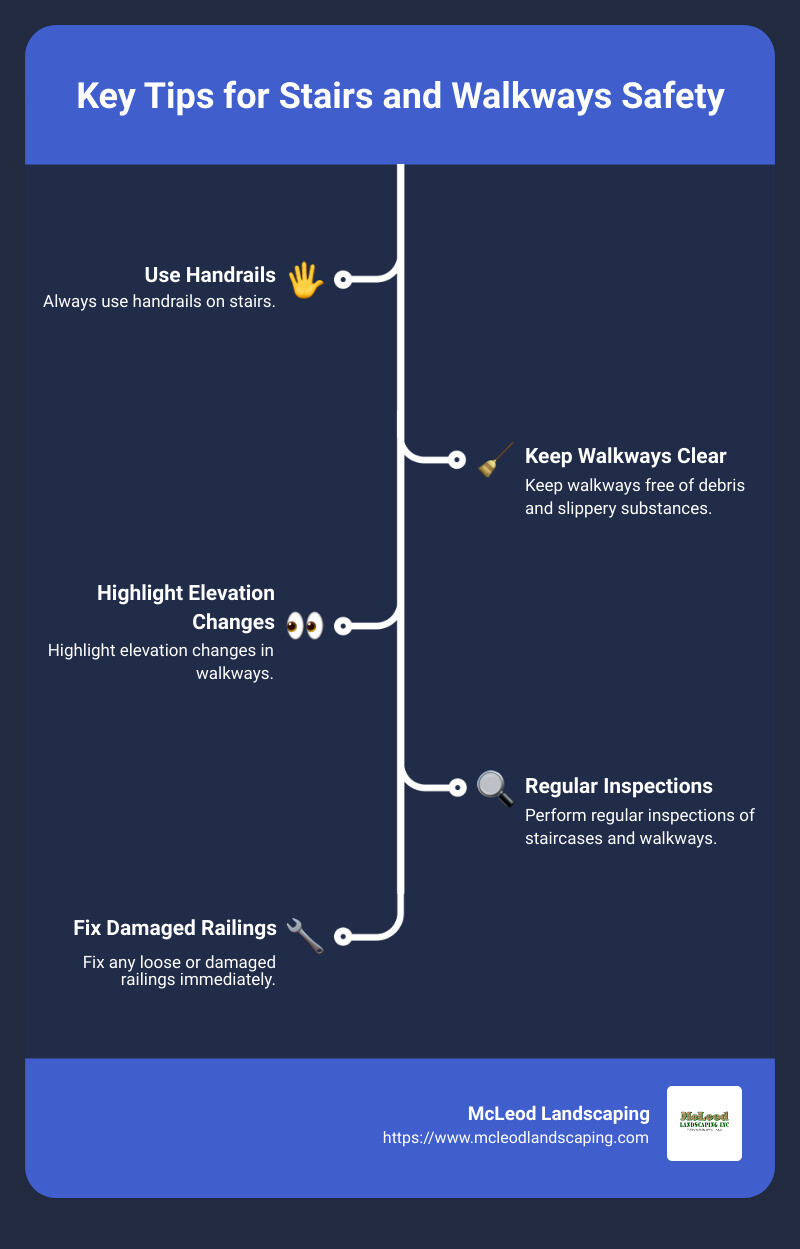
Handrails are essential for stairs and walkways safety. They provide stability and support, especially when navigating steps. Always keep one hand free to use the handrail. According to OSHA guidelines, standard handrails must be provided for stairs with four or more steps and should be 30 to 34 inches from the top of the stair tread. Loose handrails can be dangerous, so report or fix any issues immediately.
Proper lighting is critical for preventing accidents. Adequate illumination helps people see steps and obstacles clearly, reducing the risk of trips and falls. Building codes often have specific requirements for light levels in stairways and walkways. Ensure all areas are well-lit, especially during evening hours or in dimly lit indoor spaces. Always replace burned-out bulbs promptly and consider using motion-sensor lights for added safety.

Weather can significantly impact the safety of stairs and walkways. Rain, snow, and ice can create slippery surfaces. Use non-slip mats and clear ice and snow promptly. Highlight elevation changes in walkways to alert users to potential hazards. On rainy days, place non-slip mats at the foot of stairs to prevent slips.
When carrying objects on stairs, keep them close to your body and ensure they don’t obstruct your view. This practice helps maintain balance and prevents accidents. If possible, use a handrail with your free hand. Avoid carrying heavy or bulky items alone; ask for help or use equipment designed for transporting goods.
Environmental factors such as debris, tools, and equipment left in walkways can pose significant risks. Keep these areas clear at all times. Regularly inspect and clean stairways and walkways to remove any hazards. Secure electrical cords and hoses to prevent tripping, and use approved covers if they must cross walkways.
By understanding and addressing these key aspects of stairs and walkways safety, you can create a safer environment for everyone. Next, we’ll dig into specific safety measures for stairs to further improve protection.
Ensuring stair safety is crucial for preventing slips, trips, and falls. Here are some essential measures to keep in mind:
Always use handrails when ascending or descending stairs. This simple action can significantly reduce the risk of falls. According to the National Institute on Aging, holding the handrails is a vital practice, especially when carrying items.
Take one step at a time and avoid rushing. Running up or down the stairs increases the likelihood of accidents. As noted in OSHA safety guidelines, walking carefully and avoiding distractions like cell phones is critical.
Keep steps clean and clear of debris, spills, and obstacles. Regularly inspect stairs for potential hazards such as water, oil, or trash. If you spot a spill, clean it up immediately to prevent accidents.
Ensure that all carpets on stairs are securely fastened. Loose carpets can cause trips and falls. Use no-slip strips on tile and wooden floors to improve safety.
Proper lighting is essential for stair safety. Insufficient lighting can obscure hazards and increase the risk of falls. Ensure that stairways are well-lit, with switches at both the top and bottom of the stairs. Consider using motion-activated lights for added convenience and safety.
Regularly inspect stairways for any signs of damage or wear. Handrails can become loose over time and may need to be re-secured or replaced. Report any issues immediately to your supervisor or take the initiative to fix them yourself.
By implementing these key safety measures for stairs, you can create a safer environment for everyone. Next, we’ll discuss how to prevent slips, trips, and falls on walkways.
Clear Walkways
Keep all walkways clear of debris and potentially slippery substances like ice, snow, water, oil, or grease. A clean walkway prevents accidents and ensures safe passage.
Non-Slip Mats
Use non-slip mats in areas prone to wet conditions. These mats provide extra grip and reduce the risk of slipping. For example, placing mats at entrances can help dry shoes and prevent water from being tracked inside.
Weekly Inspections
Conduct weekly inspections of walkways to identify and address hazards promptly. Look for cracked pavement, loose tiles, or any other potential dangers. Regular checks help catch problems early before they cause accidents.
Clutter-Free
Maintain a clutter-free environment. Tools, equipment, and other materials should be stored properly and not left in walkways. Good housekeeping practices are essential for preventing trips and falls.
Secure Treads
Ensure all treads on stairs and walkways are secure. Loose treads can cause slips and falls. Regularly check and fix any that are not firmly in place.
Repaint Handrails
Repaint handrails to keep them visible and in good condition. Brightly colored handrails can alert people to their presence and encourage their use. Visibility is key to safety.
Weather Precautions
Take extra precautions during adverse weather conditions. Use ice melt products or sand on walkways in winter to prevent ice buildup. Highlight elevation changes in walkways to make them plainly visible, especially for those unfamiliar with the area.
By following these tips, you can significantly reduce the risk of slips, trips, and falls on walkways. Next, we’ll explore best practices for employers and employees to ensure ongoing safety.
Ensuring stairs and walkways safety is a shared responsibility between employers and employees. Simple practices can make a big difference. Here are some essential tips:
Perform regular inspections of all stairways and walkways. Look for hazards like loose treads, clutter, or poor lighting. Fixing small issues before they become big problems can prevent injuries.
Example: Many companies schedule a weekly inspection to check for hazards. This proactive step helps catch issues early, ensuring a safer environment for everyone.
Encourage employees to report any hazards immediately. Set up a simple reporting system like a digital form or a dedicated email inbox. Respond quickly to these reports to show that safety is a priority.
Quote: “When someone reports a stair hazard, your team will get notified right away. Once you investigate the report, you can implement a solution that either controls or eliminates the issue altogether.” –
Foster a culture where safety is top of mind for everyone. Regularly communicate the importance of safe practices through meetings, posters, and reminders.
Fact: Falls on staircases cause over 20,000 injuries per year in the U.S. Regular reminders can help keep safety top of mind and reduce accidents.
Clearly define and enforce safety rules. Make sure everyone knows the importance of using handrails, keeping stairs clear, and not running on stairs.
Example: Incorporate stair safety rules into your site’s code of conduct. This ensures everyone understands and follows the guidelines.
Conduct regular safety audits to ensure compliance with safety standards. Use checklists to cover all aspects of stairs and walkways.
Checklist Example: OSHA recommends using a checklist to inspect floors, stairs, and other openings, ensuring they meet safety regulations.
Provide ongoing education and training on stairway and walkway safety. Use toolbox talks, safety meetings, and online resources to keep everyone informed.
Tip: Don’t assume everyone knows how to safely use stairs just because it’s a common activity. Regular training sessions can reinforce safe behaviors and reduce accidents.
By implementing these best practices, you can create a safer workplace for everyone. Next, we’ll look at the safety equipment and tools that can improve stairs and walkways safety.
When it comes to stairs and walkways safety, the right equipment and tools can make a huge difference. Here are some essential items to consider:
Non-slip mats are crucial for preventing slips, especially in areas prone to water, oil, or other slippery substances. Place these mats at entrances, exits, and other high-traffic areas. They provide extra grip and can drastically reduce the risk of falls.
Tip: Use mats that are easy to clean and maintain. Regularly check for wear and tear and replace them as needed.
Proper lighting is essential for visibility on stairs and walkways. Poor lighting can lead to missed steps and serious injuries. Make sure all areas are well-lit, with light switches at both ends of stairways and hallways.
Fact: Consider using motion-activated lights that automatically turn on when someone walks by. This can be particularly useful in stairwells and pathways.
Handrails are your first line of defense against falls on stairs. Ensure that all handrails are secure and meet safety standards. Handrails should be 30 to 34 inches from the top of the stair tread, measured in line with the face of the riser.
Tip: Regularly inspect handrails for looseness and make repairs immediately. Don’t assume someone else will fix it.
Weather conditions can make stairs and walkways hazardous. Use weatherproofing measures to keep these areas safe. In winter, treat walkways with ice melt products or sand to prevent slips. For rainy conditions, ensure surfaces are non-slip and have proper drainage.
Tip: Highlight elevation changes in walkways to alert people to potential hazards. This is especially useful for those unfamiliar with the area.
Clear signage is vital for guiding people safely through your premises. Use signs to indicate slippery areas, elevation changes, and other potential hazards. This helps in preventing accidents and keeping everyone informed.
Tip: Use durable, weather-resistant materials for outdoor signage to ensure they remain visible and effective in all conditions.
By incorporating these tools and equipment, you can improve stairs and walkways safety and create a safer environment for everyone. Next, we’ll explore how McLeod Landscaping’s commitment to safety ensures continuous improvement and hazard reporting.
At McLeod Landscaping, we understand that stairs and walkways safety is crucial for everyone who visits your property. Our commitment to safety is unwavering and forms the foundation of our services. We believe that a safe environment is not just about compliance, but about caring for the well-being of every individual.
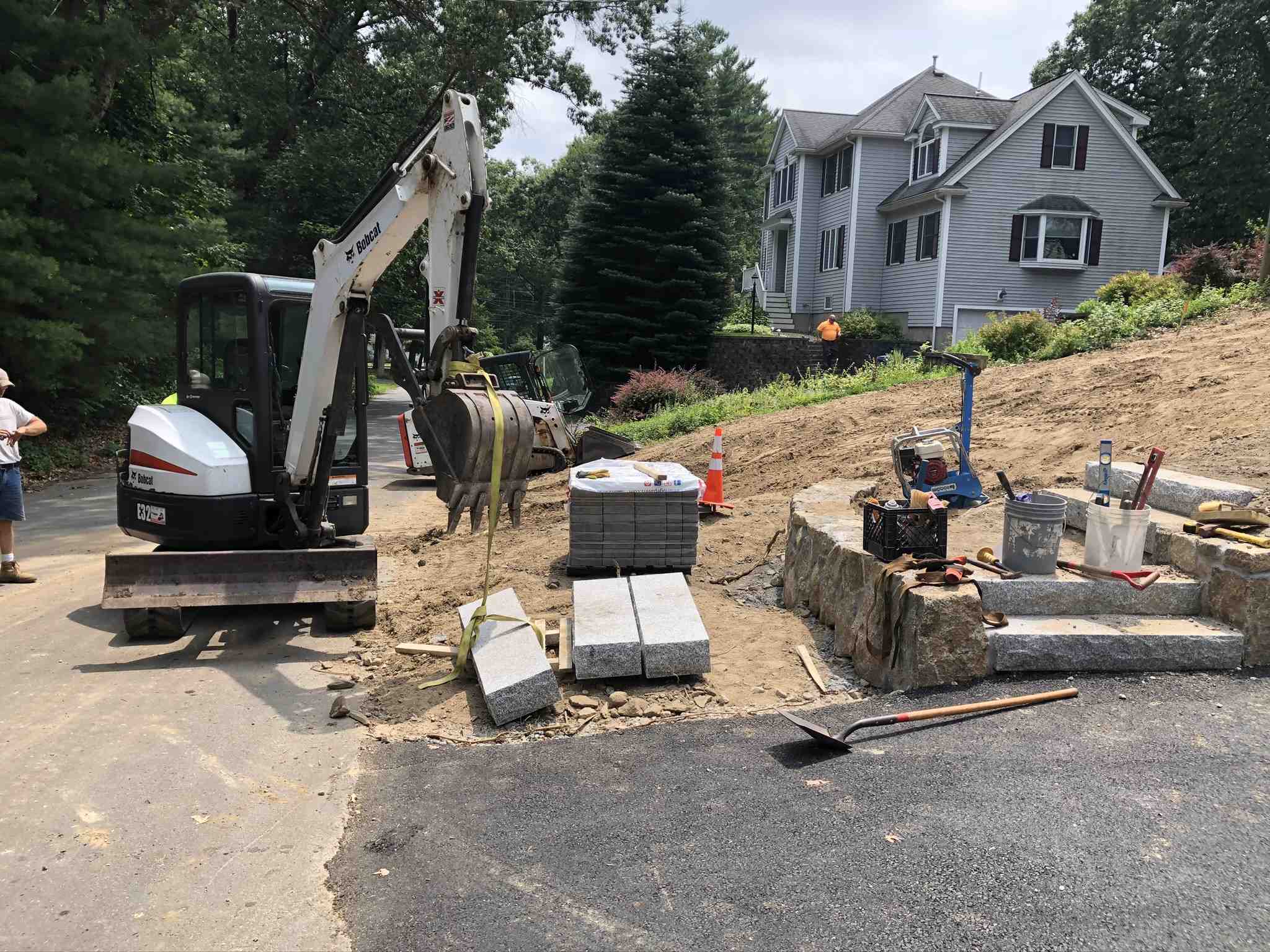
Our team is dedicated to implementing the highest safety standards in every project. Whether it’s installing new walkways or maintaining existing staircases, we prioritize safety at every step. We use materials and techniques that minimize risks and improve durability, ensuring your stairs and walkways are safe for daily use.
Safety is not a one-time effort; it’s an ongoing process. We regularly review and update our practices to incorporate the latest safety innovations and industry standards. For example, we perform weekly inspections of all staircases and walkways, ensuring they are free of hazards and well-maintained. This proactive approach helps us identify potential issues before they become serious problems.
We encourage a culture of safety where everyone feels responsible for reporting hazards. Our easy-to-use digital reporting system ensures that any issues are quickly addressed. When a hazard is reported, our team investigates and implements solutions promptly. This not only addresses immediate risks but also fosters a proactive safety culture.
Creating a safe environment is a shared responsibility. By working together and staying vigilant, we can prevent accidents and ensure that everyone can move safely through your property.
For more information on how we can help improve the safety of your stairs and walkways, visit our Walkway Installation Services page.
Thank you for trusting McLeod Landscaping with your safety needs. Let’s make safety a priority, together.
Contact McLeod Landscaping today at (978) 640-0957 or click here to schedule a consultation for retaining wall installation. Let our experienced team design and install a functional and visually appealing retaining wall that enhances your landscape.


1881 Main St Unit 1, Tewksbury, MA 01876