
Winter property maintenance involves preparing and protecting your building systems, landscape, and structures against cold weather damage through preventive tasks and ongoing monitoring. Here are the essential winter maintenance priorities:
Interior Focus:
– Heating systems: Professional tune-ups, filter changes, thermostat settings
– Pipe protection: Insulation, drip methods, cabinet doors open
– Air sealing: Caulking gaps, weatherstripping, draft detection
Exterior Focus:
– Roof & gutters: Debris removal, ice dam prevention, snow load management
– Landscape prep: Dormant pruning, mulching, sprinkler winterization
– Safety measures: Walkway de-icing, snow removal plans, emergency supplies
As one homeowner finded, “It’s easy to forget, or ignore, the importance of preparing your house for winter—staying cozy inside sounds better than braving the cold, but winter maintenance helps you avoid expensive repairs.”
The stakes are high. Between 2011 and 2021, major power outages in the U.S. increased 64 percent due to extreme weather. Around 31 percent of home heat escapes through walls and ceilings without proper insulation. With the right preparation, you can reduce heating costs by up to 30 percent while preventing costly damage.
Winter brings frozen pipes, ice dams, heating failures, and slip hazards that can cost thousands in repairs. But a systematic approach turns these threats into manageable tasks spread across fall and winter months.
I’m Scott McLeod, and over three decades of providing winter property maintenance services in the Merrimack Valley, I’ve seen how proper preparation saves property owners both money and stress. My team at McLeod Landscaping has helped hundreds of commercial and residential clients protect their investments through comprehensive seasonal care.
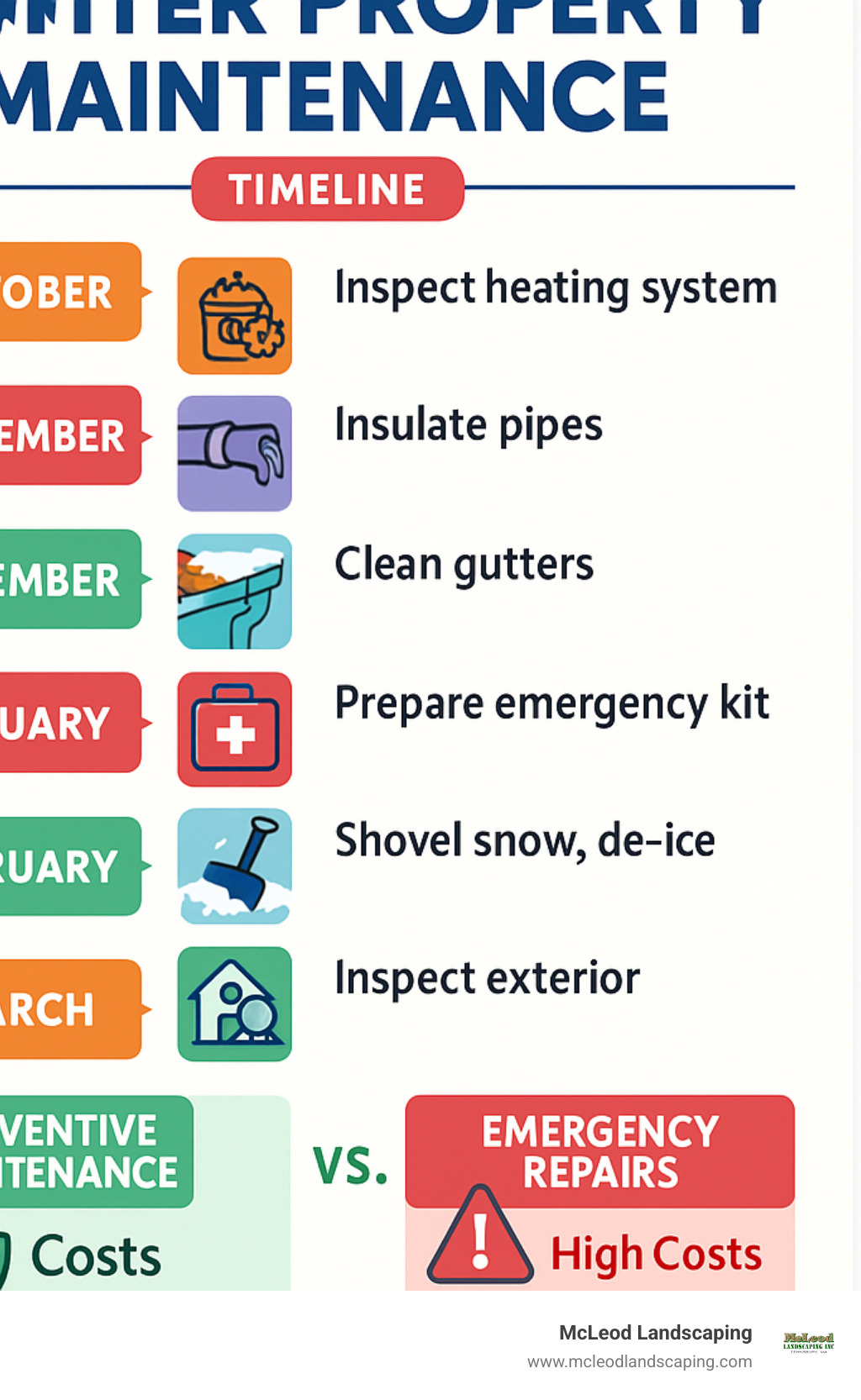
Winter property maintenance vocab to learn:
– commercial snow plowing contracts
– ice removal company
– best commercial sidewalk snow removal equipment
After three decades of helping property owners in the Merrimack Valley, I’ve learned that winter property maintenance success comes down to one thing: having a clear plan and sticking to it. We’ve developed this comprehensive checklist based on countless emergency calls that could have been prevented with proper preparation.
Safety always comes first. Every winter, we see property owners and tenants injured by preventable hazards—icy walkways, faulty heating systems, and structural damage from neglected maintenance. These accidents aren’t just painful; they’re expensive and often legally problematic for property owners.
Energy savings make the effort worthwhile. The Department of Energy estimates that proper weatherization and insulation can slash your heating and cooling costs by up to 30 percent. When you’re facing those peak winter heating bills, that’s real money back in your pocket.
Cost avoidance is where smart property owners really win. I’ve seen too many emergency calls where a small preventive measure could have saved thousands. A simple heating system tune-up prevents furnace replacements. Basic pipe insulation prevents devastating water damage. The math is simple—prevention costs pennies compared to emergency repairs.
The key is breaking everything into manageable interior and exterior tasks, then tackling them systematically. Some tasks you can handle yourself, while others require professional expertise. Knowing the difference between DIY maintenance and professional services saves both time and money.
| Task Type | DIY Time Investment | DIY Cost Range | Professional Time | Professional Cost Range* |
|---|---|---|---|---|
| Interior Quick Wins | 4-8 hours | $50-$200 | 2-3 hours | $150-$450 |
| Exterior Essentials | 6-12 hours | $100-$400 | 3-5 hours | $300-$900 |
| System Maintenance | Not recommended | N/A | 2-4 hours | $200-$600 |
*Average prices based on internet research; actual costs vary significantly by region and property size.
Understanding your responsibilities as a homeowner versus landlord also matters. Homeowners handle everything themselves or hire professionals directly. Landlords need clear lease language about who handles what—from snow removal to detector testing to emergency repairs.
Starting inside makes sense because these tasks deliver immediate comfort while you’re working in a warm environment. Plus, many interior improvements directly impact your energy bills.
Thermostat programming sets the foundation for everything else. Keep your home at least 55°F when you’re away, and 65°F when you’re home. I can’t stress this enough—never shut off heat completely, even for short trips. Burst pipes from freezing can cause water damage costing thousands of dollars.
Detector testing becomes critical during winter months when heating systems work overtime. Test smoke and carbon monoxide detectors monthly, and remember that all smoke detectors expire after 10 years based on their manufacturing date. Winter heating increases both fire and carbon monoxide risks significantly.
Insulation depth in your attic should measure 10-14 inches deep with at least an R-38 rating (R-49 in northern regions like Massachusetts). If you can see your ceiling joists, you need more insulation. Think of inadequate insulation as literally watching money fly out through your roof.
Ceiling fan reversal is a simple trick that many people forget. Switch fans to clockwise rotation on low speed during winter. This pushes warm air down from the ceiling, letting you lower your thermostat while maintaining the same comfort level.
Pipe lagging protects your most vulnerable plumbing. Wrap exposed pipes with tubular insulation, especially those running along exterior walls, in basements, crawl spaces, and unheated areas. During cold spells, open cabinet doors under sinks to circulate warm air around pipes.
Humidifier setup makes winter air more comfortable while helping you feel warmer at lower temperatures. Maintain humidity between 30-50 percent to prevent dry air issues and reduce heating needs.
The drip method works during extreme cold spells—when temperatures drop below 15°F for over 24 hours, leave faucets dripping slightly to keep water moving through pipes.
For commercial property managers, our Commercial Property Maintenance Checklist Template ensures nothing gets overlooked across multiple buildings.
Moving outside, these tasks protect your building envelope and preserve your landscape investment through winter’s challenges.
Gutter cleaning must happen before the first freeze. Clogged gutters create ice dams that force water under roof shingles, causing expensive interior damage. Clean gutters handle normal snow melt and winter precipitation without problems.
Downspout direction matters more than most people realize. Ensure downspouts direct water at least 5 feet away from your foundation. This prevents basement flooding and foundation damage during spring thaw when large volumes of water need somewhere to go.
Roof shingle inspection should happen from the ground using binoculars. Look for loose, cracked, or missing shingles. Check gutters for granules or debris that indicate roof damage above. Schedule professional repairs before winter storms arrive and make problems worse.
Chimney sweeping and inspection should happen annually if you use your fireplace. Creosote buildup increases fire risk, while blocked flues can cause dangerous carbon monoxide buildup inside your home.
Door sweeps and weather-stripping create your first line of defense against drafts. Install or replace door sweeps and apply fresh weatherstripping around windows and doors. Use a lit candle or incense stick to detect air leaks—the flame will flicker near problem areas.
Lawn preparation includes final mowing, leaf removal, and aeration before ground freeze. Aeration improves soil permeability, allowing air, water, and nutrients to reach grass roots during winter dormancy.
Mulch application of 2-3 inches around trees, shrubs, and beds improves soil fertility while retaining moisture. Mulching also insulates plant roots against freeze-thaw cycles that can damage root systems.
Dormant pruning removes storm damage risks while improving spring growth. Trim trees and shrubs during dormancy before budding begins. Focus on branches near structures, power lines, or showing signs of disease.
Walkway de-icing preparation means stocking ice melt and sand for safety. A 50-50 mix of rock salt and sand provides effective traction without overusing salt near vegetation and concrete surfaces.
Let me share something that keeps me up at night during my 30+ years in the business: getting that emergency call about burst pipes flooding a basement. Winter property maintenance isn’t just about comfort—it’s about protecting your property from thousands of dollars in preventable damage.
Water damage from frozen pipes ranks as the most expensive winter disaster we see. When water freezes, it expands with incredible force, splitting pipes like they’re made of paper. I’ve seen single pipe bursts cause $15,000 in damage over a weekend. The good news? This is completely preventable with the right approach.
Your heating system becomes your property’s lifeline during winter months. A well-maintained boiler or furnace runs efficiently and safely, while a neglected system can fail when you need it most. We recommend professional tune-ups annually for oil systems and every three years for gas systems. Think of it as insurance—a small investment that prevents major headaches.
HVAC filters deserve special attention during heating season. Replace them every 1-3 months when your system runs constantly. Dirty filters don’t just reduce efficiency—they can cause complete system failures during those bitter cold snaps when repair technicians are swamped with calls.
Air leaks are like leaving money on your doorstep for the wind to blow away. Here’s a simple trick I teach homeowners: wet one hand and run it around windows, doors, and ductwork joints. You’ll immediately feel air movement at problem spots. For a more dramatic test, hold a lit incense stick near potential gaps and watch the smoke dance.
Spray foam becomes your best friend for sealing gaps around electrical outlets, plumbing penetrations, and recessed lights. These seemingly tiny gaps add up to major heat loss—imagine cutting a hole the size of a basketball in your wall and leaving it open all winter.
Attic insulation upgrades deliver immediate results. Upgrade from basic R-19 batts to at least R-38 in our Massachusetts climate (R-49 is even better). Proper attic insulation prevents those expensive ice dams and dramatically reduces heating costs. It’s one of those improvements where you’ll actually feel the difference.
Water heater maintenance often gets forgotten until something goes wrong. Flush your unit every two years to control mineral buildup that reduces efficiency and shortens its lifespan. It’s a simple task that extends equipment life significantly.
Thermostat settings require a balancing act between comfort and cost. Maintain 55-65°F when away from home—this range prevents pipe freezing while conserving energy. Never shut off heat completely, even in vacant properties.
For detailed pipe protection strategies, check out this scientific research on adding some insulation to your pipes.
Your heating system works overtime during New England winters, making proper preparation absolutely essential. I’ve seen too many properties suffer because owners skipped this crucial step.
Professional furnace inspection should happen before cold weather arrives, not after your system fails on the coldest day of the year. Technicians check heat exchangers, gas connections, electrical components, and safety controls. They’ll also clean components and test system operation under load conditions.
Heat pump clearance requires ongoing attention throughout winter. Keep vegetation at least 18 inches away from outdoor units, and regularly remove debris, leaves, and snow buildup. Blocked airflow forces your system to work harder and reduces efficiency when you need it most.
Annual service benefits extend far beyond just preventing breakdowns. Professional technicians catch small problems before they become expensive failures and optimize system performance to reduce energy costs throughout winter. It’s preventive care that pays for itself.
Filter schedules become critical during heavy-use winter months. Mark your calendar or set phone reminders to change filters monthly. Dirty filters are the leading cause of heating system problems I see in the field.
Draft testing for fireplaces protects against heat loss through unused chimneys. Test fireplace dampers and close them when not in use. Consider using a chimney balloon to block cold air infiltration through unused fireplaces—it’s like plugging a giant hole in your house.
Protecting pipes requires both smart preparation and knowing what to do when temperatures plummet. This is where a little knowledge prevents major disasters.
Opening cabinet doors under sinks during cold spells circulates warm air around vulnerable pipes. This simple step prevents many freeze-ups in those problem locations where pipes run along exterior walls.
The strategic drip technique works when temperatures drop below 15°F for extended periods. Leave faucets dripping slightly—moving water resists freezing much better than standing water. Yes, it wastes a little water, but it’s nothing compared to the cost of burst pipe repairs.
Know your main shut-off location and ensure it’s accessible year-round. In freeze emergencies, quick water shut-off prevents extensive damage. I recommend showing every family member where it’s located and how to operate it.
Recognizing burst pipe warning signs can save thousands in damage. Watch for banging or whistling noises, slow trickle or no water flow, bubbling sounds in toilets, frost on pipe exteriors, or visible ice-cracked pipes. When you notice these signs, act immediately.
Non-toxic antifreeze applications become essential for vacant properties. Drain water systems completely and add non-toxic propylene glycol antifreeze to traps, toilets, and appliances. Never use automotive antifreeze—it’s toxic and highly corrosive to plumbing systems.
Air sealing delivers the most immediate comfort improvements and energy savings of any winter property maintenance task. It’s also one of the most cost-effective improvements you can make.
Proper caulking technique starts with using exterior-grade caulk formulated for cold temperatures. Cheap caulk cracks when temperatures drop, undoing all your hard work. Apply steady pressure and smooth with your finger for professional-looking results.
Expanding foam treatment works perfectly for larger gaps around plumbing and electrical penetrations. Don’t overfill—this stuff expands significantly and can damage surrounding materials if you get carried away.
Professional blower door audits quantify exactly where your home loses energy. These comprehensive energy audits use specialized equipment to measure air leakage and identify problem areas you might miss. The investment in professional assessment often pays for itself in energy savings.
Quality weatherstripping makes a dramatic difference around windows and doors. Install EPDM rubber weatherstripping that remains flexible in cold temperatures and provides excellent sealing year after year.
Learn more about systematic maintenance approaches in our guide to Benefits of Commercial Property Maintenance.

Your property’s exterior faces winter’s harshest challenges—heavy snow loads, ice formation, and storm damage that can cost thousands to repair. After three decades of helping Merrimack Valley property owners through New England winters, I’ve learned that outdoor winter property maintenance is all about staying ahead of Mother Nature.
Roof rakes become your best friend during heavy snow seasons. Use them to safely remove snow from the ground, focusing on that critical first 3-4 feet from your roof edge. This is where ice dams love to form, and trust me, you don’t want to deal with water backing up under your shingles.
Ice dams are sneaky troublemakers. They happen when your roof’s upper sections are warmer than the edges, causing meltwater to refreeze at the eaves. The good news? Proper attic insulation and ventilation prevent this temperature difference from occurring in the first place.
Gutter guards might seem like a luxury, but they’re actually a smart investment. They dramatically reduce debris buildup year-round and help prevent those pesky ice dams from forming. Your future self will thank you when you’re not climbing ladders to clean gutters as often.
Tree trimming before winter storms isn’t just about aesthetics—it’s about protecting your property. Dead, diseased, or overhanging branches become dangerous projectiles when loaded with heavy snow and ice. I’ve seen too many beautiful old trees cause expensive damage simply because they needed attention before winter arrived.
Snow removal planning separates the prepared from the panicked. Mark your driveway edges with reflective stakes now, before that first snowfall. Develop clear priorities: emergency access routes first, then main walkways and driveways. Your snow removal crew (or your future snow-shoveling self) will appreciate the guidance.
Slip hazards are liability nightmares waiting to happen. Stock up on ice melt and sand before you need them—trust me, everyone else will be buying them during the first storm. Apply treatments before storms when possible for much better effectiveness.
Driveway maintenance often gets overlooked until spring reveals winter’s damage. Seal those asphalt cracks with rope-like crack filler now. Water infiltration followed by freeze-thaw cycles turns small cracks into major pavement repairs.
Commercial properties need professional-grade planning. Large lots require equipment staging areas, priority clearing routes, and 24/7 monitoring capabilities that go far beyond residential needs.
Don’t forget about your irrigation system—follow this scientific research on winterize a sprinkler system to prevent costly freeze damage that could leave you with expensive spring repairs.
Gutters might not be glamorous, but they’re absolutely critical for protecting your property’s foundation and structure. I’ve seen minor gutter issues turn into major basement flooding disasters.
Timing your leaf removal makes all the difference. Clean gutters thoroughly after leaves finish falling but before that first freeze hits. Use a sturdy ladder, heavy gloves, and a small trowel to remove all debris. This isn’t a job to rush—taking shortcuts here often means emergency repairs later.
Stubborn downspout blockages require more than just water pressure. A plumber’s snake reaches deep clogs that garden hoses can’t touch. These tools are inexpensive and can save you from calling in professionals for simple blockages.
Heat cables offer a high-tech solution for properties that struggle with recurring ice dams. These systems create channels for meltwater drainage, but they’re best installed by professionals who understand proper placement and electrical requirements.
Storm monitoring becomes routine once you’ve experienced gutter damage firsthand. Check your gutters during and after winter storms for ice buildup or structural damage. Heavy snow loads can literally pull gutters away from buildings, creating expensive repairs and potential safety hazards.
Your roof works 24/7 protecting everything beneath it, but most property owners never give it a second thought until problems appear. Professional inspection prevents small issues from becoming major disasters.
Ground-level shingle inspection can reveal a lot without climbing on your roof. Look for loose, cracked, or missing shingles from your yard. Check gutters for excessive granule accumulation—this often indicates shingle deterioration happening above.
Flashing deserves special attention because it’s where most roof leaks actually start. Examine flashing around chimneys, vents, and roof penetrations carefully. Damaged flashing during winter storms often leads to expensive interior water damage.
Chimney caps and screens might seem like minor details, but they prevent major problems. Secure caps keep water out, while intact screens prevent animals from moving in during cold months. Both are much easier to fix now than during a winter storm.
Creosote buildup increases fire risk significantly, especially during peak fireplace season. Professional cleaning removes this highly flammable substance and ensures safe operation throughout winter.
Annual chimney sweeps do more than just cleaning—they inspect for structural damage, proper draft operation, and safety issues that could endanger your family. Schedule this before you need your first fire of the season.
Your landscape represents a significant investment that needs protection through winter’s harsh conditions. Smart preparation now prevents expensive replacement costs come spring.
Dormant pruning timing gives trees and shrubs their best chance for vigorous spring growth. Prune during dormancy when pests and diseases are inactive, reducing stress on plants while improving their structure and health.
Mulch application provides insulation for plant roots while improving soil health. Apply 2-3 inches around trees and shrubs, but keep mulch away from trunks to prevent pest and disease issues.
Fall aeration improves soil oxygen and water penetration during winter dormancy. Complete this before ground freeze to give your lawn the best foundation for spring recovery.
Outdoor furniture storage prevents weather damage that’s completely avoidable. Clean furniture thoroughly before storing to prevent mold and deterioration during storage months.
Ice-melt versus sand creates an ongoing debate among property owners. Sand provides excellent traction without chemical damage to vegetation, while ice-melt works better in severe conditions. Choose pet-safe formulations when using chemical treatments.
Snow flag markers might seem unnecessary until your first major snowfall. Install reflective markers to identify hidden landscape features, sprinkler heads, and property boundaries. Your snow removal crew will appreciate the guidance, and you’ll avoid expensive landscape damage.
Our Commercial Snow Removal Services include comprehensive landscape protection strategies that keep your investment safe all winter long.
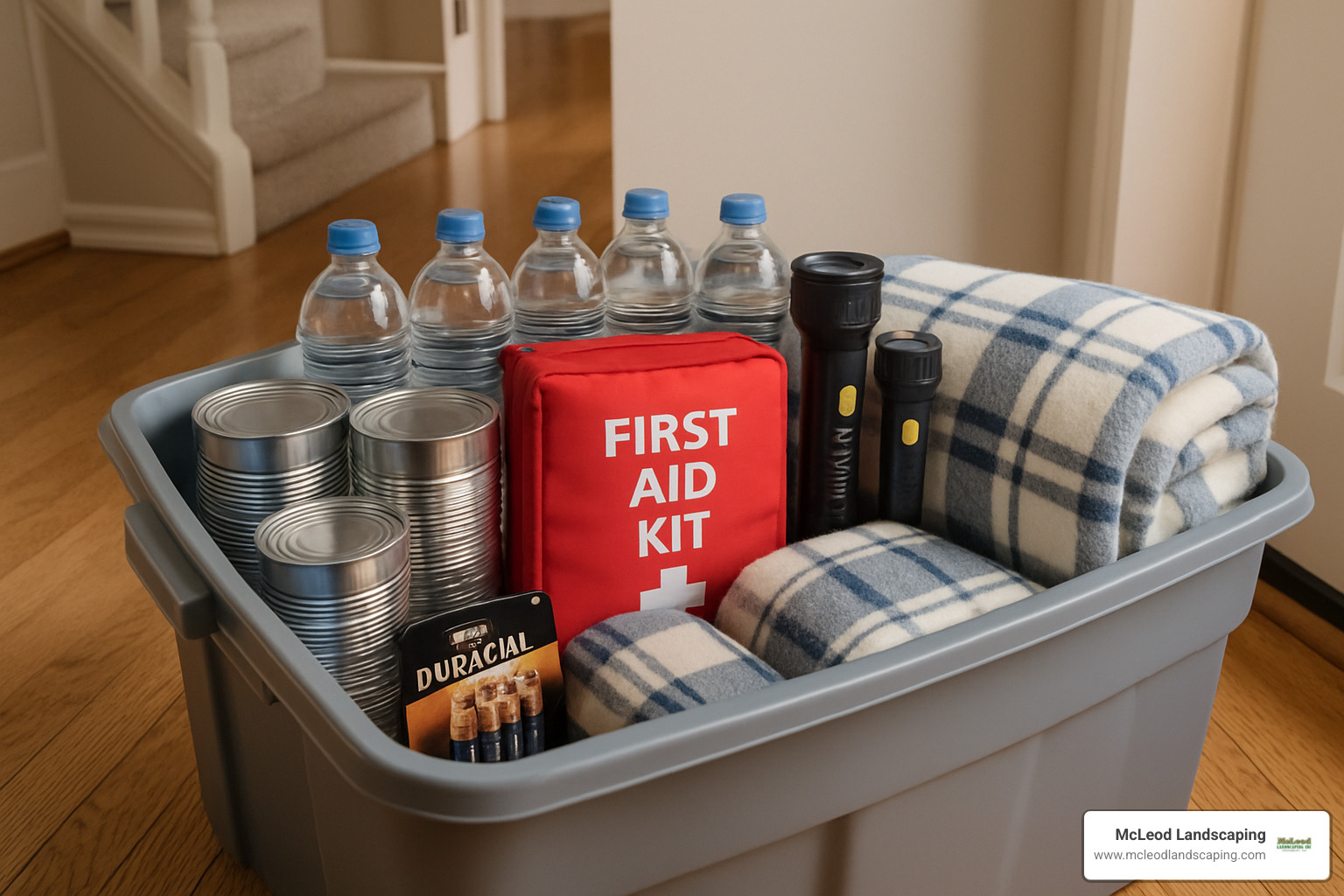
When winter storms hit the Merrimack Valley, they don’t ask permission first. Over the past decade, major power outages have increased by 64% due to extreme weather, making emergency preparedness a necessity rather than a luxury for winter property maintenance.
I’ve seen too many property owners caught off guard by sudden blizzards or ice storms that knock out power for days. The difference between a minor inconvenience and a major disaster often comes down to preparation. Whether you’re managing your own home or rental properties, having the right supplies and communication plans can save thousands in damage and keep everyone safe.
Storm kit essentials form your first line of defense. A well-stocked 72-hour emergency kit should include water, non-perishable food, warmth sources, lighting, and communication tools. Think of it as insurance you hope never to use.
Generator safety requires special attention. If you’re using portable generators, always operate them outdoors to prevent carbon monoxide poisoning. Many property owners invest in manual transfer switches for safe electrical connections during outages.
Emergency preparedness extends beyond personal safety to property protection. Emergency contact lists should include utility companies, heating contractors, plumbers, and property managers. Post these numbers in easily accessible locations where tenants or family members can find them quickly.
For rental property owners, tenant communication becomes crucial before winter arrives. We recommend sending detailed newsletters explaining heating schedules, damage detection tips, and emergency procedures. Clear communication prevents panic and protects your investment.
Vacant property winterization presents unique challenges. These properties can’t rely on occupants to monitor conditions or respond to emergencies. They require systematic preparation and regular check-ins throughout winter months.
Documentation of all winterization steps protects you legally and helps with insurance claims if problems arise. Photos and detailed checklists prove you took reasonable precautions to protect the property.
The key to storm survival is having supplies ready before you need them. When everyone else is fighting over the last flashlight at the hardware store, you’ll be warm and prepared at home.
Water storage tops the priority list. Plan for one gallon per person per day for drinking, cooking, and basic hygiene needs. Include water purification tablets as backup—you never know how long municipal water might be affected.
Non-perishable food should require no cooking or refrigeration. Stock canned goods, energy bars, dried fruits, and nuts. Don’t forget a manual can opener—electric ones won’t help during power outages.
Warm blankets and extra clothing can mean the difference between comfort and misery. Wool and synthetic materials retain warmth even when damp, making them superior to cotton for emergency situations.
LED flashlights with extra batteries provide reliable lighting without fire risk. Include headlamps for hands-free operation when you need to work with both hands. Avoid candles during emergencies—the fire risk isn’t worth it.
Charged power banks keep phones and emergency devices operational. Solar chargers provide renewable power for extended outages. Your phone might be your only connection to emergency services.
Hand-crank weather radios deliver emergency information without relying on batteries or power. Many models include phone charging capabilities, making them doubly valuable during extended outages.
Vacant properties face winter’s worst without anyone inside to monitor conditions or respond quickly to problems. They require extra protection and regular attention throughout the cold months.
System drainage becomes essential for long-term vacant properties. Shut off the main water supply and drain all plumbing fixtures, water heaters, and appliances. Take photos of valve positions—you’ll thank yourself when spring restoration time arrives.
Utility management depends on vacancy duration and local requirements. For short-term vacancies, maintain minimal heat at 55°F. For extended vacancies, complete system winterization might be more economical.
Non-toxic antifreeze application protects traps, toilets, and appliances in fully winterized systems. Use propylene glycol antifreeze specifically designed for plumbing—never use automotive antifreeze, which is toxic and corrosive.
Temperature monitoring systems provide peace of mind for heated vacant properties. Smart thermostats with remote monitoring alert you to heating failures before pipes freeze.
Continued snow removal from walkways and emergency access routes remains legally necessary even for vacant properties. Slip and fall liability doesn’t disappear when properties are empty.
Lease addendums should clearly specify winter maintenance responsibilities before tenants move in. Clear expectations prevent disputes when snow starts flying.
Winter maintenance disputes can freeze landlord-tenant relationships faster than January temperatures. Clear communication and written agreements prevent most problems before they start.
Snow removal responsibilities need specific definition in lease agreements. Specify who handles walkways, driveways, and parking areas, including timing requirements and safety standards. Don’t leave room for interpretation when liability is at stake.
Detector maintenance assignments should be crystal clear. Assign smoke and carbon monoxide detector testing and battery replacement duties with specific schedules. Provide written procedures so tenants know exactly what to do.
Mold prevention education helps tenants understand their role in maintaining proper ventilation and humidity control. Winter condensation problems often result from tenant behavior rather than building defects.
Emergency information sheets should include main water shut-off locations and emergency contact numbers. When pipes burst at 2 AM, tenants need to act quickly to minimize damage.
For comprehensive maintenance planning, explore our Commercial Property Maintenance Contracts guide, which covers systematic approaches to year-round property protection.
Some winter property maintenance tasks require professional expertise and specialized equipment:
Load-bearing Snow Assessment: Professional evaluation prevents roof collapse from excessive snow loads. Structural engineers can assess safe limits for your specific building.
Steep Roof Safety: Roof work on steep or high buildings requires professional safety equipment and expertise. Don’t risk injury for DIY savings.
Electrical System Issues: Heating system electrical problems need licensed electrician attention. Carbon monoxide and fire risks make DIY electrical work dangerous.
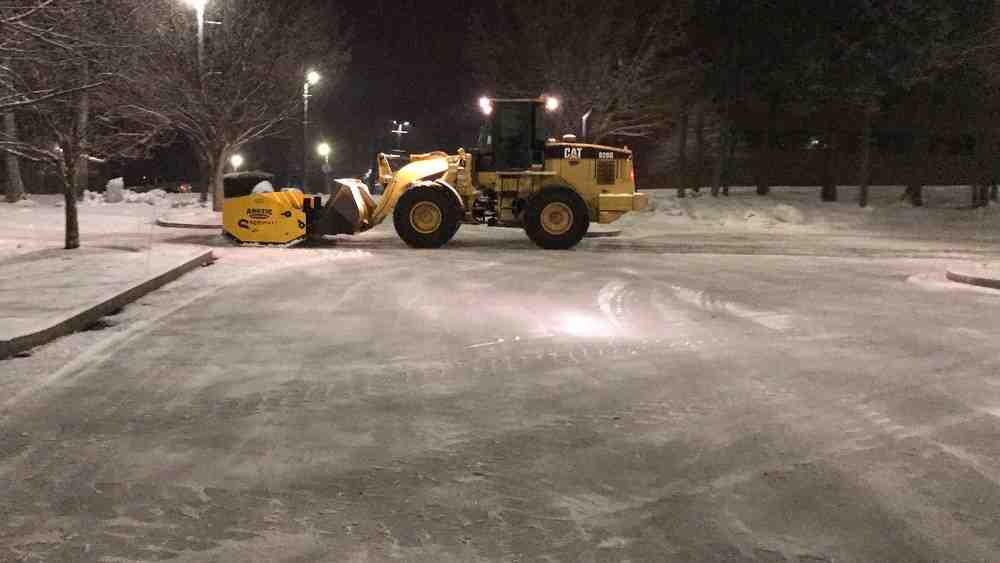
Specialized Equipment Needs: Professional snow removal equipment handles large areas efficiently and safely. Commercial properties especially benefit from professional service.
Local Code Variations: Building codes and winterization requirements vary by municipality. Professionals understand local compliance requirements.
Service Cost Considerations: Average professional service costs vary widely based on complexity and regional factors. Basic maintenance costs less than emergency repairs.
Environmental De-icer Choices: Professionals can recommend eco-friendly de-icing alternatives that protect vegetation and water systems while maintaining safety.
Professional snow removal requires careful vendor selection:
Responsiveness Standards: Evaluate average response times and deployment procedures. Quality vendors often begin preparation before snowfall starts.
GPS Tracking Systems: Modern snow removal companies use GPS tracking and weather monitoring to optimize service delivery and verify completion.
Safety Record Verification: Review safety training, insurance coverage, and accident history. Professional crews follow strict safety protocols.
Equipment List Review: Verify backup equipment availability and maintenance standards. Equipment failures during storms can leave you unprotected.
Our Commercial Snow Removal Company services demonstrate professional standards and capabilities.
Massachusetts winter conditions require specific preparation strategies:
Insulation R-Value Requirements: Our northern climate requires R-49 attic insulation compared to R-38 in milder regions. Higher R-values provide better energy savings.
Precipitation Pattern Considerations: New England’s variable winter weather—from ice storms to heavy snow—requires flexible preparation strategies.
Winterization Timing: Start preparation in October, complete by November. Spring de-winterization typically occurs in March-April depending on weather patterns.
Local Bylaw Compliance: Municipalities throughout the Merrimack Valley have specific requirements for snow removal timing, sidewalk clearing, and ice management.

Average prices shown are internet estimates and may vary significantly. High-end figures represent premium services and can be 3× median costs. Contact us for actual pricing specific to your property needs.
Over three decades of helping clients with winter property maintenance, I’ve heard these questions countless times. Here are the answers that can save you from costly mistakes and winter headaches.
Start your preparation in early October—seriously, don’t wait until you see frost warnings on the weather app! I’ve watched too many property owners scramble when the first cold snap hits unexpectedly.
October gives you time to schedule heating system inspections before HVAC contractors get swamped with emergency calls. It’s also when you can still work comfortably outside, cleaning gutters and checking roof shingles without numb fingers.
Complete all major tasks by mid-November. This timing protects you from New England’s unpredictable weather patterns. Some years we’ve seen significant snow before Thanksgiving, and you don’t want to be insulating pipes or fixing loose shingles when there’s already ice on your roof.
Early preparation also means you can address problems properly instead of applying quick fixes. Finding a loose shingle in October means a simple repair. Finding it during a January ice storm means potential water damage and emergency service calls.
Keep your indoor temperature at 55°F minimum—this is the magic number that prevents most pipe freezing disasters. I’ve seen too many vacation-home owners try to save money by shutting off heat completely, only to return to burst pipes and thousands in water damage.
But here’s what many people don’t realize: indoor temperature doesn’t tell the whole story. Pipes in unheated basements, crawl spaces, or exterior walls can still freeze even when your living space feels comfortable.
For those vulnerable areas, pipe insulation and heat tape become essential even when you’re maintaining proper indoor temperatures. During extreme cold snaps (below 15°F for extended periods), open cabinet doors under sinks to circulate warm air around pipes.
The drip method works too—leave faucets dripping slightly during severe cold. Moving water resists freezing much better than standing water. Yes, it wastes a little water, but it’s nothing compared to the cost of repairing burst pipe damage.
Look for thick ice ridges along your roof edges—they often look like frozen waterfalls hanging from your gutters. While icicles can be normal, massive ice buildup signals trouble brewing above.
Check inside your home for warning signs. Water stains on ceilings or walls near exterior walls are red flags. If you notice water dripping from ceiling fixtures or see discoloration around windows, you likely have ice dam issues.
Ice dams form when heat escapes through your attic, melting snow on the upper roof. That meltwater runs down and refreezes at the colder roof edges, creating a dam that backs water under your shingles.
Address ice dams immediately—they won’t fix themselves and only get worse with more snow and freeze-thaw cycles. Use a roof rake to carefully remove snow from the first few feet of your roof edge. Never climb on an icy roof or try to chop ice with tools—you’ll damage shingles or hurt yourself.
The real solution involves proper attic insulation and ventilation to prevent the temperature differential that causes ice dams in the first place. This is exactly the kind of systematic approach that makes winter property maintenance so valuable for protecting your investment.
Winter property maintenance isn’t just about checking items off a list—it’s about protecting your biggest investment while keeping your family or tenants safe and comfortable. After three decades of helping property owners steer Massachusetts winters, I can tell you that the difference between a smooth winter and a crisis often comes down to simple preparation done at the right time.
The math is pretty straightforward: spending a few hundred dollars on fall preparation beats spending thousands on emergency repairs. But beyond the money, there’s something to be said for sleeping peacefully during winter storms, knowing your heating system is tuned up, your pipes are protected, and your roof can handle whatever Mother Nature throws at it.
Safety always comes first in everything we do. Whether we’re helping a commercial client develop ice management protocols or showing a homeowner how to properly clear snow from their roof, protecting people matters more than protecting property. That said, proper winter property maintenance accomplishes both goals beautifully.
What I’ve learned over the years is that the best approach combines your own efforts with professional expertise where it makes sense. You can absolutely handle interior tasks like changing filters and checking detectors. But when it comes to climbing on icy roofs or diagnosing heating system problems, calling in the pros isn’t just smart—it’s essential.
The single-source approach has served our clients well throughout Andover, Billerica, Burlington, Carlisle, Chelmsford, Concord, Lowell, Tewksbury, Westford, and Wilmington. Instead of juggling multiple contractors for different winter challenges, having one experienced team handle everything from landscape protection to snow management just makes life easier.
Winter in New England will always bring surprises, but proper preparation turns those surprises from disasters into minor inconveniences. Whether you’re managing a commercial property or protecting your family home, the principles remain the same: plan ahead, maintain regularly, and don’t hesitate to call for help when you need it.
Ready to tackle this winter with confidence? We’re here to help with comprehensive Commercial Snow Removal and maintenance services custom to your specific needs. Because when winter arrives—and it always does—you’ll be glad you prepared.
Contact McLeod Landscaping today at (978) 640-0957 or click here to schedule a consultation for retaining wall installation. Let our experienced team design and install a functional and visually appealing retaining wall that enhances your landscape.

1881 Main St Unit 1, Tewksbury, MA 01876