
Brick veneer steps offer a transformative way to improve your home’s curb appeal while providing durability and cost-effectiveness that outshines traditional materials. Here’s what you need to know:
Key Benefits of Brick Veneer Steps:
What Are Brick Veneer Steps?
Brick veneer steps use a thin layer of real clay brick (typically 1/2″ to 5/8″ thick) applied over a concrete base with mortar and grout. This creates the appearance of solid brick construction at a fraction of the weight and cost.
Whether you’re upgrading existing concrete steps or planning new construction, brick veneer provides that striking visual effect that improves your property’s value and creates a welcoming entrance.
As Scott McLeod, owner of McLeod Landscaping with over 30 years of hardscaping experience, I’ve seen how brick veneer steps can transform a property’s exterior and significantly boost curb appeal. My team has helped countless homeowners and commercial property managers achieve professional results with this versatile material.
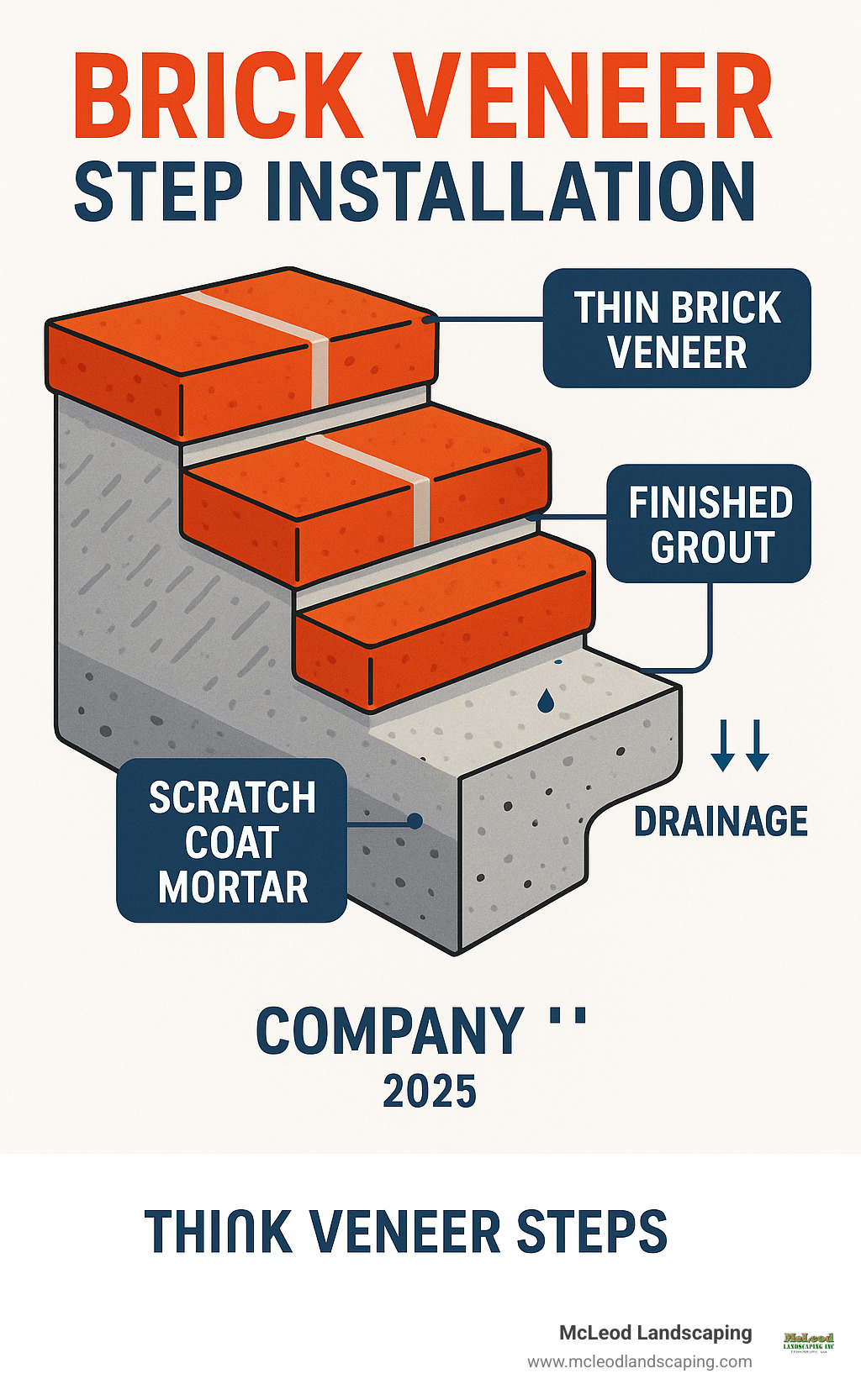
Picture this: you’re excited to transform your plain concrete steps into stunning brick veneer steps, but you skip the planning phase and dive right in. Three hours later, you’re standing in your driveway with half the materials you need, a trowel that’s too small for the job, and concrete that looks like it hasn’t been cleaned since the Clinton administration. Trust me, we’ve all been there!
Proper planning is what separates a weekend warrior success story from a “honey, we need to call a professional” moment. Taking time to gather the right materials, assemble proper tools, and prepare your existing steps will save you time, money, and quite a few colorful words later.

Here’s where the fun begins – choosing the star of your show! Thin brick veneer is your best friend for step installations. Unlike full-sized bricks that can weigh down your structure, thin brick gives you all the beauty at just 1/2″ to 5/8″ thick. It’s lightweight enough to handle easily, yet durable enough to withstand years of foot traffic and weather.
The style options are endless, and honestly, this is where many homeowners get wonderfully overwhelmed. Classic red brick never goes out of style – it’s the reliable friend of the masonry world. If you’re drawn to character and charm, tumbled finishes create that weathered, lived-in look that makes new steps feel like they’ve been welcoming guests for decades. For those leaning toward contemporary design, modern grey or carbon tones offer a sleek, sophisticated appearance that pairs beautifully with today’s architectural trends.
Here’s a pro tip from our years of experience: don’t be afraid to mix colors! Some of our most stunning projects have incorporated multiple brick tones, creating depth and visual interest that makes your steps truly unique.
Now, let’s talk about the supporting cast – your mortar and grout. Think of mortar as the strong handshake between your brick and steps, while grout is the finishing touch that defines your pattern. For exterior brick veneer steps, we always recommend high-quality exterior mortar. Type N mortar works well for most residential applications, offering good bonding strength and workability. However, if your steps face harsh winters or extreme weather, Type S mortar provides extra durability – it’s like choosing the heavy-duty option when you know you’ll need it.
Don’t forget about sealant – this protective layer is your insurance policy against moisture, staining, and Mother Nature’s mood swings. Quality sealant applied every 2-3 years will keep your brick veneer steps looking fresh and prevent costly repairs down the road.
When sourcing materials, here’s a lesson learned the hard way: order 10-15% more than you calculate. Nothing kills project momentum like running out of matching brick veneer halfway through. It’s better to have extras for future repairs than to find your exact color was discontinued.
For more detailed guidance on material selection and professional installation, check out our hardscape construction services.
Having the right tools transforms your brick veneer steps project from a wrestling match into a satisfying dance. You wouldn’t try to cut a steak with a butter knife, so don’t tackle masonry with inadequate tools.
Your tape measure and level are your best friends – accuracy here prevents headaches later. A trowel becomes an extension of your hand for applying mortar, while a 5-gallon bucket and mortar mixing paddle ensure you get that perfect pancake-batter consistency every time.
Here’s where many DIYers stumble: cutting brick veneer. A wet saw or tile cutter makes clean, precise cuts that fit perfectly. Trying to break brick by hand or using the wrong cutting tool creates jagged edges that scream “amateur hour.”
For spacing, 3/8″ tile spacers or square dowel rods keep your brick lines straight and consistent. Trust us on this – eyeballing it rarely works out well! A grout bag might seem like overkill, but it makes filling joints so much cleaner than trying to squeeze mortar from a makeshift container.
Safety gear isn’t optional – safety glasses, gloves, and a dust mask protect you from flying debris and harmful dust. Your family wants you back in one piece!
Finally, don’t forget cleanup tools: a stiff bristle brush for removing excess mortar and plastic sheeting with painter’s tape to protect surrounding areas from splatter.
This is where patience pays off big time. Your brick veneer steps are only as good as the foundation they’re built on, so proper preparation isn’t just recommended – it’s absolutely critical.
Start by measuring everything twice. Get the width, depth, and height of each step and riser. These measurements determine your material needs and help you avoid that sinking feeling of coming up short.
Next comes the deep clean. We’re talking about a thorough surface cleaning that removes dirt, debris, loose paint, and any old coatings. A pressure washer works wonders here, but make sure everything dries completely before moving forward.
Crack repair is non-negotiable. Even small cracks can become big problems once freeze-thaw cycles get involved. Use quality concrete patch or repair compound to create a smooth, stable surface. Your veneer will only be as strong as what it’s attached to.
Here’s a common question: can you install brick veneer steps over existing surfaces? The answer depends on what you’re working with. Concrete steps are perfect candidates, provided they’re structurally sound and properly prepared. However, exterior wooden steps are a different story entirely. Wood expands and contracts with weather changes, which can cause your beautiful new veneer to crack and pop off. If you’re dealing with wooden steps, consider upgrading to a concrete base first.
For complex preparation work or structural concerns, our team has extensive experience with exterior brick stairs projects and can ensure your foundation is ready for long-lasting results.
Here’s where the magic happens – changing your ordinary steps into stunning brick veneer steps that’ll make your neighbors stop and stare! This is honestly my favorite part of any hardscaping project. There’s something deeply satisfying about watching a plain concrete step evolve into something that looks like it belongs in a magazine.
The key to success here is patience and working systematically. We always recommend tackling your brick veneer steps in manageable sections, starting with the risers (those vertical faces) before moving to the treads (the horizontal surfaces you actually step on). This approach keeps you organized and helps maintain consistent quality throughout the project.
If you’re a visual learner like many of our clients, you might want to check out this helpful how-to apply brick veneer to steps video before diving in. Sometimes seeing the process in action makes all the difference!
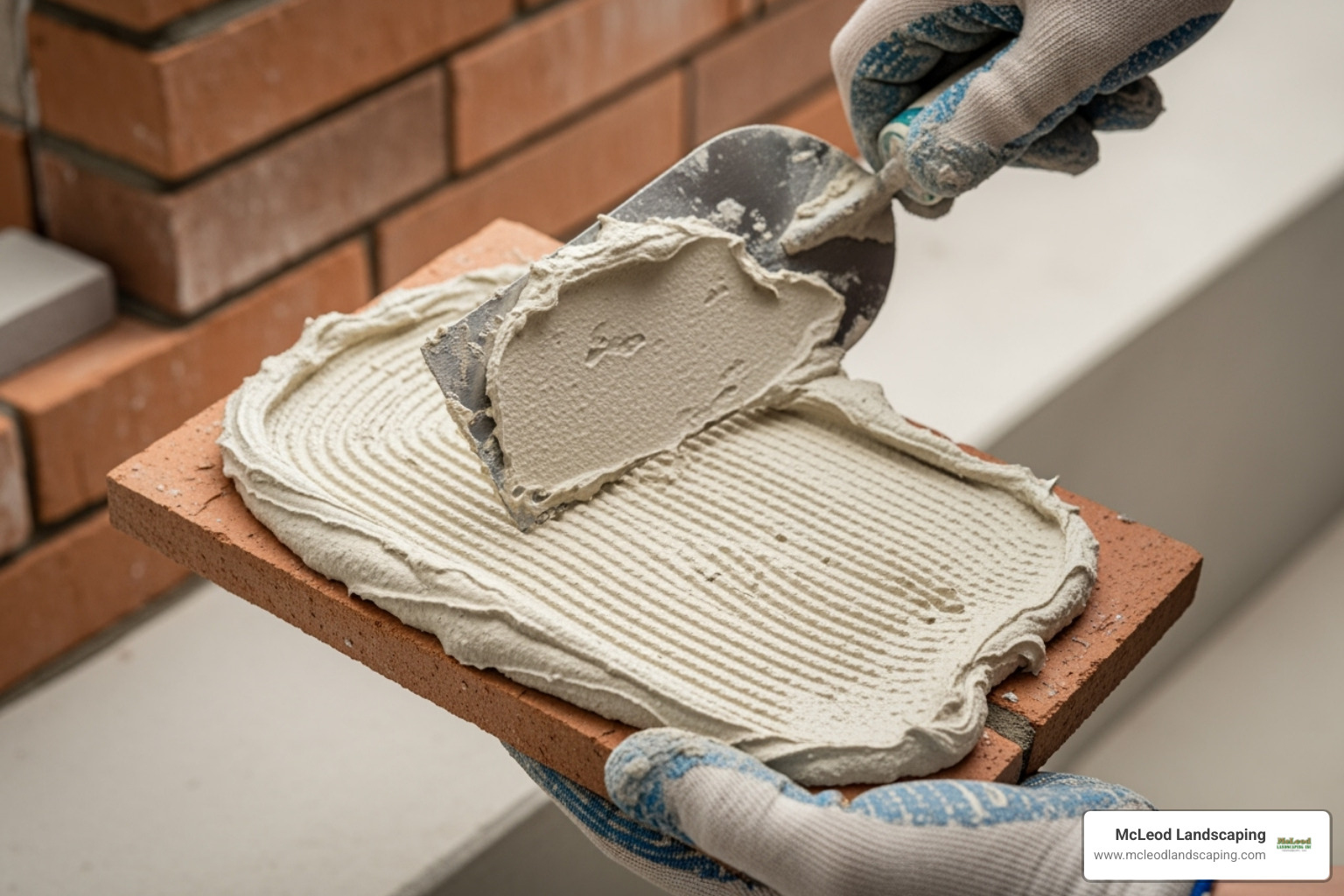
Getting your mortar consistency just right is absolutely crucial – and honestly, it’s where I see most DIYers stumble. You’re aiming for something that looks and feels like thick pancake batter. Not the thin, runny kind that spreads all over your griddle, but the hearty, stick-to-your-ribs variety that holds its shape.
Too runny, and your mortar will sag and slide down the step. Too thick, and you’ll be wrestling with it like you’re trying to spread cold peanut butter. Trust me, I’ve been there, and it’s not fun!
Using a drill with a mixing paddle in your 5-gallon bucket is the way to go here. Mix your mortar dry first, then add water slowly – and I mean really slowly. It’s much easier to add more water than to try to fix a soupy mess.
Once you’ve got that perfect consistency, it’s time for what we call “buttering” the brick. Apply a thin, even coat of mortar to the back of each brick veneer piece, keeping it about 1/4″ to 3/8″ thick. Some folks prefer to apply a scratch coat to the concrete step first, then butter the brick. Either method works fine – just stay consistent with whichever approach you choose.
Here’s where your patience really pays off. Always start from the bottom step and work your way up – this prevents you from accidentally bumping into freshly set bricks below (learned that lesson the hard way on my first project!).
When working on risers, begin from one side and methodically work across. For treads, start at the back edge and work toward the front. As you place each brick, press it firmly into that mortar bed. Give it a gentle wiggle – not enough to disturb the mortar, just enough to ensure good contact and squeeze out any air pockets.
This is where those 3/8″ square dowel rods become your best friend. Place them between each brick to maintain consistent spacing. It’s like having a built-in measuring system that ensures your brick veneer steps look professionally installed.
Your level should practically become an extension of your hand during this process. Check every brick both horizontally and vertically. Small adjustments are easy right after placement, but once that mortar starts to set, you’re committed.
Don’t worry about cutting bricks – it’s inevitable. A wet saw with a masonry blade gives you the cleanest cuts, though a tile snap cutter works for straight cuts if that’s what you have available. Just remember those safety glasses – flying brick chips are no joke!
The waiting game begins now. Your mortar needs 24-48 hours to set properly before you can start grouting, depending on humidity and temperature. You’ll know it’s ready when it crumbles like dry sand when touched, rather than feeling soft or sticky.
Mix your grout to that same thick pancake batter consistency we talked about earlier. Load your mortar piping bag about halfway – any more and it becomes unwieldy, any less and you’ll be constantly refilling.
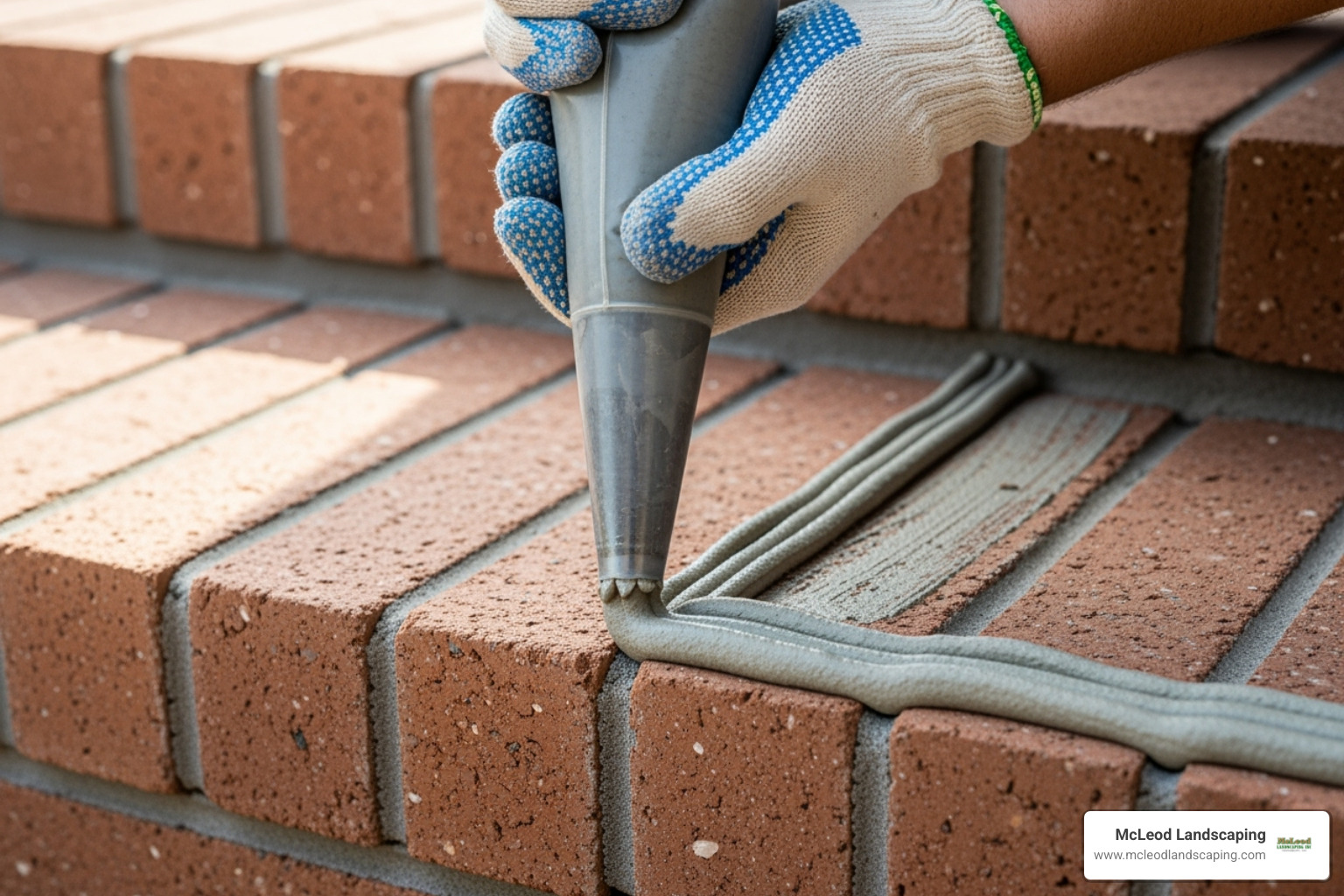
Start from the bottom and work your way up, filling horizontal joints first, then moving to the vertical ones. That piping bag is a game-changer here – it keeps your grout exactly where you want it instead of smeared all over your beautiful new brick faces.
The “tooling” process comes next, and it’s what gives your brick veneer steps that classic, professional finish. Use your brick jointer to create those smooth, concave joints that not only look great but also help shed water away from the mortar.
Work the vertical joints first, then tackle the horizontals. As you tool, excess grout will squeeze out – clean it immediately with a stiff bristle brush. Never use a wire brush on the brick faces themselves, as it can scratch and damage the veneer.
For any stubborn mortar haze that dries on the bricks, a diluted muriatic acid solution with a wire brush can help, but always test it in an inconspicuous area first and follow all safety precautions. A utility knife also works great for carefully chipping away excess hardened mortar from edges.
When you step back and see those finished brick veneer steps, you’ll understand why this technique has been popular for generations. The change is truly remarkable!
Your beautiful new brick veneer steps are now the crown jewel of your home’s entrance, but they’ll need some thoughtful care to keep looking their best. The good news? With proper maintenance, these steps can weather decades of New England seasons while maintaining their stunning appearance.
Weather resistance is one of the biggest advantages of brick veneer steps. The combination of quality brick and proper mortar creates a surface that handles rain, snow, and temperature changes remarkably well. However, freeze-thaw cycles can be challenging – when water gets into small cracks and then freezes, it expands and can cause damage. That’s why proper drainage around your steps and regular maintenance are so important.
The longevity of your brick veneer steps largely depends on the quality of installation and ongoing care. When done right, they can easily last 20-30 years or more with minimal issues. If you do encounter significant problems down the road, our hardscape repair services can help restore them to their original beauty.
Even the most careful DIY installation can hit a few bumps along the way. Don’t worry – most issues have straightforward solutions if you catch them early.
Veneer pop-off is probably the most frustrating problem you might encounter. This usually happens when the concrete base wasn’t properly cleaned, the mortar wasn’t mixed correctly, or someone tried to apply veneer over exterior wood (which we definitely don’t recommend). Prevention is your best defense here – make sure that concrete base is spotless and structurally sound before you start.
Uneven lines are a telltale sign of a DIY project gone slightly awry. This happens when you get excited and forget to use your spacers consistently or skip checking with the level. If you catch it while the mortar is still workable, carefully remove the wonky bricks and reset them. Once everything hardens, it becomes a much bigger headache to fix.
Mortar haze – that annoying whitish film that can appear on your beautiful bricks – usually shows up when you don’t clean excess mortar quickly enough during grouting. Fresh haze comes off easily with a stiff brush and water. Stubborn dried haze might need a diluted muriatic acid solution and wire brush, but always test this in a hidden spot first and wear proper safety gear.
Water penetration is the silent enemy of brick veneer steps. When water gets behind the veneer and freezes, it can cause serious damage. Make sure water drains away from your steps properly, and don’t ignore small cracks in the mortar joints – they’re like tiny doorways for trouble.
Cracks and gaps will eventually appear – it’s just the nature of outdoor masonry. Small cracks can be sealed with high-quality exterior caulk or mortar repair compound. Larger gaps might need polymeric sand, which stays flexible and durable through temperature changes.
Keeping your brick veneer steps looking fantastic doesn’t require a lot of work, but consistency is key. Think of it as a small investment in protecting a much larger one.
Regular sweeping might seem obvious, but it’s surprisingly effective. Those fallen leaves and everyday dirt can actually stain your bricks over time if left to accumulate. A quick sweep every week or two keeps things looking fresh.
Gentle washing with a garden hose and soft brush works wonders for routine cleaning. Mild soap and water handle most grime. If you need to bring out the pressure washer for stubborn dirt, keep it on a low setting and maintain a safe distance – you want to clean the steps, not blast the mortar out of the joints!
Sealing every 2-3 years is probably the most important maintenance task. A good breathable masonry sealant creates a protective barrier against water and stains while still allowing the brick to “breathe.” It’s like sunscreen for your steps – a little effort that prevents big problems later.
Seasonal care becomes especially important during harsh New England winters. Rock salt might melt ice quickly, but it’s brutal on both brick and mortar. Sand or non-corrosive de-icers are much gentler options. When shoveling snow, use a plastic shovel to avoid scratching the surface.
Inspecting mortar joints should become part of your regular home maintenance routine. Walk around your steps periodically and look for any cracks, crumbling, or loose bricks. Catching these issues early and fixing them with fresh mortar prevents water from sneaking in and causing expensive damage.
With this simple care routine, your brick veneer steps will continue welcoming guests to your home with style and elegance for many years to come. The small amount of time you invest in maintenance will pay dividends in both appearance and longevity.
Deciding whether to tackle your brick veneer steps as a DIY project or hire a professional can feel overwhelming. Trust me, we’ve seen homeowners go both routes successfully – and we’ve also helped fix projects that didn’t go quite as planned! The truth is, there’s no one-size-fits-all answer. Your best choice depends on your comfort level, available time, and the complexity of your specific project.
Here’s a comparison to help you weigh your options:
| Factor | DIY Installation | Professional Installation |
|---|---|---|
| Cost | Lower material cost; no labor fees. | Higher upfront cost due to labor and professional rates. |
| Time | Can be time-consuming; may take longer to complete. | Faster completion; efficient use of time. |
| Skill Level | Requires basic masonry skills, patience, and attention to detail. | Expert knowledge and experience; precise execution. |
| Tools Required | Need to purchase or rent specialized tools. | Professionals bring all necessary equipment. |
| Quality Guarantee | No professional guarantee; relies on personal effort. | Often comes with warranties or guarantees on workmanship. |
To put the cost factor into perspective, a DIY project might run you several hundred to over a thousand dollars in materials, depending on the size of your steps and the quality of the brick veneer you choose. For a professional installation, the cost is significantly higher due to labor.
Based on general data from various online sources, homeowners can expect to pay anywhere from $2,500 for a small, straightforward set of steps to $7,500 or even upwards of $15,000 for larger, more complex projects with premium materials. Please note: these are average cost ranges based on internet data and do not represent actual pricing from McLeod Landscaping. For an accurate quote tailored to your specific project, it’s always best to get a direct estimate.
Taking on brick veneer steps as a DIY project can be incredibly rewarding – there’s something special about stepping back and admiring work you’ve done with your own hands. We often see successful DIY installations when homeowners have small, straightforward projects like a simple set of three or four steps with clean, straight lines. These are much more manageable than complex, multi-tiered staircases with curves or unusual angles.
Previous masonry experience is your best friend here. If you’ve laid tile, worked with mortar on other projects, or have general construction experience, you already have many of the skills needed. Even something as simple as grouting bathroom tile gives you a feel for working with mortar and achieving clean joints.
Budget is often a deciding factor too. DIY can significantly reduce your total project cost by eliminating labor fees, which typically represent 50-70% of a professional installation. If you’re on a tight budget and willing to invest the time to learn, DIY becomes very attractive.
Finally, if you genuinely enjoy hands-on work and have the patience for a methodical process, this can be a fulfilling weekend project. Just remember – this isn’t something you’ll knock out in a single Saturday. Factor in time for preparation, installation, and proper curing between steps.
Sometimes the smartest decision is recognizing when a project is beyond your comfort zone or available time. We recommend considering professional help when you’re dealing with large or complex staircases. Intricate designs, numerous steps, or unusual angles can quickly become overwhelming, and mistakes become expensive to fix.
If your existing steps need structural repairs before the veneer can be applied, that’s definitely professional territory. We can assess whether your concrete base needs reinforcement, repair significant cracks, or address drainage issues that could cause problems down the road.
The professional guarantee factor is huge for many homeowners. When we install brick veneer steps, we stand behind our workmanship with warranties. If something goes wrong due to installation issues, you’re covered. That peace of mind is worth a lot, especially for a prominent feature like your front entrance.
Time and tool considerations are practical realities too. If your schedule is packed or you don’t want to invest in specialized tools you’ll rarely use again, hiring out makes perfect sense. We bring everything needed and can typically complete installations much faster than a DIY approach.
At McLeod Landscaping, we specialize in professional masonry services throughout the Merrimack Valley. With over 30 years of experience in areas like Andover, Billerica, Burlington, Carlisle, Chelmsford, Concord, Lowell, Tewksbury, Westford, and Wilmington, MA, we’ve seen every type of challenge that can arise with brick veneer steps.
Our expertise ensures your steps are installed correctly the first time, with proper drainage, structural integrity, and that polished finish that makes your entrance truly stunning. Sometimes the best DIY decision is knowing when to call in the experts!
There’s something truly magical about watching a plain concrete entrance transform into a stunning brick veneer steps masterpiece. Throughout this guide, we’ve walked together through every aspect of this rewarding project – from understanding why brick veneer is such a game-changer to mastering the art of installation and long-term care.
The beauty of brick veneer steps lies not just in their timeless elegance, but in their practical benefits too. You’re getting exceptional durability that stands up to weather and heavy foot traffic, increased home value that pays dividends when it’s time to sell, and that classic charm that never goes out of style. Whether you chose traditional red clay or modern grey tones, your new entrance creates a welcoming statement that guests notice immediately.
If you decided to tackle this as a DIY project, congratulations! You’ve gained valuable skills and the deep satisfaction that comes from creating something beautiful with your own hands. The patience you invested in proper preparation, the precision you applied during installation, and the care you’ll provide through regular maintenance will reward you with steps that look stunning for decades.
For those who chose to work with professionals, you’ve made a smart investment in expertise and peace of mind. Professional installation ensures your brick veneer steps are built to last, with proper drainage considerations and flawless execution that eliminates common pitfalls.
Either way, you now have an entrance that makes a lasting first impression – one that reflects pride in your home and welcomes everyone who visits. Your brick veneer steps aren’t just a pathway; they’re the opening chapter of your home’s story.
Ready to transform your entryway with new front stairs? Contact us today! At McLeod Landscaping, we’re here to help bring your vision to life with over 30 years of experience creating beautiful, durable entrances throughout the Merrimack Valley.
Contact McLeod Landscaping today at (978) 640-0957 or click here to schedule a consultation for retaining wall installation. Let our experienced team design and install a functional and visually appealing retaining wall that enhances your landscape.


1881 Main St Unit 1, Tewksbury, MA 01876