
Starting a successful grass seed installation project can transform your outdoor space. It’s an economical and rewarding way to get a lush, green lawn.
Here are the essential steps for successful grass seed installation:
A beautiful lawn doesn’t happen by chance. It needs good planning, careful preparation, and consistent care. This guide will walk you through each step to help you grow a vibrant, healthy lawn that you’ll love.
I’m Scott McLeod, owner of McLeod Landscaping. With over three decades of experience, I’ve guided countless clients through successful grass seed installation projects, building beautiful, thriving lawns that stand the test of time.
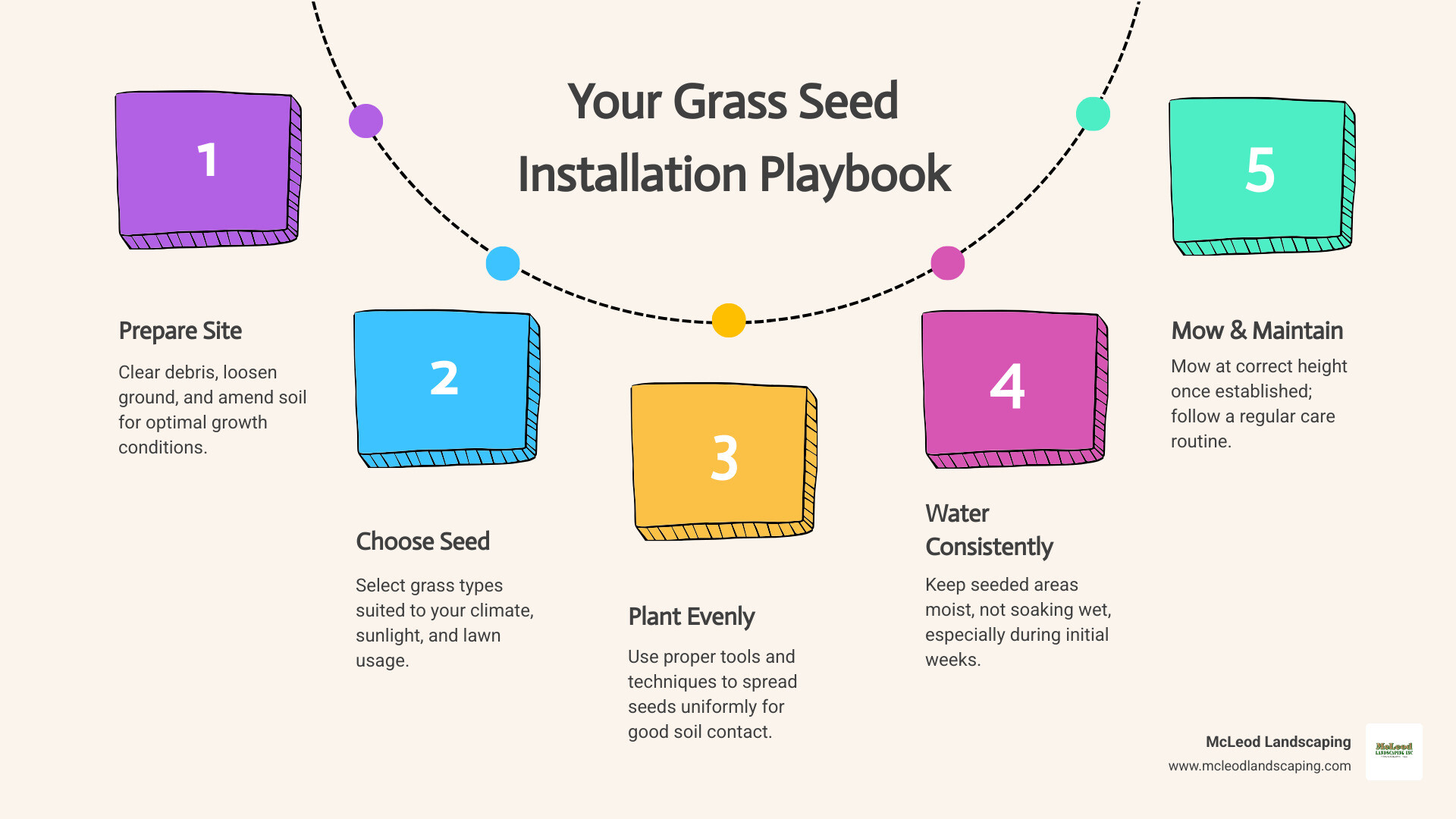
Before scattering any seed, proper preparation is the real secret to a stunning lawn. Successful grass seed installation depends on smart planning and getting your soil in top shape. We’ll start by assessing your lawn’s unique conditions—sun exposure, shade, and foot traffic—to choose the perfect grass seed and prepare the area correctly.
The most critical decision for your grass seed installation is when to plant. The best time depends on your location and grass type.
In northern regions like the Merrimack Valley, cool-season grasses (Kentucky bluegrass, tall fescue, perennial ryegrass) are ideal. They thrive when temperatures are around 60°F.
In the southern U.S., warm-season grasses (Bermudagrass, Zoysia grass, Bahiagrass) are the best choice. They love temperatures above 80°F. Their optimal planting time is Spring and Early Summer (Mid-May through July).
Focus on soil temperature, not just air temperature. Cool-season grasses need soil at 55°F or warmer to germinate. Planting when the soil is too cold or hot can lead to poor results.
Picking the right grass seed sets the stage for a healthy lawn. Your choice depends on climate, sunlight, and use.
| Feature | Cool-Season Grasses | Warm-Season Grasses |
|---|---|---|
| Types | Kentucky bluegrass, tall fescue, perennial ryegrass, fine fescue | Bermudagrass, Zoysia grass, Bahiagrass, Centipede grass, St. Augustine grass |
| Best Planting Time | Early Fall (best), Early Spring | Late Spring, Early Summer |
| Growth Habit | Grow best in temperatures around 60-75°F. Go dormant in hot summer. Remain green in cooler temps. Generally finer blades. | Grow best in temperatures above 80°F. Go dormant in fall/winter. Turn brown. Wider, coarser blades. |
| Water Needs | Moderate to high, can struggle in prolonged drought without irrigation | Moderate, generally more drought-tolerant once established |
| Spread | Bunch varieties (perennial ryegrass, fine fescue) or creeping (Kentucky bluegrass) | Creeping varieties (rhizomes/stolons) |
Always check the grass seed label. Look for the Named Variety, Percentage of Weed Seed (aim for 0%!), and the Germination Rate (85% or higher is best). You’ll also see blends (different varieties of the same grass type for resilience) and mixes (different grass species for diverse conditions).
Finally, consider your lawn’s specific needs:
Proper soil preparation is critical for a successful grass seed installation.
With your soil prepped and seed selected, it’s time to plant. Successful grass seed installation is all about using the right techniques for even coverage and optimal germination.
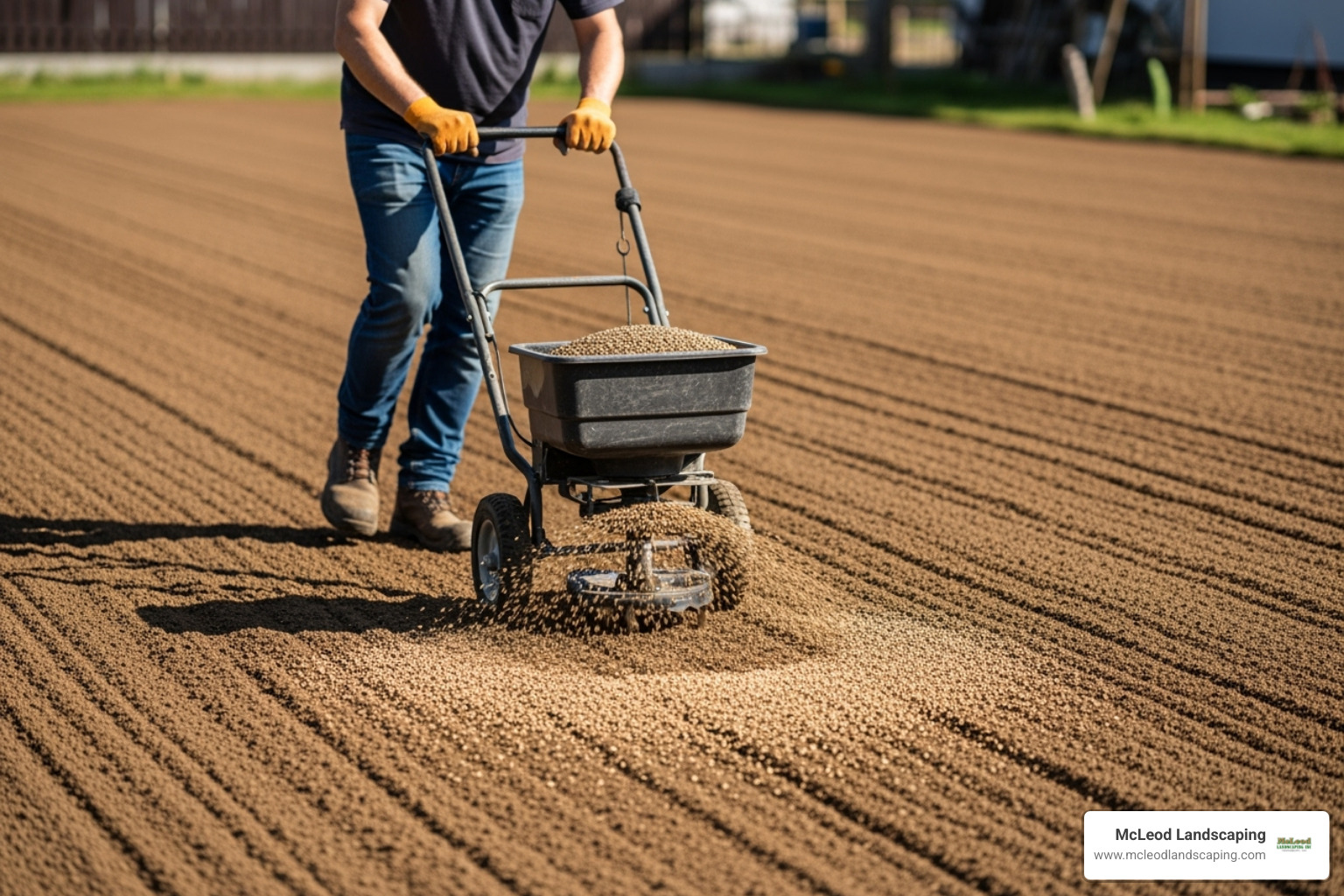
Whether you’re starting a new lawn, overseeding, or patching, matching your technique to your situation is key.
For large areas, a broadcast spreader works best, while a drop spreader offers more precision for smaller spaces. To get professional results, use a criss-cross pattern: apply half the seed walking north-to-south, then the other half walking east-to-west. This prevents bare strips.
After spreading, lightly rake the area to cover seeds with no more than 1/4 inch of soil. Seeds need light to germinate, so don’t bury them. A gentle pass with a lightweight lawn roller helps press seeds into the soil for crucial seed-to-soil contact.
Finally, mulch with a thin layer of weed-free straw (one bale per 1,000 sq. ft.) to retain moisture, prevent erosion, and protect seeds from birds.
If you prefer instant results, our new lawn installation services include professional sodding for an immediate green carpet.
Overseeding fills in thin spots, crowds out weeds, and improves your lawn’s resilience. First, mow your lawn shorter than usual (1.5 to 2 inches) to expose the soil. Then, dethatch and aerate to remove the dead grass layer and create holes for seeds to settle in. Spread the seed at a higher rate than for a new lawn to account for competition from existing grass, using the same criss-cross pattern. A thin layer of compost as a top-dressing will help retain moisture and add nutrients.
Fixing bare spots is straightforward with targeted grass seed installation.
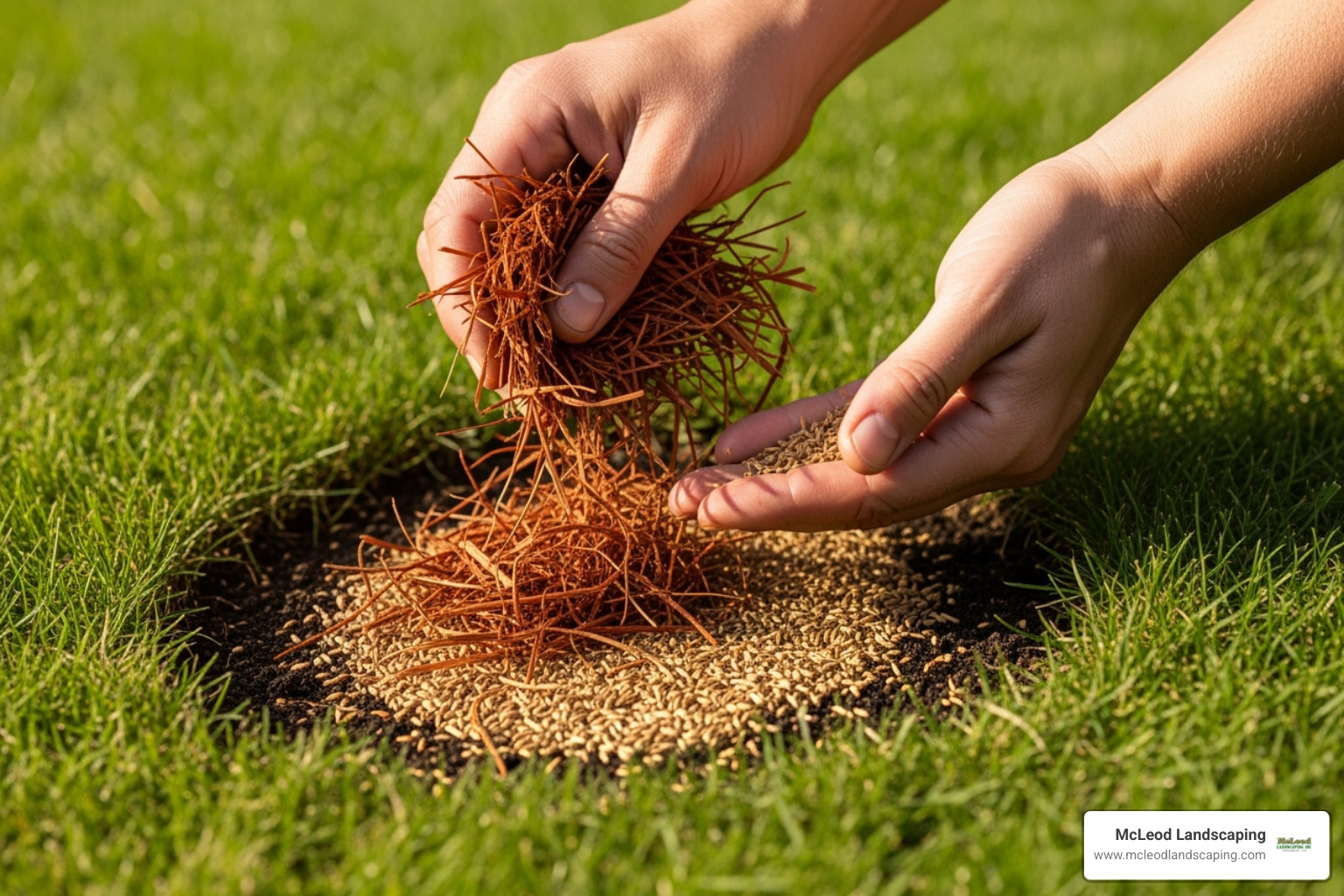
Start by removing dead grass and debris from the patch. Loosen the soil 2 to 3 inches deep with a hand rake. Apply grass seed evenly—all-in-one patch repair products are great for small spots. Gently work the seeds into the soil, press them down, and cover with a thin layer of straw or peat moss. Consistent watering is key, as small patches dry out quickly.
Avoid these common pitfalls for a successful grass seed installation:
Congratulations, you’ve planted your seed! The next 8 weeks are critical for establishing your new lawn. This is when your hard work pays off as tiny seeds transform into a green carpet.

Seeing the first green sprouts is exciting, but patience is key. If germination seems slow, don’t worry. A little investigation can usually identify the issue and get you back on track.
Watering is the most important factor for successful grass seed installation and establishment.
For the first 2-3 weeks (or until seedlings are 1 inch tall), the goal is light, frequent watering. Water 2-3 times a day with a gentle spray to keep the top 1/2 inch of soil consistently damp. Avoid puddles, which can drown or wash away seeds.
Once seedlings reach 1 inch, gradually reduce watering frequency but increase the duration. This encourages deeper root growth. By the time the grass is 2 inches tall, watering once or twice a week should be sufficient, as long as you wet the soil three inches deep.
For established lawns (after 6-8 weeks), switch to deep and infrequent watering. Soaking the soil several inches deep and letting the topsoil dry out builds a resilient, drought-tolerant root system. A general rule is 1 inch of water per week.
Proper irrigation is fundamental. Our irrigation system services can ensure your lawn gets the right amount of water when it needs it.
The first mow is a milestone, but it must be done correctly. Wait until your new grass is 2.5 to 3 inches tall. When you mow, never cut more than one-third of the grass blade at a time. For the first season, keep your mower height at 3-4 inches to help shade the soil and suppress weeds. Always use a sharp mower blade to avoid tearing the grass.
Weeds are common in new lawns. Do NOT use “weed and feed” products, as they will kill new grass seedlings. For the first few weeks, pull weeds by hand. After the lawn has been mowed at least four times, you can consider using a post-emergent herbicide that is safe for young grass. Always read product labels carefully.
If your seed isn’t germinating, don’t panic. Common reasons include:
First, assess the situation. For small bare spots, you can loosen the soil and reseed. If more than half the lawn is bare, it may be more effective to prepare the entire area again. Patience is essential; it takes a full growing season for most grasses to mature.
We know you’ve got questions about grass seed installation. Here are answers to some of the most common inquiries.
Growth happens in stages, and the timeline depends on the grass type and conditions.
The cost of grass seed installation varies based on whether you do it yourself or hire a professional, the size of your lawn, the seed type, and the amount of soil preparation required.
For a DIY project, material costs can range from a few hundred dollars and up. This includes grass seed ($20-$100+ per bag), soil amendments like compost or topsoil ($50-$300+), tool rentals ($50-$200 per day), and straw mulch ($10-$30).
Professional grass seed installation costs can range from $0.10 to $0.50 per square foot or more, depending on project complexity. For a 10,000-square-foot lawn, this could average $1,000 to $5,000+. While the upfront investment is higher, you save significant time and labor and benefit from expert knowledge and equipment for a more successful result.
Please note: The costs mentioned here are general averages based on industry data and are not actual prices for McLeod Landscaping services. Every lawn and project is unique, and pricing will vary based on specific site conditions, materials, and labor requirements. We are always happy to provide a detailed, personalized quote for your unique landscaping needs!
While you can just throw seed on your lawn, we strongly advise against it. This method almost always leads to poor results and wasted money. For a successful grass seed installation, proper preparation is essential.
The main problem is poor seed-to-soil contact. For seeds to germinate, they must be in direct contact with the soil. If scattered on top of existing grass or thatch, most seeds will never reach the soil. They will dry out, get eaten by birds, or fail to root.
This leads to a low germination rate and wasted seed. To ensure success when overseeding or repairing bare spots, you must prepare the area first. Mow low, rake to expose the soil, and consider dethatching or aerating. These steps create the ideal environment for seeds to germinate and thrive.
Achieving a beautiful, healthy lawn through grass seed installation is a rewarding journey that creates a vibrant outdoor space for family, friends, and relaxation. With proper planning and consistent care, that lush green carpet is well within your reach.
The keys to success are simple but vital:
By paying attention to these details, you can transform your yard into a green oasis. If you’re in the Merrimack Valley area and prefer to leave the work to professionals, McLeod Landscaping is here to help. We offer expert lawn and landscape installation services across Andover, Billerica, Burlington, Carlisle, Chelmsford, Concord, Lowell, Tewksbury, Westford, and Wilmington, MA. With over three decades of experience, we are dedicated to ensuring your project is a success from start to finish. Learn more about our residential landscaping services.
Contact McLeod Landscaping today at (978) 640-0957 or click here to schedule a consultation for retaining wall installation. Let our experienced team design and install a functional and visually appealing retaining wall that enhances your landscape.


1881 Main St Unit 1, Tewksbury, MA 01876