Servicing Greater Tewksbury, MA and Surrounding Towns

Installing Sod in Spring: 5 Perfect Secrets


Why Spring is the Perfect Season for Sod Installation

Installing sod in spring can transform your patchy lawn into a lush, green landscape in just weeks. Here’s a quick overview:

Key Steps for Spring Sod Installation:

  1. Prepare – Test soil pH (6.0-7.5), remove old grass, till 4-6 inches deep.
  2. Measure – Calculate square footage, order 5-10% extra for cuts.
  3. Lay – Install within 24 hours, stagger seams like bricks, no overlaps.
  4. Water – Daily for 2 weeks, keep soil moist 3-4 inches deep.
  5. Maintain – First mow at 3-4 inches tall, fertilize after 4-6 weeks.

Spring offers the ideal conditions for sod. Cool temperatures and natural rainfall help new grass establish strong roots before summer heat arrives, providing instant results and better weed control than seeding. The key to success is proper soil preparation and consistent watering, which allows for quick root establishment in just 2-4 weeks.

Common spring advantages include:

  • Reduced weed competition
  • Natural moisture from spring rains
  • Cooler temperatures reduce stress
  • Strong root development before summer

I’m Scott McLeod, owner of McLeod Landscaping. For over three decades, I’ve helped property owners in the Merrimack Valley achieve perfect lawns, and my experience shows that spring installation consistently delivers the best results.
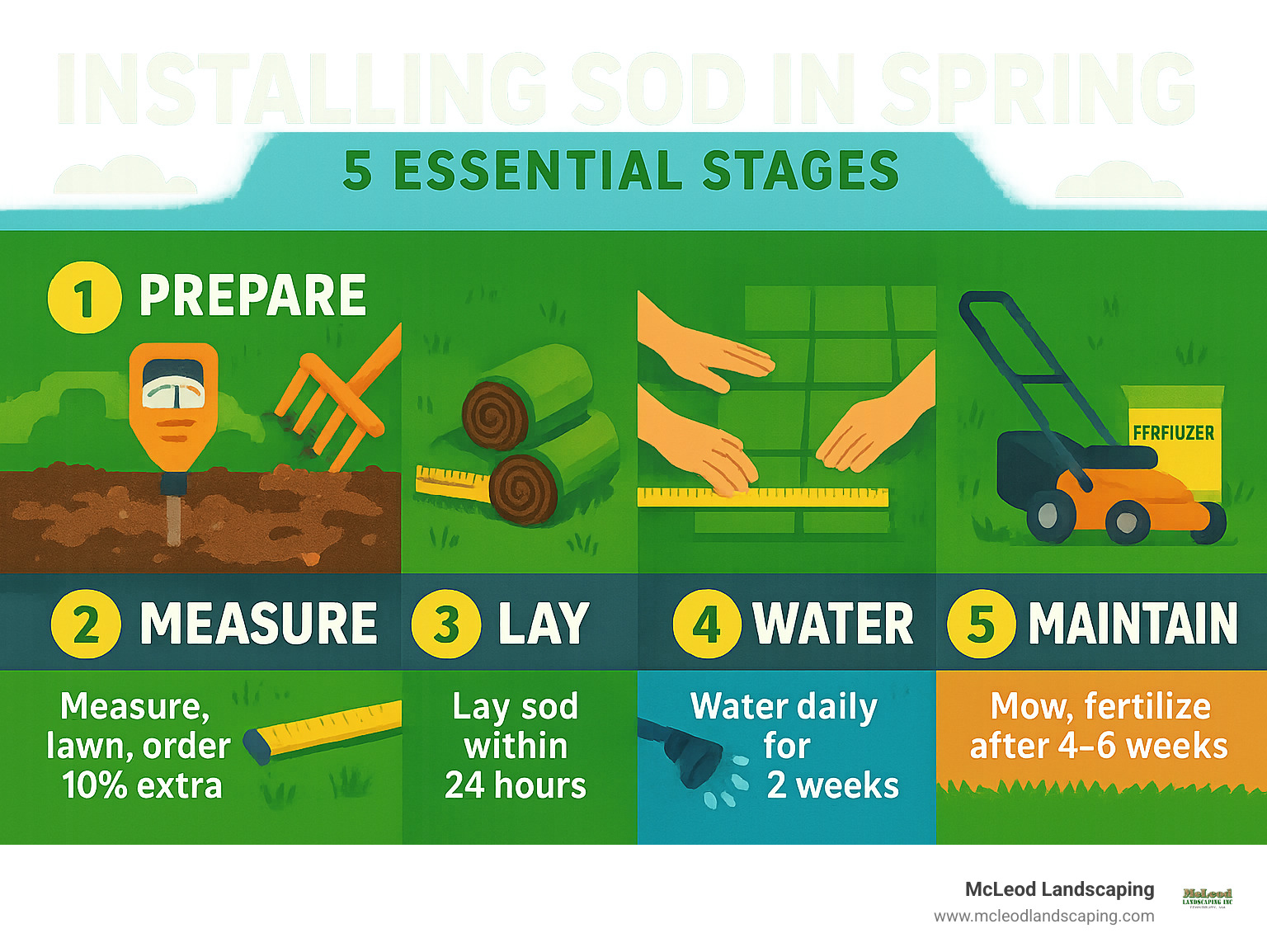
Infographic showing the 5 essential stages of spring sod installation: Stage 1 - Prepare soil by testing pH and removing old grass, Stage 2 - Measure lawn area and order 10% extra sod, Stage 3 - Lay sod in brick pattern within 24 hours of delivery, Stage 4 - Water daily for first 2 weeks keeping soil moist 3-4 inches deep, Stage 5 - Maintain with first mow at 3-4 inches and fertilize after 4-6 weeks - installing sod in spring infographic

Installing sod in spring definitions:

Why Spring is a Prime Time for a New Sod Lawn

Spring is the ideal time to give your lawn a fresh start. While you can install sod almost any time the ground isn’t frozen, spring offers a perfect combination of conditions that make installing sod in spring the smart choice for homeowners in the Merrimack Valley.

The season’s cooler temperatures, natural rainfall, and reduced weed competition give your new sod the best chance to establish strong roots. Whether you’re installing cool-season grass like tall fescue or warm-season grass like zoysia, spring provides the sweet spot for successful root establishment before summer’s heat arrives.

Sod vs. Seeding in Spring Sod Installation Seed Installation
Time to Establish 2-4 weeks for strong roots 6-8 weeks minimum
Initial Cost Higher upfront investment Lower material costs
Labor Required Intensive but quick Light work, long commitment
Weed Prevention Excellent natural barrier Vulnerable to invasion
Immediate Results Instant green lawn Months of waiting
Best Spring Advantage Takes full advantage of ideal conditions Competes with spring weeds

Key Advantages of Sod Over Seeding in Spring

When you choose installing sod in spring, you’re setting your lawn up for success. Here’s why sod is often the superior choice over seeding during this season.

  • Faster Results & Establishment: Sod provides an instant green lawn that is ready for light use in just 2-4 weeks. Seeding requires 6-8 weeks for germination and several more months to mature, leaving your yard unusable for a longer period.
  • Superior Weed Prevention: Dense sod acts as a natural barrier, smothering existing weed seeds and preventing new ones from taking hold. A newly seeded lawn is highly vulnerable to aggressive spring weeds, which can easily outcompete young grass seedlings.
  • Immediate Erosion Control: Sod provides an immediate protective layer over your soil, which is crucial during heavy spring rains. It prevents valuable topsoil from washing away, a common problem with bare soil on seeded lawns, especially on slopes.
  • Stronger Root System Before Summer: Sod gives grass a head start. The roots have weeks to grow deep in spring’s ideal conditions, creating a resilient lawn ready to handle the stress of summer heat. Seeded lawns are often still fragile when the first heatwaves arrive.
  • Instant Curb Appeal: Sod transforms your property overnight, providing immediate aesthetic value and a usable outdoor space. Seeding results in a patchy, uneven look for months. While the cost of new sod installed is higher upfront, the immediate benefits and reduced long-term maintenance often provide better value.

Beautiful Landscaping - installing sod in spring

Pre-Installation Prep: Setting the Stage for Success

Proper preparation is the most critical part of installing sod in spring. The work you do before the sod arrives makes the difference between a lawn that thrives and one that merely survives. Think of it as building a strong foundation for your investment.

A yard cleared and graded, ready for sod installation - installing sod in spring

Step 1: Measuring and Ordering Your Sod

Accurate measurements save money and prevent headaches. Start by calculating the square footage of your lawn area by multiplying length by width for rectangular sections. For irregular shapes, break them into smaller, manageable squares and rectangles. An online Area Calculator Tool can also help.

A crucial pro tip: always add 5-10% overage for cuts and trimming around obstacles. It’s better to have a little extra than to run short. Finally, order from a reputable sod farm to ensure you receive fresh, healthy sod. It’s a living product and should be installed within 24-48 hours of being harvested.

Step 2: Preparing the Soil for Sod Installation

This is the most labor-intensive step, but it’s non-negotiable for a healthy lawn. Poor soil prep is the number one reason sod installations fail.

  • Remove Existing Lawn and Weeds: Use a sod cutter to strip away the old lawn and any weeds. Clear all debris, including rocks and roots, to give your new sod a clean slate.
  • Till the Soil: Loosen the soil to a depth of 4-6 inches with a rototiller. This breaks up compaction, allowing new roots to penetrate easily and improving air and water circulation.
  • Test Soil pH: This is insurance for your investment. Most grasses thrive in a pH range of 6.0-7.5. Test your soil a few weeks in advance to allow time for amendments like lime (to raise pH) or sulfur (to lower it).
  • Add Amendments: Based on your soil test, incorporate 2-3 inches of quality compost or topsoil. This improves soil structure, nutrient content, and moisture retention.
  • Grade and Level: Rake the surface smooth, ensuring the final grade is about an inch below sidewalks or driveways to accommodate the sod’s thickness. Proper grading is essential for drainage, ensuring water flows away from your home’s foundation.

Understanding Sod Installation Costs

Understanding the costs helps you budget for your spring sod project. The sod installation price per square foot can vary significantly.

  • Average Cost: Based on internet data, sod material typically ranges from $0.30 to $1.50 per square foot.
  • DIY vs. Professional: A DIY installation for a 1,000 sq. ft. yard might cost $500 to $1,500 for materials and rentals. Professional installation, which includes labor, expertise, and guaranteed results, typically ranges from $1,200 to $4,000 for the same area.
  • Factors Affecting Price: The final price depends on lawn size, sod variety, site accessibility, and the amount of soil preparation required.

Please note: These are average costs based on internet data and not the actual costs for McLeod Landscaping. For an accurate estimate custom to your specific project in the Merrimack Valley, please Request Estimate.

The Step-by-Step Guide to Installing Sod in Spring

With your soil perfectly prepared, it’s time for the most rewarding part of installing sod in spring: laying the sod. This is where bare soil transforms into a green carpet in just hours. For best results, work on a cool, overcast day to reduce stress on the new grass.
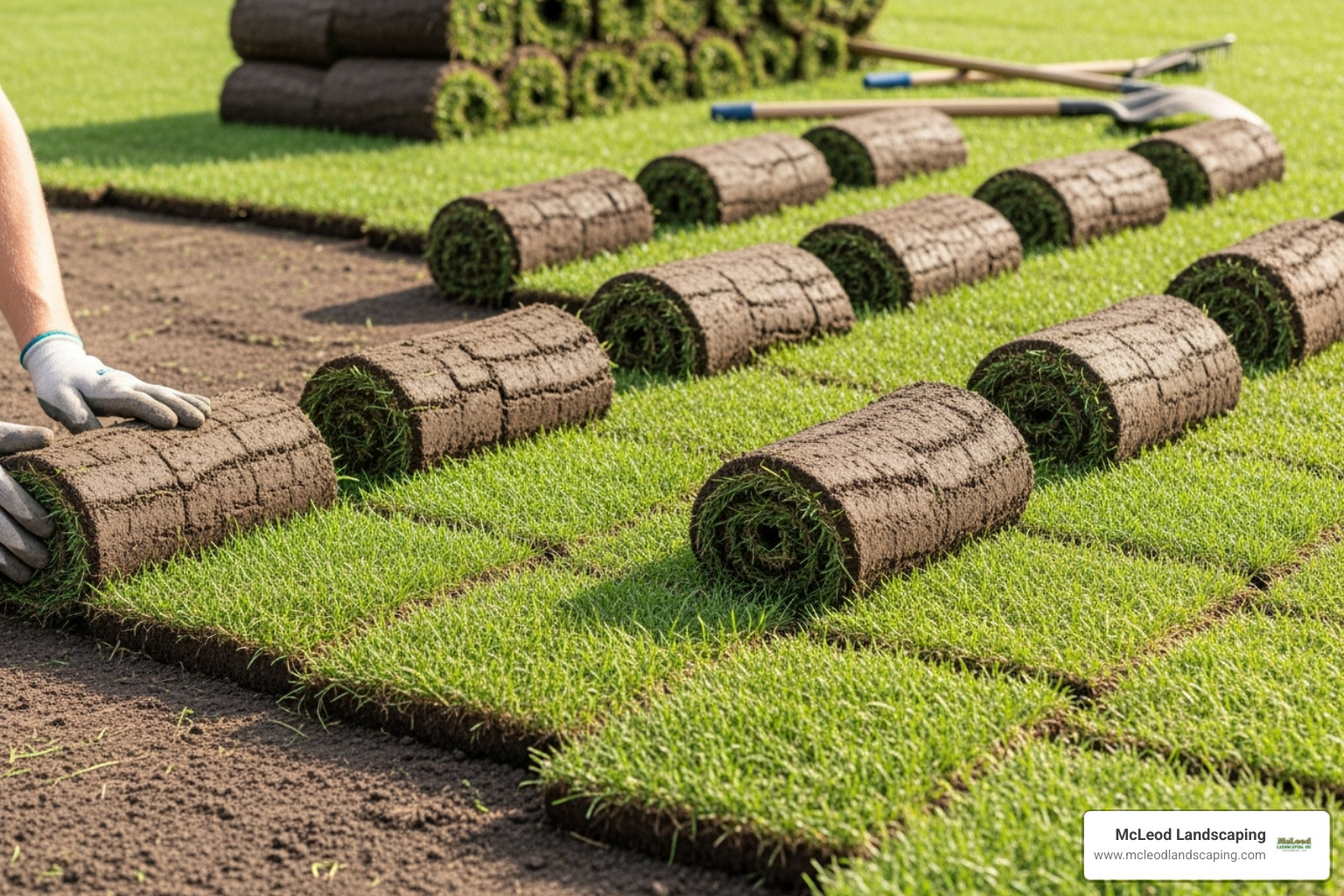
Sod rolls being laid in a staggered, brick-like pattern - installing sod in spring

Step 3: The Art of Laying Sod

Laying sod correctly ensures a seamless, healthy lawn. Time is of the essence; sod is a living product and must be installed within 24 hours of delivery.

  • Start Along a Straight Edge: Begin laying sod along the longest straight line available, like a driveway or patio. This ensures your rows are straight.
  • Use a Brick-Like Pattern: Stagger the seams on each row, just like laying bricks. This avoids creating visible lines and helps the pieces knit together more strongly.
  • Ensure Tight Seams: Push the edges of each sod piece snugly together, but do not overlap them. Gaps can cause edges to dry out, while overlaps create air pockets that prevent rooting.
  • Make Clean Cuts: Use a sharp utility knife to trim sod to fit around curves, sprinkler heads, or other obstacles. Clean cuts heal faster and are less prone to drying out.

Our expertise in Residential Sod Installation ensures these details are handled efficiently for a professional result.

Step 4: Addressing Gaps, Slopes, and Unevenness

Proper technique can handle common challenges like slopes and small imperfections.

  • Fill Small Gaps: Use loose topsoil to fill any minor gaps between sod pieces. This prevents the edges from drying out.
  • Handle Slopes Correctly: Always lay sod horizontally across a slope, not vertically down it. This helps prevent erosion and improves water absorption. On steep grades, use biodegradable sod staples to hold the pieces in place until they root.
  • Roll the Sod: After laying a section, use a lawn roller (filled about one-third with water) to press the sod down. This eliminates air pockets and ensures good sod-to-soil contact, which is critical for root development.

The beauty of working with McLeod Landscaping is that we seamlessly integrate your new lawn with existing features. Our Hardscaping Services expertise means your sod installation coordinates perfectly with patios, walkways, and retaining walls.

Post-Installation Care: Your Guide to a Thriving Lawn

A sprinkler system watering a newly installed sod lawn - installing sod in spring

The Perfect Watering Schedule for New Sod

Water is the single most important factor for new sod success. It’s almost impossible to overwater in the first two weeks, as long as the ground isn’t constantly puddled.

  • Immediately After Installation: Water thoroughly the moment the last piece is laid. This first deep watering is non-negotiable to prevent shock and start the rooting process.
  • First Two Weeks: Water daily, preferably in the early morning. The goal is deep watering to moisten the soil 3-4 inches deep. This usually equates to 1 to 1.5 inches of water. Check by lifting a corner to ensure the soil underneath is damp.
  • After Two Weeks: As roots establish, gradually reduce watering frequency to every other day, then every few days. This encourages roots to grow deeper, creating a more drought-tolerant lawn. For help with sprinkler run times, you can use this guide. If you’d like a permanent solution, McLeod Landscaping can coordinate the installation of an efficient in-ground irrigation system as part of your project.

Mowing, Fertilizing, and Walking on Your New Lawn

Beyond watering, a little patience goes a long way.

  • Foot Traffic: Keep foot traffic to an absolute minimum for the first 2-3 weeks to allow delicate new roots to establish without being disturbed.
  • First Mow: Wait to mow until the grass is 3-4 inches tall and feels firmly rooted (usually 1-2 weeks). Set your mower blade high (at least 3 inches) and never cut more than one-third of the grass blade’s length.
  • Fertilizing: Wait 4-6 weeks before fertilizing. Most sod is pre-fertilized. When it’s time, use a starter fertilizer high in phosphorus to promote root growth and water it in well.

Common Mistakes When Installing Sod in Spring and How to Avoid Them

After three decades in the business, we’ve seen what works and what doesn’t. Avoid these common pitfalls:

  • Skipping proper soil preparation (tilling, amending, grading).
  • Letting the sod dry out on the pallet or after installation.
  • Leaving large gaps between sod pieces or overlapping the seams.
  • Mowing too soon or cutting the grass too short.
  • Ignoring your soil’s pH level.

The bottom line is that installing sod in spring offers the best chance for success, but it requires diligent follow-up care. The reward is a beautiful, healthy lawn that improves your property for years.

Frequently Asked Questions about Installing Sod in Spring

Here are answers to some of the most common questions we receive about installing sod in spring in the Merrimack Valley.

How long does it take for new sod to root in the spring?

Thanks to the ideal cool, moist conditions of a New England spring, new sod typically establishes a strong root system in just 2 to 4 weeks. This is often faster than in other seasons.

You can test for rooting after two weeks by gently tugging on a corner of a sod piece. If you feel resistance, the roots are taking hold. If it lifts easily, it needs more time and water. Consistent watering is the key to rapid rooting.

Can you lay sod on wet ground in the spring?

The ground should be moist, but not waterlogged or muddy. If you walk on the prepared soil and leave deep, muddy footprints, it is too wet. Wait a day or two for it to dry out.

Laying sod on overly saturated ground can lead to poor root-to-soil contact, compaction, and an increased risk of fungal diseases. The ideal condition is soil that is workable and damp, but not muddy.

What is the best fertilizer for new sod in the spring?

Wait about 4-6 weeks after installation before fertilizing. Most new sod comes from the farm with enough nutrients to get started. Fertilizing too soon can stress the grass.

When the time comes, use a starter fertilizer with higher phosphorus content. Phosphorus is the key nutrient for promoting strong, deep root development. Always water the fertilizer in immediately after application to prevent burning the new grass blades.

Achieve Your Perfect Lawn with Professional Sod Installation

Installing sod in spring is a rewarding project that offers the instant gratification of a beautiful lawn. Following the key steps—thorough soil preparation, proper installation techniques, and consistent watering—will create a strong foundation for a resilient lawn that can thrive through the summer heat.

However, sod installation is a labor-intensive project that requires the right tools, timing, and physical effort. For large or complex yards, or to simply guarantee flawless results without the hassle, professional installation is the ideal solution.

McLeod Landscaping has been changing properties across the Merrimack Valley for over 30 years. We provide a comprehensive approach, handling everything from meticulous soil grading and drainage to integrating your new lawn with hardscape design features and efficient lawn sprinkler systems. Our team ensures your new lawn fits perfectly within your overall landscape vision.

We serve clients throughout Andover, Billerica, Burlington, Carlisle, Chelmsford, Concord, Lowell, Tewksbury, Westford, and Wilmington, MA. Our local expertise means we understand the soil, climate, and grass varieties that perform best in our region.

Don’t spend your weekends wrestling with heavy sod rolls. Let our experienced team transform your yard into the perfect outdoor space this spring. Contact us for a residential sod installation estimate today!


Contact Us Today

Contact McLeod Landscaping today at (978) 640-0957 or click here to schedule a consultation for retaining wall installation. Let our experienced team design and install a functional and visually appealing retaining wall that enhances your landscape.

McLeod Landscaping Patchy to Perfect: Spring Sod Secrets Revealed

Table Of Contents

Landscape & Hardscape Professionals Servicing , MA

McLeod Landscaping, Inc.

1881 Main St Unit 1, Tewksbury, MA 01876

Stay Connected