
Understanding the lawn installation price is a top concern for anyone dreaming of a beautiful, green outdoor space. The cost can vary quite a bit, depending on the method you choose and the specific needs of your yard.
When considering a new lawn, here’s a quick look at the main installation options and their general characteristics:
Many homeowners admit their lawns could use improvement. Yet, a significant number aren’t sure how to achieve that lush, green look. Deciding on a new lawn is a big step. It’s an investment that boosts your home’s curb appeal and creates an inviting outdoor living area. To make the best choice, it helps to understand what goes into the total cost. This guide will break down the options. It will show you what factors influence the price. And it will help you budget for your perfect green space.
As Scott McLeod, owner of McLeod Landscaping Inc., I’ve spent over three decades helping clients understand the true lawn installation price for their projects in the Merrimack Valley. My team and I are experts in changing outdoor spaces, ensuring quality and satisfaction from start to finish.
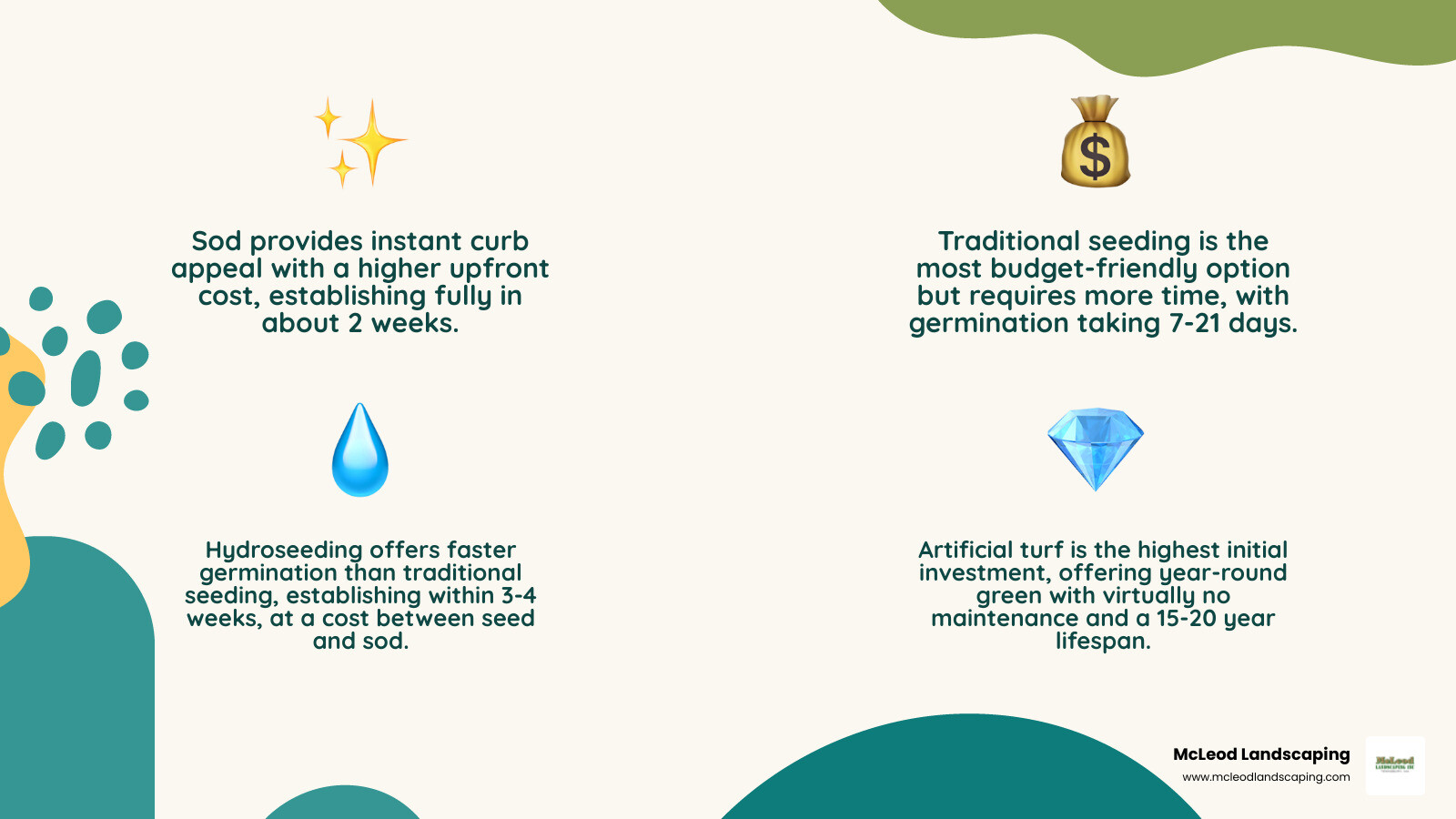
This section will detail the different ways to install a lawn, including their costs, pros, cons, and maintenance needs. Please note: The following figures are national averages based on aggregated online data and are for informational purposes only. They do not represent actual quotes. For a precise estimate for your project, it’s always best to request a professional consultation.
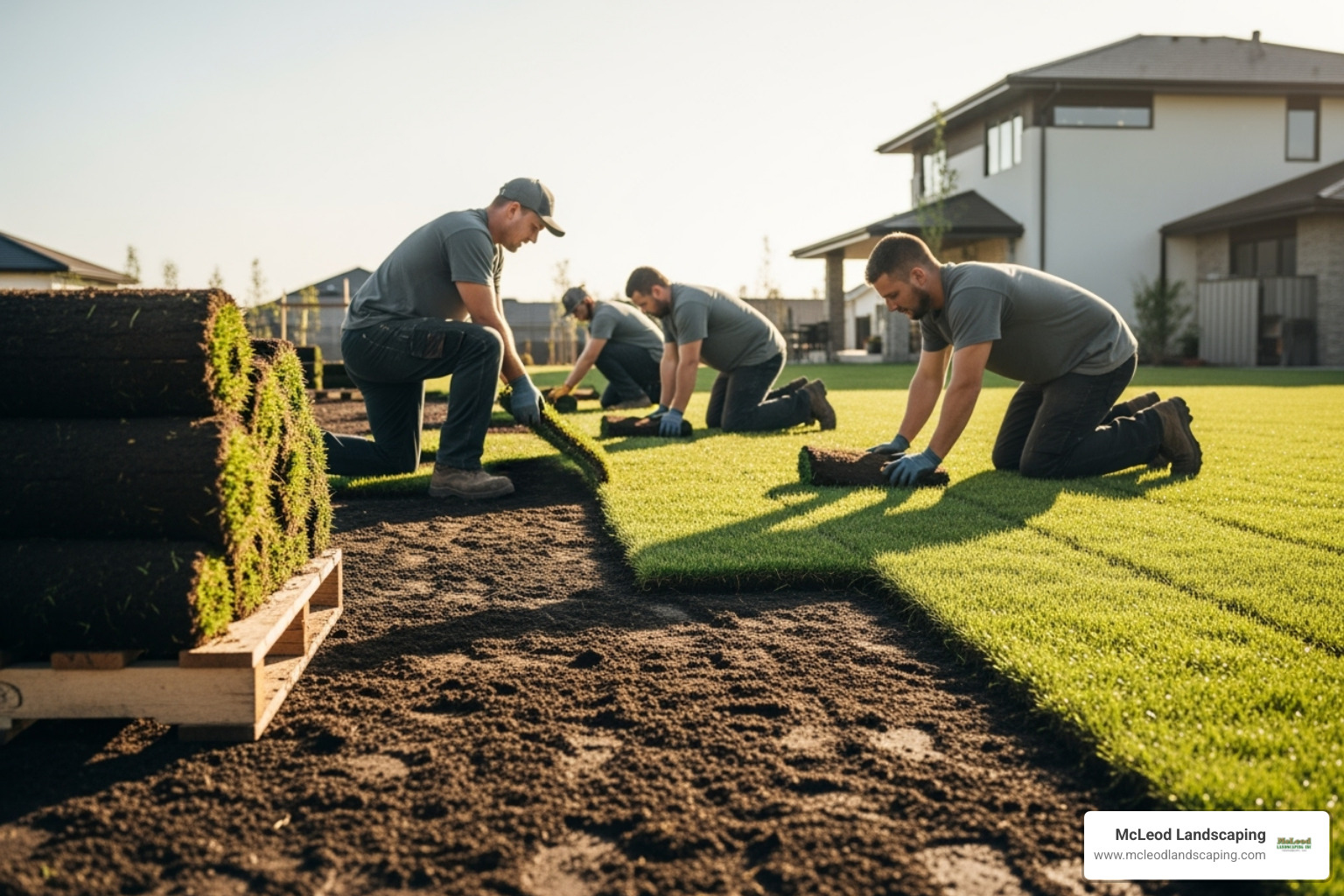
Sod installation offers instant curb appeal, providing a fully grown, green lawn laid directly onto prepared soil. It’s ideal for immediate results.
When it comes to the lawn installation price for sod, the material itself typically costs around $0.30 to $0.85 per square foot. Professional installation, which includes both the sod and the labor, can range from approximately $1 to $6 per square foot. For an average 1,000-square-foot lawn, homeowners typically spend between $1,048 and $2,992, with the national average around $2,010. However, depending on various factors, the cost could potentially go up to $7,238 or even higher for larger or more complex projects.
Pros of Sod Installation:
Cons of Sod Installation:
Establishment and Maintenance:
New sod usually takes root within 10 to 14 days, with full establishment in 12 to 16 weeks. Avoid heavy foot traffic for at least two weeks. Ongoing maintenance includes regular mowing, consistent watering, and periodic fertilization. Proper site preparation is critical for success for your sod to thrive. For more details on this process, explore our residential sod installation services.

Traditional lawn seeding involves spreading grass seeds directly onto prepared soil. It’s a budget-friendly method that, while requiring patience, offers long-term benefits.
The lawn installation price for seeding is the most economical option upfront. Grass seed itself can cost as little as $0.05 to $0.25 per square foot for materials. When professional installation is included, the cost to reseed a lawn typically ranges from $1 to $3 per square foot. For a larger project, the total cost to seed a lawn can range from $592 to $1,768, depending on the area and specific requirements.
Pros of Lawn Seeding:
Cons of Lawn Seeding:
Establishment and Maintenance:
Grass sprouts typically appear within 7 to 21 days, but full maturity can take one to two years. Consistent watering is crucial during the initial eight weeks. Ongoing maintenance involves regular watering, diligent weed control, and protecting the young lawn. Once established, mowing and fertilizing routines are similar to sod, but the initial phase requires more careful attention.

Hydroseeding is an efficient way to establish a new lawn, especially for larger or sloped areas. It involves spraying a slurry of grass seed, mulch, fertilizer, and water, with the mulch aiding moisture retention and faster growth.
The lawn installation price for hydroseeding falls between traditional seeding and sod. On average, hydroseeding costs approximately $0.50 to $1.00 per square foot. For a more comprehensive project that includes initial ground preparation and other services, the cost can range from $1.00 to $3.00 per square foot.
Pros of Hydroseeding:
Cons of Hydroseeding:
Establishment and Maintenance:
Sprouts typically appear within 3 to 4 weeks, and the lawn will green up noticeably. Consistent moisture is vital during establishment. Ongoing maintenance is similar to a traditionally seeded lawn as it matures. To learn more about this effective method, we offer detailed information on our hydroseeding services.

Artificial turf provides a perpetually green lawn with minimal upkeep. Made from synthetic fibers, it’s popular where natural grass struggles or for those prioritizing extreme low maintenance.
The lawn installation price for artificial turf is typically the highest upfront investment among all options. The material alone can range from $2 to $20 per square foot, depending on quality and type. Professional installation can bring the total cost to between $6 and $20 per square foot. Nationally, the average cost to install artificial grass is around $6,500, with typical projects ranging from $2,500 to $10,000. For larger or premium installations, costs can easily exceed $20,000.
Pros of Artificial Turf:
Cons of Artificial Turf:
Lifespan and Maintenance:
Artificial turf typically lasts 15 to 20 years. Maintenance is minimal, including periodic rinsing and brushing to keep fibers upright. Annual maintenance costs are relatively low.
So, you’re dreaming of that perfect, lush lawn? That’s fantastic! But before we dive in, let’s talk about the practical side: the lawn installation price. The truth is, there’s no single, fixed price tag. Your new lawn’s cost depends on much more than just the grass itself. Think of it like building a house – every detail, big or small, can significantly impact the final investment.
When McLeod Landscaping provides an estimate, we consider several variables influencing the overall lawn installation price. These factors help us tailor a solution that fits your needs and budget.
First up is Yard Size. Naturally, larger yards require more materials and labor. While per-square-foot costs might decrease for bigger projects due to economies of scale, the total project cost will generally be higher for expansive areas.
Then there’s your Yard Shape. Irregularly shaped yards or complex designs require more precise work, gently nudging costs up compared to straightforward lawns.
Site Accessibility also plays a big role. Narrow gates, steep slopes, or long distances from a road can increase labor time and costs due to manual material transport.
Your Geographic Location is another key consideration. Labor rates, material costs, and grass types vary significantly by region. For example, our Merrimack Valley service area’s lawn installation price might differ from national averages due to local market conditions and climate needs.
The Best Time of Year to Install can also influence the cost. In New England, spring or fall are ideal for new lawn installation, promoting better establishment. Installing during extreme summer heat or winter cold can increase costs due to challenges or higher re-do risk.
Finally, consider whether it’s a New vs. Replacement Lawn. Replacing an old lawn typically adds to the cost due to extra steps like removing old grass, weeds, and debris, incurring additional labor and disposal fees. Nationally, this can range from $7,500 to $22,500 or even higher for a 5,000-10,000 square foot area, often higher than installing on a prepared site ($1-$4 per sq ft depending on the method chosen).

Think of ground preparation as the essential foundation for your new lawn’s long-term health and beauty. Skimping on this step can lead to problems down the road, and these preparatory steps significantly influence the overall lawn installation price.
Here’s what typically goes into preparing the ground for a new lawn and how it impacts your budget:
Before we can lay down new grass, the Old Grass and Weed Removal is often necessary. This involves carefully removing existing turf, weeds, and any underlying debris. This process alone can add approximately $1 to $2 per square foot to your project’s cost, or potentially more for extensive overgrowth.
Land Leveling and Regrading are critical for proper drainage. If your yard has uneven spots, ruts, or slopes that direct water towards your home’s foundation, we might need to level or regrade the land. Nationally, this service typically costs an additional $1 to $3 per square foot. For a larger yard, regrading can add anywhere from $1,000 to $3,000 or even more to the total bill.
We always recommend a Soil Testing. This relatively inexpensive step, usually costing around $20 to $100, gives us vital information about your soil’s pH and nutrient levels. Knowing this allows us to make precise amendments, ensuring your new grass has the best possible start.
Finally, adding Topsoil and Compost is often necessary. Healthy grass needs healthy soil. If your existing soil is poor, compacted, or lacking nutrients, we’ll add a layer of nutrient-rich topsoil and compost. This material typically costs between $12 and $55 per cubic yard. We often recommend adding a layer of 4-6 inches of quality topsoil for optimal growth and a truly thriving lawn.
Here are the essential steps we take during ground preparation:
Beyond the grass and basic ground preparation, the lawn installation price includes skilled labor and additional services that improve your new green space.
Our experienced landscapers are the backbone of your project, and their expertise is reflected in the Typical Labor Rates. Labor costs for lawn installation services can vary widely depending on the complexity of the job, but nationally, they typically range from $35 to $190 per hour. For specialized installation tasks, you might see hourly rates from $50 to $100. When calculated per square foot, labor for installation can be between $0.55 to $0.93. These rates reflect the expertise, efficiency, and physical demands of the work needed to transform your yard.
Once old grass, soil, and other removed materials are cleared, they need to be properly disposed of. These Debris Disposal Fees are often factored into the overall removal cost but can sometimes be an additional line item.
Delivery Fees are also part of the equation. Transporting large quantities of sod, topsoil, or other materials to your property incurs delivery costs. For sod, these fees typically range from $65 to $230 per truckload, depending on distance and quantity.
A new lawn, especially sod, requires consistent watering to establish a strong root system. Many homeowners wisely opt to install a new Sprinkler System Installation concurrently with their lawn. Nationally, this can add between $1,650 and $3,600 to the total project cost. Investing in an efficient irrigation system ensures your lawn receives the right amount of water, saving you time and potentially preventing costly issues down the line. We can certainly help you with irrigation systems custom to your lawn’s needs.
Sometimes, a new lawn project is part of a larger outdoor change, which might involve other Landscaping Alterations. This could mean removing old tree stumps (nationally, around $80-$250 per stump) or even entire trees (nationally, $400-$900 per tree). If you’re envisioning more extensive changes, such as integrating new walkways, a patio, or an outdoor kitchen, these hardscape alterations will be additional costs. However, they can significantly lift your outdoor living experience. General landscaping projects can range from $2,600 to $13,700 or even higher, depending on their scope and complexity.
Deciding whether to handle your new lawn yourself or bring in the pros has a big impact on both your lawn installation price and your long-term satisfaction. Below is a streamlined look at what each route really costs once you tally every line item.
Going the DIY route can appear cheaper on paper, but remember to factor in every hidden cost:
Choosing professional installation means hiring an experienced crew that rolls all of those tasks into one itemized quote:
The table below compares national-average costs for a 1,000 sq. ft. sod project. These figures are aggregated from online sources and do not represent an actual McLeod Landscaping quote. Always request a professional consultation for precise pricing.
| Cost Element | DIY (1,000 sq. ft. Sod) | Professional (1,000 sq. ft. Sod) |
|---|---|---|
| Sod Materials | $300 – $850 | Included in quote |
| Ground Prep Supplies | $150 – $400 | Included |
| Equipment Rental | $200 – $450 | Included |
| Debris Disposal | $50 – $150 | Included |
| Labor | Your time & effort | Included |
| Typical Total | $700 – $1,900 | $1,000 – $6,000 |
By weighing true costs—not just the sticker price—you can decide whether DIY sweat equity or professional expertise delivers the best value for your green dream.
When you hear that the lawn installation price for artificial grass can swing from $6.00 all the way up to $20.00 per square foot, it might sound like a huge difference! But what does that really mean for your backyard dreams?
Essentially, this wide range covers the entire cost of getting that gorgeous, maintenance-free artificial lawn installed by professionals. It’s what we call a “turnkey” price – meaning it includes the turf itself, the labor to install it, all the necessary ground preparation, infill materials, and even hauling away the old stuff. It’s the full package, from start to finish, so you can just sit back and enjoy your new green space.
This big price difference really just shows that artificial grass isn’t a one-size-fits-all kind of product. Just like cars, there’s a range from practical and efficient to luxurious and high-performance. Many things can make the final price tag go up or down.
While we’re talking about national averages here (so these aren’t specific McLeod Landscaping quotes!), you’ll find that these per-square-foot ranges often align with typical project costs. For instance, the national average for a full artificial grass project might be around $6,500, with typical projects ranging from $2,500 to $10,000. It’s a significant upfront investment compared to natural grass, but remember, the long-term savings on mowing, watering, and fertilizing can really add up!
So, what pushes that lawn installation price for artificial grass towards the higher end? Think of it as choosing the custom-built, top-of-the-line option, often involving complex work and premium materials.
First, the high-quality turf material itself plays a big role. High-quality turf features dense, realistic, multi-toned fibers with higher stitch rates and superior backing for drainage and UV resistance. Premium materials like polyethylene or nylon, specialty features (cooling, antimicrobial), and reputable brands also increase cost.
Next, complex site preparation and installation can significantly impact the cost. Complex site preparation, including removal of old concrete/lawn, extensive grading/leveling for uneven terrain or drainage, difficult access for equipment, and intricate custom designs, significantly impacts cost. Premium infill materials and robust bases also contribute.
Then there are specialized applications. If you’re looking for a putting green, that’s a very specific kind of turf and installation, often involving intricate contours and cup installations, which makes it much more expensive. Pet systems are designed to handle heavy use and odors, requiring improved drainage and specialized infill. And playground turf needs special padding underneath to meet crucial safety standards, significantly increasing the price.
Lastly, partnering with reputable and experienced installers like McLeod Landscaping means you’re investing in peace of mind. Highly skilled labor brings expertise and efficiency to ensure a flawless, long-lasting installation. Companies with a proven track record often provide comprehensive services, including strong warranties and excellent project management, which is reflected in their pricing.
Now, let’s look at what helps keep the lawn installation price for artificial grass on the more budget-friendly side. This often means choosing a more straightforward, functional approach.
The type of basic-quality turf material chosen is a primary factor. More economical turf uses less dense fibers (e.g., polypropylene), has a lower stitch count, fewer blades, and is typically single-toned. Thinner backing is common but suitable for standard applications.
When it comes to the site and installation, simplicity is key. Simplicity is key: flat, well-drained areas with minimal existing landscape removal, easy access, and basic rectangular shapes reduce preparation and labor costs. Standard infill materials and thinner aggregate bases also save money.
Standard applications also fall into this lower price range. This means the turf is primarily for general landscaping or light foot traffic, rather than specialized uses like high-performance putting greens or pet-specific systems. While very small areas sometimes have fixed setup fees that can make the per-square-foot cost seem higher, tiny, straightforward installations can also easily fit into this lower range if they minimize labor.
Finally, some less experienced or smaller installers might offer lower prices, often because they have lower overhead costs or are looking to build their portfolio. While McLeod Landscaping brings decades of experience to every project, understanding these market dynamics helps explain the broad range you see.
In a nutshell, the wide range for artificial grass installation simply reflects the spectrum of choices available – from a practical, functional turf on a simple site to a luxurious, specialized option requiring extensive preparation and expert craftsmanship. Knowing these factors helps you better understand what to expect for your specific project and needs.
Contact McLeod Landscaping today at (978) 640-0957 or click here to schedule a consultation for retaining wall installation. Let our experienced team design and install a functional and visually appealing retaining wall that enhances your landscape.


1881 Main St Unit 1, Tewksbury, MA 01876