
Brick over concrete steps transforms a plain entrance and dramatically boosts your home’s curb appeal. This upgrade offers the timeless beauty of brick without the high cost and disruption of a complete step replacement.
Quick Answer: How to Install Brick Over Concrete Steps
The benefits are compelling: improved aesthetics for instant character, superior durability for a long-lasting investment, increased home value, and cost-effectiveness.
This rewarding DIY project can often be completed in a weekend. Success depends on proper preparation and using the right materials for your climate.
As Scott McLeod, owner of McLeod Landscaping with over 30 years of experience in the Merrimack Valley, I’ve helped countless clients install brick over concrete steps. My team has perfected techniques to ensure lasting, professional-quality results.

Brick over concrete steps terms made easy:
Plain concrete steps are functional but often look tired and uninspiring. Covering them with brick over concrete steps is a game-changer for your home’s entrance.
The visual improvement alone is significant. Brick adds instant character and warmth that concrete lacks. Whether you prefer classic red, earthy browns, or modern grays, you’re adding timeless elegance. It’s a complete makeover for your entrance without the need for major construction.
Beyond aesthetics, brick veneer offers superior durability. It can handle rain, snow, ice, and daily foot traffic. When installed correctly, your new brick surface will look great for decades.
This project is also cost-effective. Instead of tearing out your existing concrete steps, you use them as a solid foundation. This renovation approach provides amazing results without breaking the bank.
Increased home value is another key benefit. A beautiful, well-maintained entrance makes a powerful first impression on visitors and potential buyers, making it a smart investment in your property.
Finally, brick veneer is low maintenance. Once installed, it only requires occasional cleaning and periodic sealing. No constant repairs or touch-ups are needed.
For more detailed information, check out our guide on Brick Veneer Stairs.
| Feature | Brick Veneer Overlay | Full Concrete Step Replacement |
|---|---|---|
| Cost | Cost-effective, lower material and labor costs | Significantly higher due to demolition and new pour |
| Time | Quicker installation, often a few days | Longer, involves demolition, curing, and finishing |
| Disruption | Minimal, steps remain partially usable during work | High, steps are unusable for an extended period |
| Skill Level | Can be a rewarding DIY project with careful planning | Often requires professional contractors |
For covering concrete steps, thin brick veneer is the ideal material. It’s made from the same real clay as traditional bricks, providing an authentic look and feel, but it’s much lighter and thinner. This allows you to achieve a classic brick appearance without adding excessive weight that could compromise your existing concrete structure. For background on how these systems work, see Masonry veneer.
Using full bricks is generally not recommended for this type of project. Their weight and thickness would dramatically alter your step heights, potentially creating tripping hazards and issues with your front door threshold.
When selecting materials, choose exterior-grade bricks or clay-based pavers rated for outdoor use, especially in climates with freeze-thaw cycles like the Merrimack Valley. Don’t compromise on quality, as it’s crucial for the project’s long-term success.
Explore the wide range of color and texture options available in thin brick veneer. From classic reds to sophisticated grays, you can find a style that perfectly matches your home. For more ideas, see our Stone Brick Stairs guide.
Proper planning is critical to avoid problems. Before you begin, consider these key factors.
First, check the structural integrity of the existing concrete. It must be solid and sound. Inspect for large cracks, crumbling edges, or spongy areas. Minor issues can be repaired, but significant damage may require professional attention before you proceed.
Next, check local building codes. Step modifications can affect safety requirements like riser heights and tread depths. A quick call to your local building department can prevent costly rework.
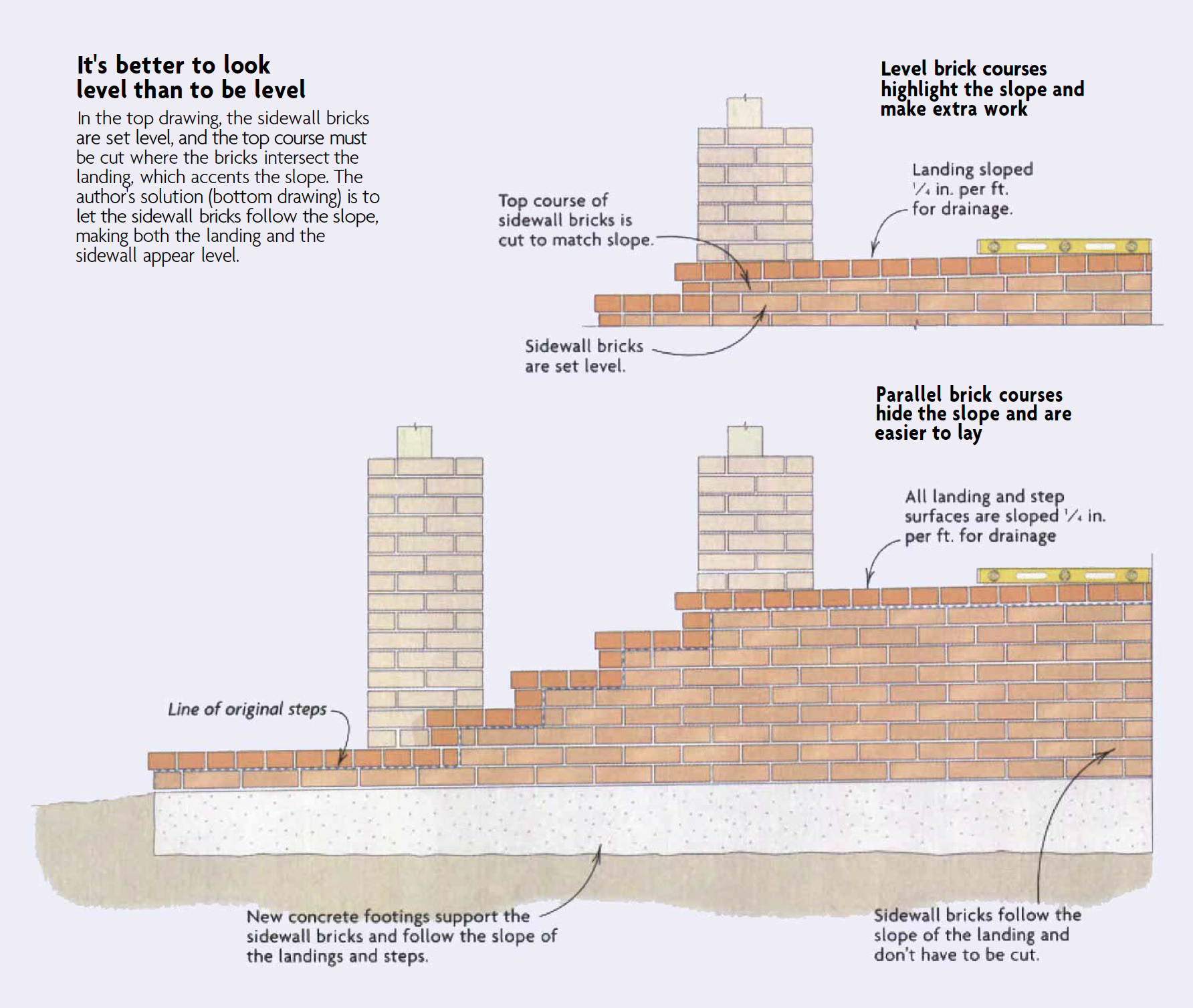
Proper drainage and slope are also crucial. Water is a primary enemy of brickwork. Surfaces should slope at least 1/4 inch per foot away from your house to ensure water runs off instead of pooling, which can lead to damage.
Finally, plan for expansion joints. Concrete and brick expand and contract at different rates with temperature changes. Expansion joints where the steps meet the foundation or other structures prevent cracking and are essential for long-term durability.
Having the right tools and materials ready is the first step to success with your brick over concrete steps project. A well-prepared workspace prevents frustrating delays.
For tools, you’ll need a wet saw with a diamond blade for clean, precise cuts on the brick veneer. A trowel is essential for mixing and applying mortar, while a level and straightedge ensure your steps are straight and sloped correctly for drainage. A grout bag makes filling joints much neater, and a rubber mallet helps set bricks without damaging them. You’ll also need a wire brush for surface preparation.
Safety gear is non-negotiable. Always use safety glasses, especially when cutting brick, and wear sturdy gloves to protect your hands from mortar and sharp edges.
For materials, your primary need is thin brick veneers or pavers rated for exterior use. You’ll also need Type S mortar for a strong bond, a masonry adhesive or bonding agent to help the mortar adhere to the concrete, and grout to fill the joints. A quality concrete sealer will protect the finished work, and spacers will help you maintain consistent joint widths for a professional look.
The mortar and grout you choose are critical to your project’s longevity. They are the foundation that holds your beautiful new steps together.
Type S mortar is the standard for exterior masonry. It has high compressive strength and excellent bonding properties, making it ideal for load-bearing applications. For even better adhesion, consider a polymer-modified mortar, which contains additives that improve bond strength, flexibility, and water resistance.
Your grout mix consistency should allow it to flow from the grout bag but still hold its shape in the joints without slumping. Achieving this perfect balance may take some practice.
Grout color options allow for customization. A matching color creates a seamless look, while a contrasting color highlights individual bricks for more visual texture. The choice depends on your home’s style and personal preference.
For professional guidance on material selection, our team at Masonry Services can help you choose the right products for your project.
This guide will walk you through the installation process for changing your plain concrete into stunning brick over concrete steps.
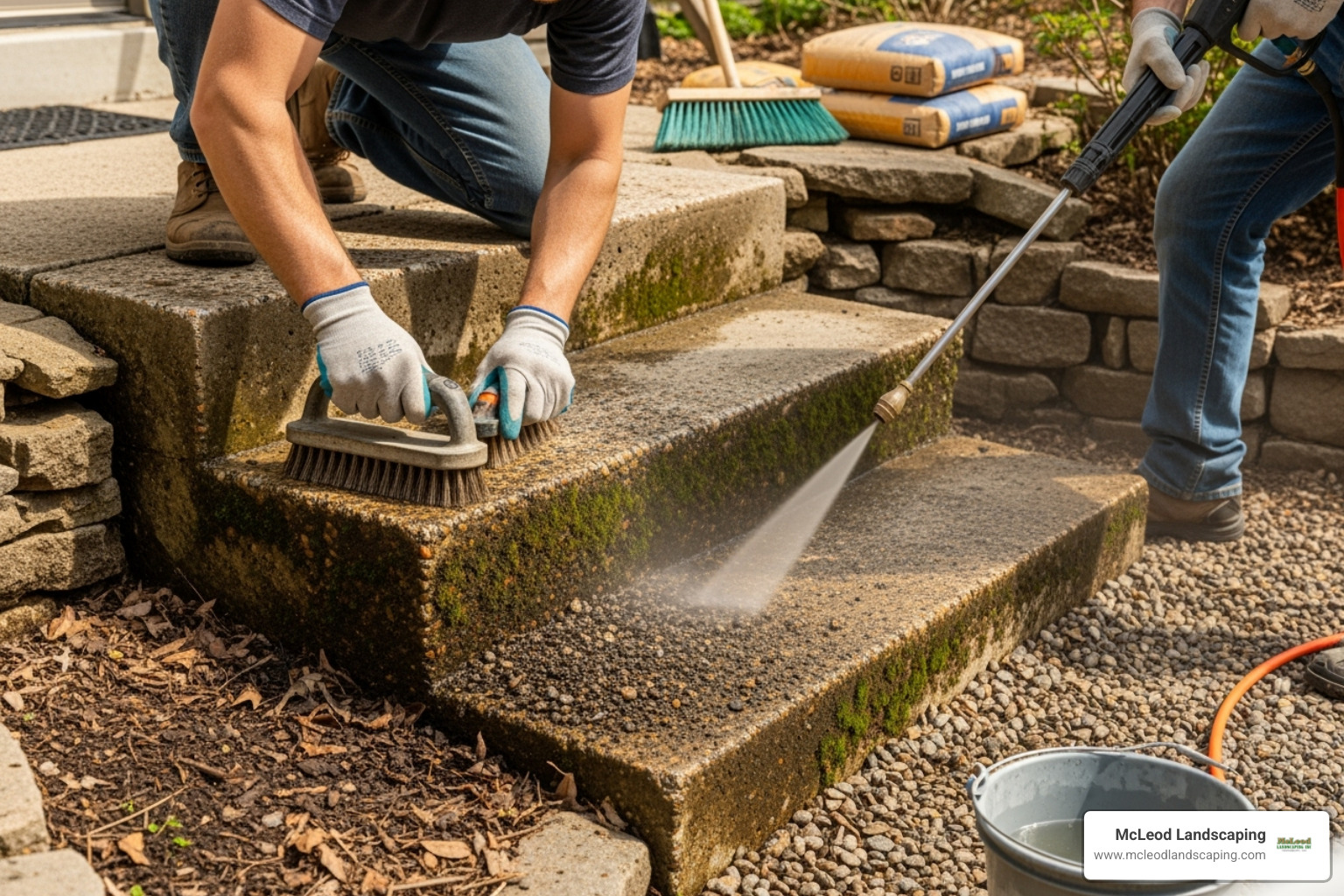
Proper surface preparation is crucial for a lasting finish. The concrete must be clean and properly textured for the mortar to bond effectively.
Start by cleaning the steps thoroughly. Use a stiff wire brush to remove all loose debris, dirt, and old paint. Follow up with a power washer to blast away any remaining grime.
Next, inspect and repair any cracks or damage. Fill small cracks with a concrete repair compound, smoothing it flush. For larger issues, you may need professional help.
Finally, you must roughen the surface to help the mortar adhere. Smooth concrete does not bond well. Use a hand grinder or a wire brush to etch the surface until it has a texture similar to medium-grit sandpaper.
Careful planning prevents mistakes and ensures a professional appearance. Start by measuring your steps carefully, noting the height and depth of each one.
Next, choose your brick pattern. A running bond pattern offers a classic look, while a herringbone pattern can add visual interest and help accommodate slight variations in brick size.

Dry fitting the bricks without mortar is a critical step. Lay them out on the steps or a nearby flat surface to see where cuts are needed and to finalize your pattern. Use chalk lines on the concrete to mark your layout and keep your courses straight.
The right mortar consistency is key. When mixing mortar, add water gradually until it reaches a peanut butter consistency—thick enough to hold its shape but still spreadable.
Before applying mortar, coat the prepared concrete with a bonding agent. This primer improves adhesion between the old concrete and new mortar. Once it becomes tacky, you can proceed.
Spread the mortar bed with a trowel to a consistent thickness of about 1/2 to 1 inch. For maximum adhesion, some professionals apply a thin scratch coat first, letting it partially cure before adding the main mortar bed.
This is where your project takes shape. Work carefully to avoid crooked lines and uneven joints.
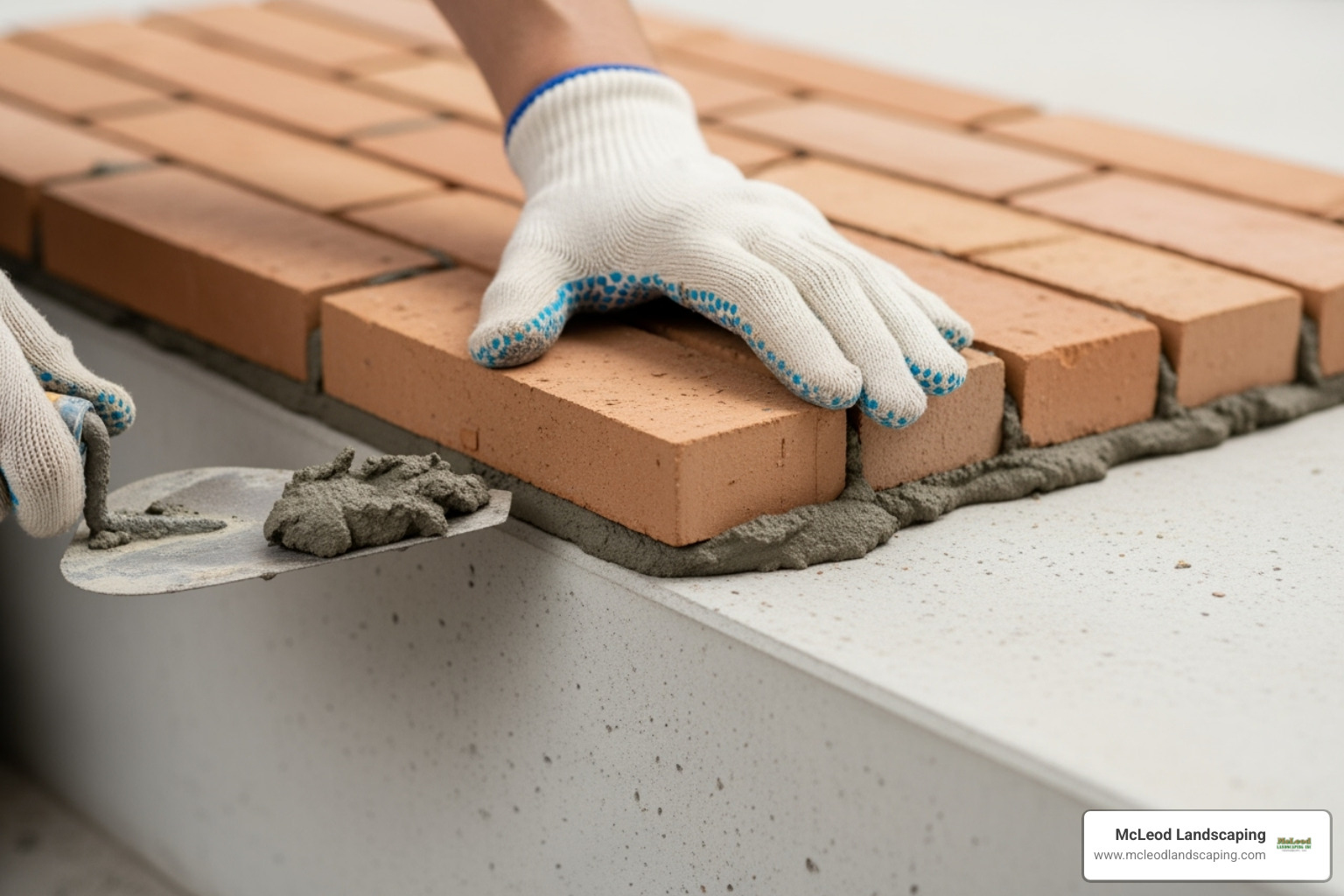
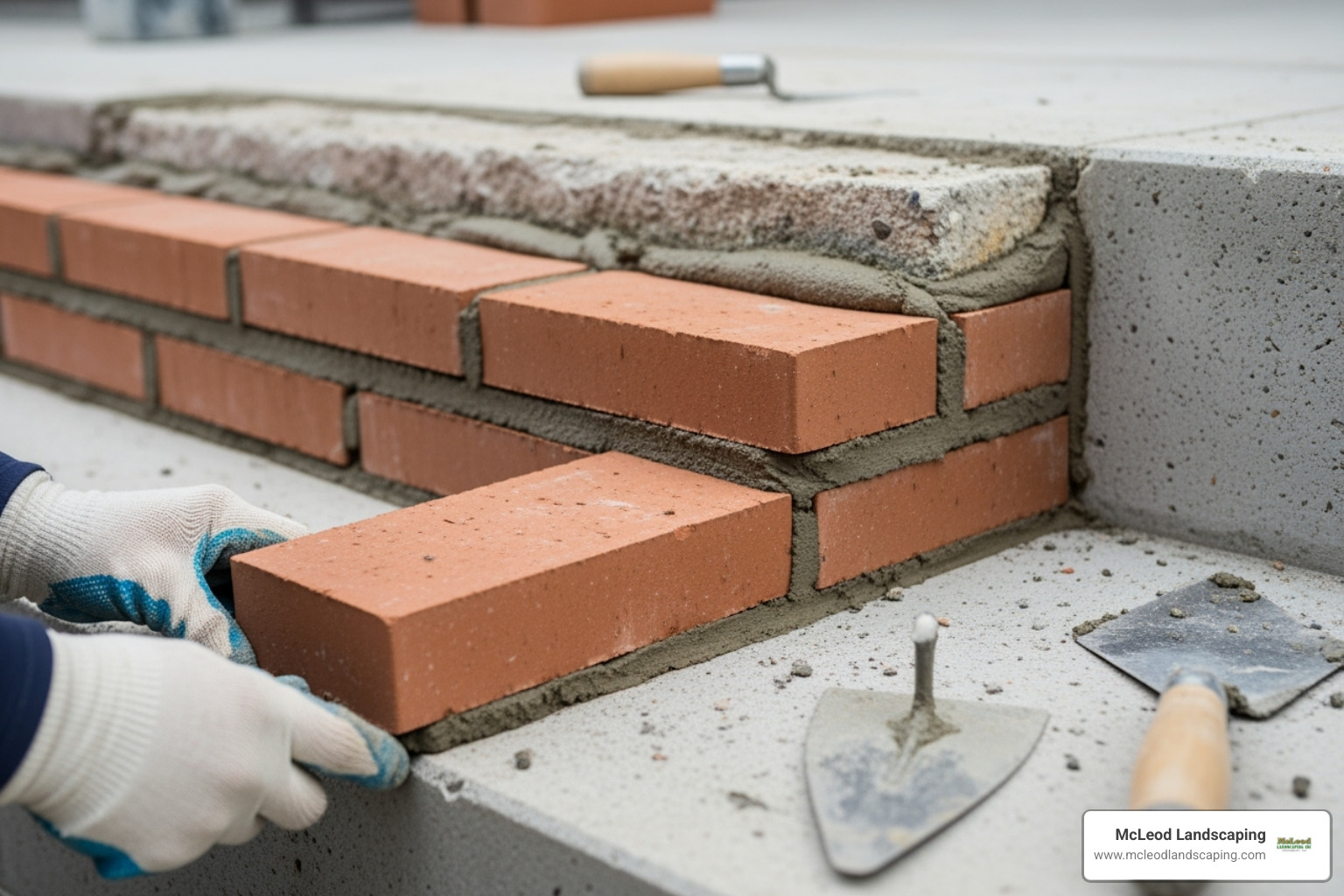
Start with the risers (the vertical faces). Apply mortar to the back of each brick (“buttering”) and press it firmly into place. Use spacers to maintain consistent 3/8- to 1/2-inch joints. Check each brick with a level to ensure it’s plumb.
Once the risers are done, move to the treads (the horizontal surfaces). Press each brick into the mortar bed with firm pressure, then tap it gently with a rubber mallet to set it. Your goal is to make the finished surface look level and plumb, even if the underlying concrete is not perfect. You can adjust the mortar bed thickness to compensate for minor irregularities.
Grouting unifies the surface and locks the bricks in place. Wait for the mortar to set until it’s firm to the touch (usually several hours).
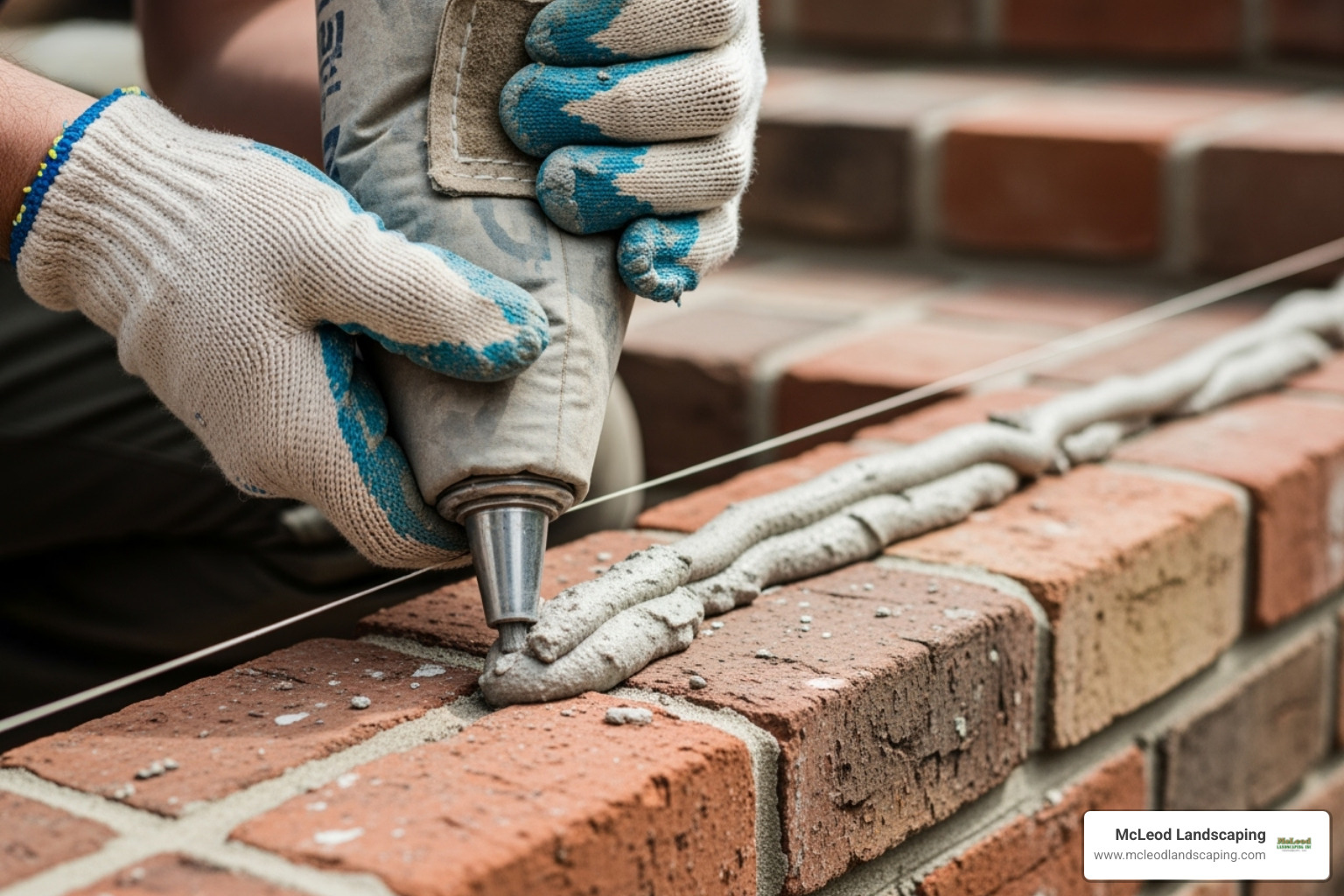
Mix your grout to a slightly wetter consistency than the mortar. Fill the joints using a grout bag, pushing the grout deep into the joints for a solid fill. After the grout firms up slightly, use a jointer tool to strike the joints. This compacts the grout and creates a uniform, water-shedding profile.
The final steps protect your investment. Clean excess grout from the brick faces with a trowel edge and a soft brush while it’s still workable, being careful not to pull it from the joints.
Allow for proper curing time (several days to a week) before sealing. Rushing this can trap moisture.
Finally, apply a masonry sealer. This provides crucial moisture protection and makes future cleaning easier. Use a breathable sealer and apply it according to the manufacturer’s instructions.
For complex projects, our Hardscape Design Services team can ensure professional results.
Even a well-planned brick over concrete steps project can present challenges. Here’s how to handle some common issues with the right approach.
Existing concrete steps are rarely perfectly uniform. Riser heights may vary, and treads may have settled unevenly. The goal is to make the finished steps appear level and consistent, even if the concrete underneath is not.
Adjusting the mortar bed thickness is the key. Use a little more mortar in low spots and a bit less in high spots to create a visually uniform surface. When riser heights vary, you can average the heights across the steps, making up small differences in the mortar joints to create a safer and more attractive staircase.
Prioritizing a visually level appearance is what matters most. Trust your eyes as much as your level.
Water is the biggest threat to your new brick steps. Proper drainage is essential for longevity. The importance of slope cannot be overstated; every horizontal surface must slope at least 1/4 inch per foot away from your house. This prevents water from pooling, which is especially critical in climates with freeze-thaw cycles.
Mitigating freeze-thaw cycle damage starts with proper slope. When trapped water freezes, it expands with enough force to crack mortar and split bricks. Ensure gutters and downspouts direct water away from the steps. If your existing concrete lacks adequate slope, you can create it with your mortar bed.
For complex drainage solutions for your Exterior Brick Stairs, our experienced team can provide professional guidance.
You will likely need to cut some bricks for a perfect fit. With the right tools, this is a straightforward process.
Using a wet saw with a diamond blade provides clean, precise cuts. The water cools the blade and minimizes dust. When cutting for patterns like herringbone, use a Speed Square to guide your angled cuts accurately.
Safety precautions are essential. Always wear safety glasses and gloves when operating a wet saw. Take your time, as each precise cut contributes to the professional appearance of your finished steps.
Here are answers to common questions about upgrading to brick over concrete steps, based on our 30 years of experience in the Merrimack Valley.
Properly installed brick veneer over concrete can last 20 years or more. The key durability factors are proper installation techniques—including the right mortar mix, good adhesion, and correct slope for drainage. Regular sealing and maintenance, such as occasional cleaning and re-sealing every few years, are also crucial for protecting the brickwork from moisture and extending its lifespan.
While regular bricks seem strong, they are generally not suitable for this application. The primary issues are weight considerations and the impact on step height. Full bricks are much heavier than thin veneer and can stress the underlying concrete structure. They also add significant thickness, which can create dangerously high step risers and interfere with door thresholds.
Thin veneer is purpose-built for this type of retrofit. It provides the authentic look of real brick without the structural and safety complications.
Cost is a key consideration, and it can vary based on several factors. The largest variable is DIY vs. professional costs. A DIY project involves only material and tool rental costs, while professional installation includes labor but ensures expertise and a lasting result.
Material costs for thin brick veneer typically range from $8 to $20 per square foot. Based on internet average pricing data (not McLeod Landscaping’s actual pricing), you can expect a complete professional installation to range from approximately $20 to $50+ per square foot. Complex designs or challenging site conditions can push costs to $75 per square foot or higher.
For an accurate estimate custom to your project in the Merrimack Valley, we recommend a professional consultation to account for all unique factors.
Covering your concrete steps with brick over concrete steps is a home improvement project that delivers on all fronts: instant curb appeal, lasting durability, and excellent value. In just a weekend, you can completely transform your home’s first impression from plain concrete to a beautiful, welcoming entrance.
The benefits are clear: improved aesthetics, superior durability that stands up to New England winters, increased home value, and low maintenance. This guide has provided the crucial steps for a successful installation, from surface preparation to the final seal.
For confident DIYers, this is an achievable and rewarding project. However, if you prefer the peace of mind that comes with professional installation, our team at McLeod Landscaping is here to help.
We’ve been perfecting these techniques for over 30 years throughout the Merrimack Valley. Our team knows how to handle any challenge, delivering the flawless finish your home deserves.
Whether you do it yourself or call in the pros, you’re making a valuable investment in your home. Those beautiful brick over concrete steps are ready to welcome you home.
For professional results on your exterior brick stairs and other hardscaping projects, contact McLeod Landscaping today to create the entrance your home deserves.
Contact McLeod Landscaping today at (978) 640-0957 or click here to schedule a consultation for retaining wall installation. Let our experienced team design and install a functional and visually appealing retaining wall that enhances your landscape.


1881 Main St Unit 1, Tewksbury, MA 01876