
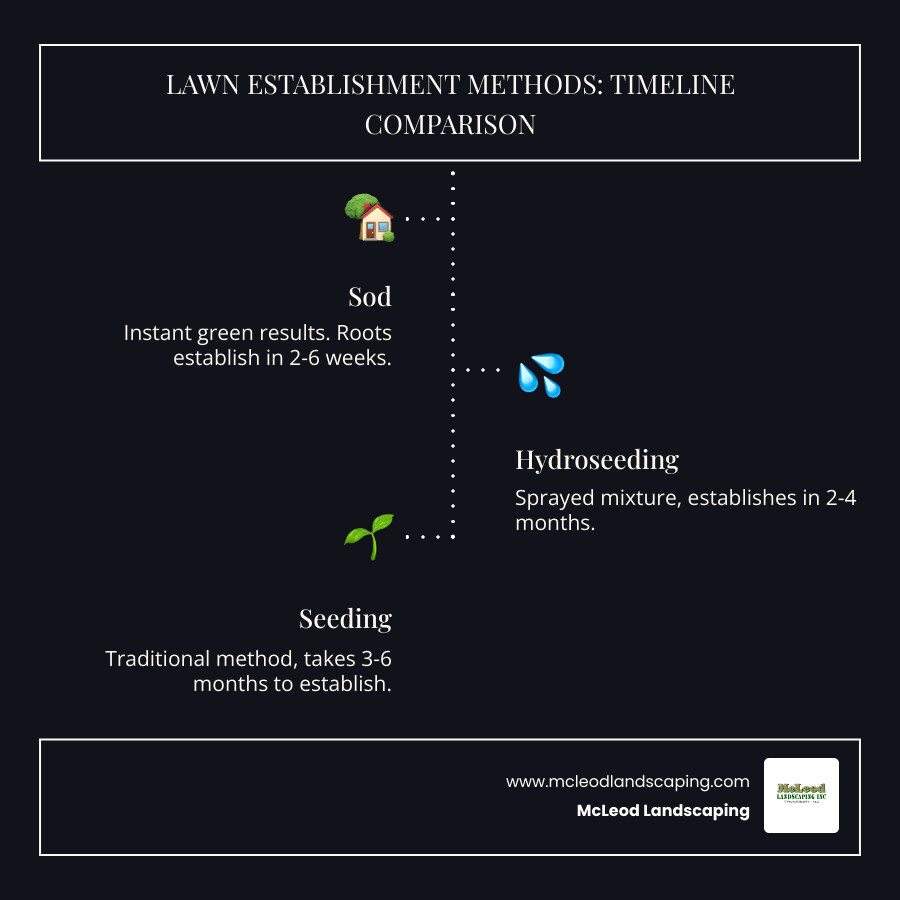
Installing new grass sod is the quickest way to transform a bare or patchy yard into a lush, green lawn that’s ready to enjoy in just weeks, not months. Unlike seeding, which can take 3-6 months to establish, or hydroseeding, which requires 2-4 months, sod gives you instant results with a mature lawn surface from day one.
Quick Answer: Installing New Grass Sod in 5 Steps
The key to success lies in proper soil preparation and consistent watering during the first two weeks. Sod that’s laid down more than 24 hours after harvesting may not survive, so timing is critical. Based on internet data (and not McLeod Landscaping’s pricing), professional installation can range from $2.75 to $8.25 per square foot including labor and materials, while DIY projects range from $300-$900 for 1,000 square feet of sod alone.
I’m Scott McLeod, owner of McLeod Landscaping, and over my 30+ years in the industry, I’ve seen countless homeowners achieve beautiful lawns through proper sod installation techniques. My team has perfected the art of installing new grass sod across hundreds of properties in the Merrimack Valley, ensuring each project delivers the instant gratification that makes sod such a popular choice.
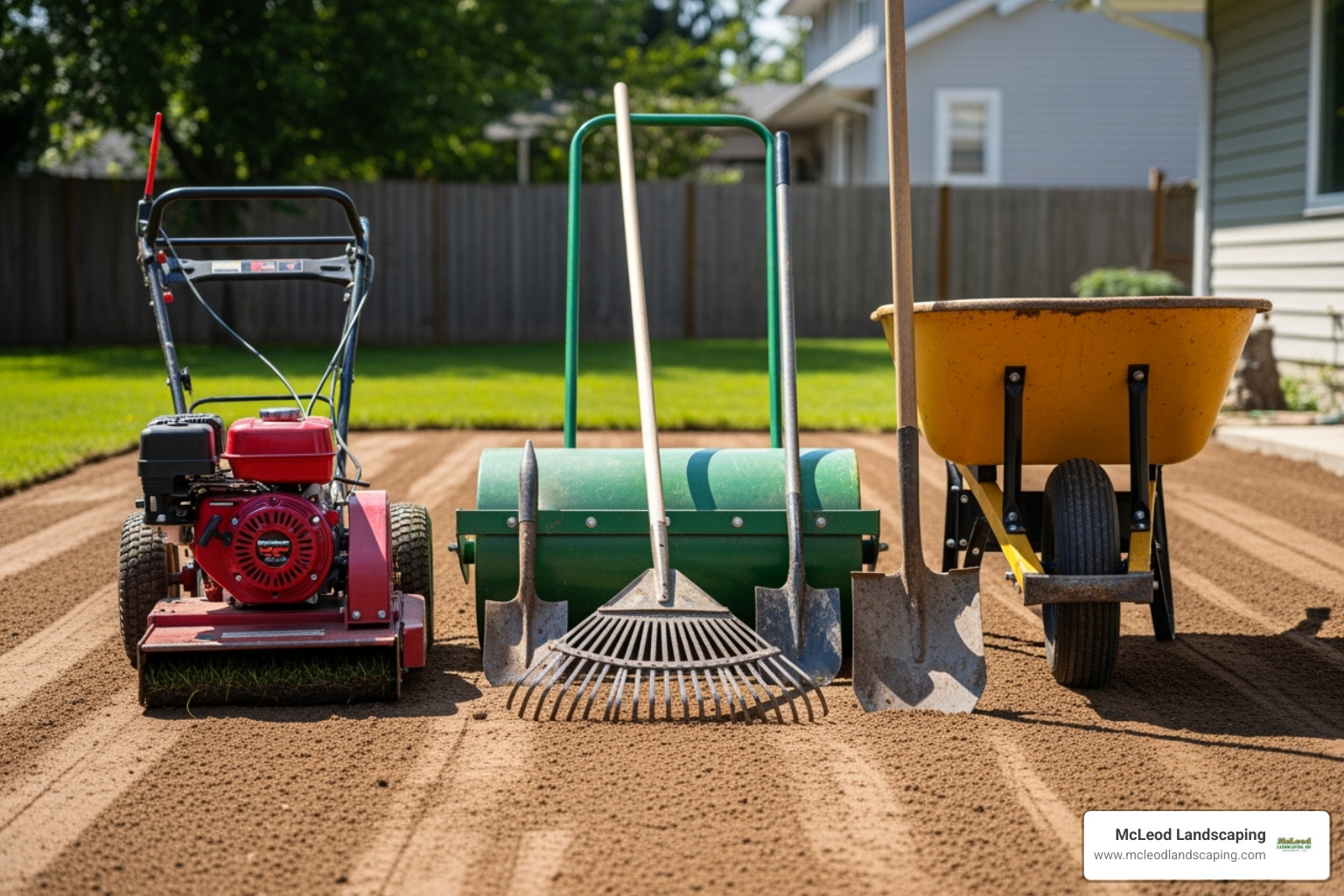
Before we even think about unrolling that beautiful green carpet, some crucial groundwork needs to be done. Think of it like building a house – a strong foundation is everything! Proper preparation makes all the difference in how quickly and successfully your new sod takes root and flourishes. It’s the most labor-intensive part of the process, but trust us, it’s worth every bead of sweat.
While sod can be laid any time the ground isn’t frozen, the optimal time to lay sod is late summer or early fall. The warm soil helps roots establish before winter, with ideal soil temperatures between 10 and 15 degrees Celsius. Spring is also a good option, as it helps reduce weed competition before summer heat arrives.
Avoid laying sod during peak summer heat or just before the ground freezes. Extreme temperatures stress the grass, requiring significantly more water and risking failure if the roots don’t establish in time.
Accurate measurement is key to ordering the right amount of sod. Here’s how to calculate your square footage:
Once you have your total, add 5-10% extra to account for cuts and trimming. Running out mid-job can cause delays and result in mismatched sod from a different batch.
Sod is a perishable product. Sod that is laid down more than 24 hours after harvesting may not survive. Schedule your delivery for the day you plan to install it to ensure maximum freshness and viability.
Proper soil preparation is the most critical step for a successful new lawn. Do not cut corners here.
Now comes the exciting part – watching your vision come to life as you transform that prepared soil into a beautiful green lawn! While installing new grass sod might look straightforward, specific techniques separate amateur results from professional-quality installations. The key is to work systematically and pay attention to detail, fitting each piece like a puzzle to create a seamless whole.
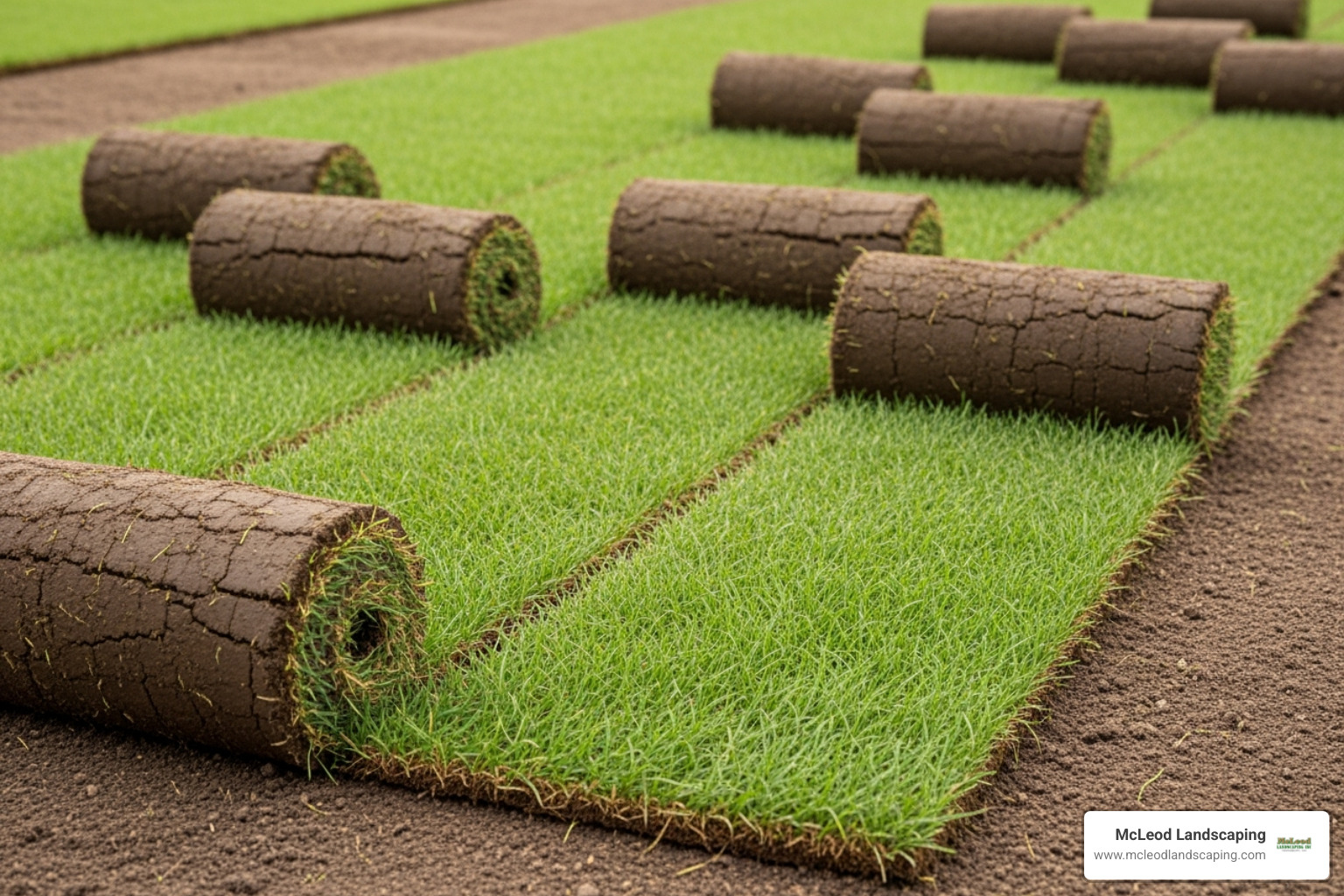
A professional-looking lawn starts with your first strip placement. Begin along the longest straight edge of your property, like a driveway or walkway, to act as your guide.
From there, think like a bricklayer. Stagger your joints in a brick-like pattern so the seams don’t line up. This helps the sod knit together and creates a stronger, more unified lawn. Tight seams are critical; push each piece snugly against its neighbors without overlapping. Gaps allow weeds and drying, while overlaps prevent proper rooting and cause brown spots.
If you’re working on a slope, lay your sod strips horizontally across the slope, not up and down. This prevents erosion and helps water soak in. Time is your enemy; don’t let freshly laid sod sit without water for more than an hour on a hot day.
You’ll inevitably need to cut sod to fit around obstacles.
This final step is what separates good installations from great ones. Rolling eliminates air pockets and ensures the good root-to-soil contact that is essential for your new sod to establish.
Use a water-filled lawn roller (about three-quarters full) and roll the entire area in a grid pattern—first in one direction, then perpendicular—for even pressure. For smaller areas, you can place a piece of plywood on the sod and walk on it to press it down.
Roll immediately after laying each section. However, if the soil is very soft and muddy from recent rain, wait to roll to avoid creating ruts or shifting the sod.
Congratulations! You’ve successfully laid your sod, but the journey to a beautiful lawn is just beginning. Those first few weeks require constant attention and care. With the right approach, you’ll be rewarded with a lush, healthy lawn that becomes the envy of your neighborhood.

Water is the single most important factor for successful sod establishment.
Use the “tug test” to check if your sod is establishing. Gently lift a corner; if you feel resistance, the roots are bonding with the soil. This usually happens within 2-6 weeks. For optimal efficiency, consider upgrading your Lawn Sprinkler Systems. You can learn more about The Importance of Proper Irrigation: Tips for Efficient Watering.
Your new sod requires special mowing and feeding.

Every lawn faces challenges, but most problems are easily solved with proper diagnosis and quick action. Your patience during these first few weeks will pay off with years of beautiful, healthy grass that improves your property’s value and your family’s enjoyment of your outdoor space.
Over the years, we’ve answered countless questions about installing new grass sod. Here are the ones that come up most often, along with the honest answers we give our clients.
This is probably the most common question we get, and it seems like a logical shortcut. Unfortunately, you absolutely cannot lay sod over existing grass. This common mistake almost always ends in failure.
The new sod never gets proper root-to-soil contact, which is critical for establishment. The old grass acts as a barrier, preventing the new roots from reaching the soil, water, and nutrients below. The drainage also suffers, creating soggy conditions. Eventually, the old grass decomposes into a “slimy mess” that creates an unstable base for your new lawn.
Proper soil preparation isn’t just a recommendation – it’s the foundation of a successful lawn installation.
The cost of installing new grass sod depends on whether you’re doing it yourself or hiring professionals.
For DIY projects, you’re looking at $300 to $900 for 1,000 square feet of sod alone, based on internet averages. This doesn’t include tools, soil amendments, or your own labor. If you hire professionals, expect to pay anywhere from $600 to $2,700 or more for that same 1,000 square feet, which includes expertise, labor, and equipment.
These are average costs based on internet data and not actual costs for McLeod Landscaping. Every project is different, and several factors can affect your final price.
Job size makes a huge difference, as larger projects typically have a lower cost per square foot. The complexity of your installation is another big factor; extensive grading, serious weed problems, or poor soil conditions will add to the cost. Access also matters, as difficult-to-reach areas can affect pricing.
For an accurate estimate custom to your specific situation, it’s always best to get a consultation. You can learn more about our approach to pricing on our Cost of New Sod Installed page.
Most sod farms grow their grass in full-sun conditions, meaning the sod you buy is typically a sun-loving grass type.
In our region, Kentucky Bluegrass is the star of the sod world, creating a gorgeous, thick lawn in full sun. For shadier spots, the solution is more creative. Fescue varieties, especially Tall Fescue, often work well as they develop deep roots that handle both shade and drought. Some clients have success with Zoysia grass varieties, which are more shade-tolerant but are better suited to warmer climates.
Even “shade-grown” sod tends to be weaker and more prone to disease. We often recommend overseeding with shade-tolerant grass seed after installation or blending grass types to create a lawn that can handle your yard’s unique light conditions.
Choosing the right grass depends on your yard’s specific soil, drainage, and light. As part of our Residential Landscape Design services, we help you choose the grass type that will give you the best shot at long-term success.
Installing new grass sod transforms your yard from patchy disappointment to green paradise faster than any other lawn method. Success comes down to understanding a few fundamental truths.
Preparation truly makes all the difference. Skipping soil prep is a common mistake that leads to failure. A proper foundation of tilled, amended soil with good drainage is non-negotiable for changing turf rolls into your personal lawn sanctuary.
Timing is also critical. Avoid laying sod in extreme heat and always ensure it’s installed the same day it was harvested. Late summer through early fall is the ideal window, giving the sod time to establish strong roots before winter.
However, the real work begins after you roll out that last strip. The first few weeks of consistent watering and patient waiting for the roots to establish are what make a lawn thrive.
While many homeowners successfully tackle installing new grass sod as a weekend project, others find that the physical demands and attention to detail required make professional installation worth every penny. For complex projects involving significant grading, challenging access, or when you simply want the peace of mind that comes with three decades of experience, our team at McLeod Landscaping brings the expertise to ensure your investment pays off for years to come.
We’ve helped countless families across Andover, Billerica, Burlington, Carlisle, Chelmsford, Concord, Lowell, Tewksbury, Westford, and Wilmington create outdoor spaces that become the backdrop for family memories. Your new lawn is waiting – Learn more about our Residential Sod Installation services.
Contact McLeod Landscaping today at (978) 640-0957 or click here to schedule a consultation for retaining wall installation. Let our experienced team design and install a functional and visually appealing retaining wall that enhances your landscape.


1881 Main St Unit 1, Tewksbury, MA 01876