
Installing sod in october might sound like a risky move, but it’s actually one of the smartest lawn decisions you can make. Most homeowners believe spring is the only time to establish a new lawn, but fall installation offers significant advantages that can save you time, money, and stress.
Quick Answer: Installing sod in October is ideal because:
The science is clear: grass focuses on root growth rather than blade growth during fall months. This means your new sod spends its energy building a strong foundation instead of just looking green on top. Cool-season grasses like Kentucky Bluegrass and Tall Fescue actually prefer the cooler temperatures that October provides.
As Ray Weekley, owner of Chantilly Turf Farm, notes: he “prefers fall installations of fescue/bluegrass sod as watering is less critical due to cooler temperatures and moist soils.” Professional sod installers consistently report fewer callbacks and complaints with fall installations compared to spring or summer projects.
I’m Scott McLeod, owner of McLeod Landscaping, and in my 30+ years serving the Merrimack Valley, I’ve seen how installing sod in october creates healthier, more resilient lawns than spring installations. The combination of our region’s climate and fall’s natural growing conditions makes October the secret weapon for achieving a perfect lawn.
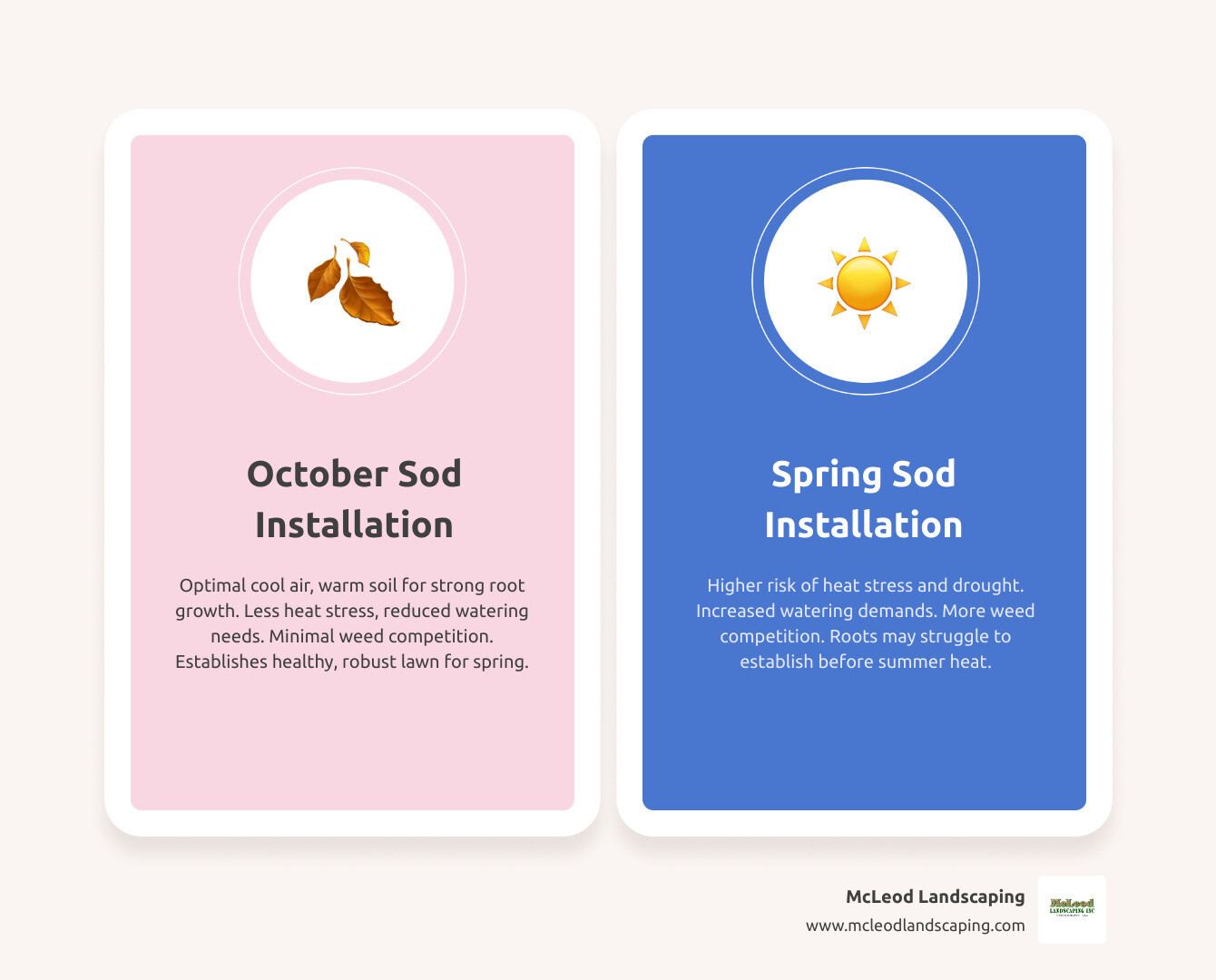
There’s a reason smart lawn enthusiasts choose to be installing sod in october. This month offers a unique combination of conditions that set your new lawn up for long-term success.
The cooler air temperatures are a relief for new sod, preventing the heat stress that plagues summer installations. Meanwhile, the soil is still holding onto summer’s warmth. This creates an ideal scenario: cool on top, warm below. As long as your soil temperature is above 55°F, roots will grow vigorously. Mother Nature often helps with more natural rainfall, which means less watering required from you.
This timing also syncs perfectly with the grass growth cycle. In fall, cool-season grasses like Kentucky Bluegrass and Tall Fescue shift their energy from blade growth to root development. They are building a deep, strong foundation to store energy and survive winter. This focus on roots, combined with reduced weed competition, gives your sod a huge advantage. The result is a significantly healthier lawn next spring, ready to green up faster and stronger. For more details on how we can help transform your yard, check out our Residential Sod Installation services.
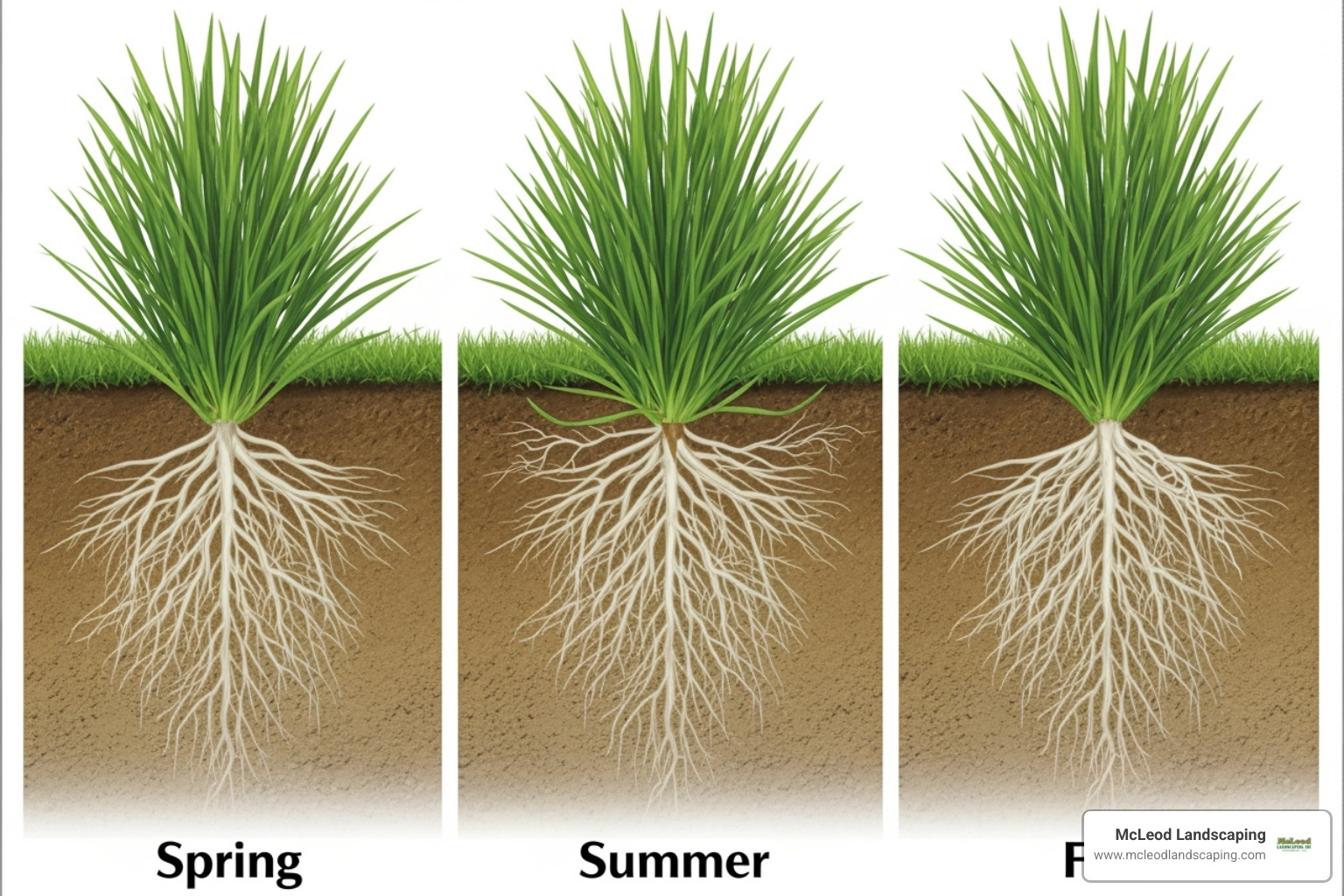
Living here in Massachusetts gives us a distinct advantage for installing sod in october. Our Merrimack Valley weather patterns create a ‘Goldilocks zone’ for fall sodding.
Our climate provides a longer establishment window before a hard freeze, typically 6-8 weeks of good growing weather after October 1st. This is plenty of time for your sod to develop crucial roots. This timing also avoids the high risk of summer drought and heat damage. October provides warm days for root growth without the extreme heat that can kill new sod.
Before you start, it’s smart to check your local frost dates to make sure you have adequate establishment time. And while you’re thinking about improving your outdoor space, you might want to explore the differences between our Hardscaping vs Landscaping services to create a complete yard change.
Installing sod in october is an exciting project. Whether you’re doing it yourself or hiring our team, understanding the process is key. October’s cooler weather is more forgiving than summer’s heat, but timing is still crucial. Plan to lay your sod within 12-24 hours of delivery for the best results.
Essential tools include: rakes, a shovel, a rototiller, a wheelbarrow, a hose/sprinkler, a utility knife, a spreader, and a lawn roller.
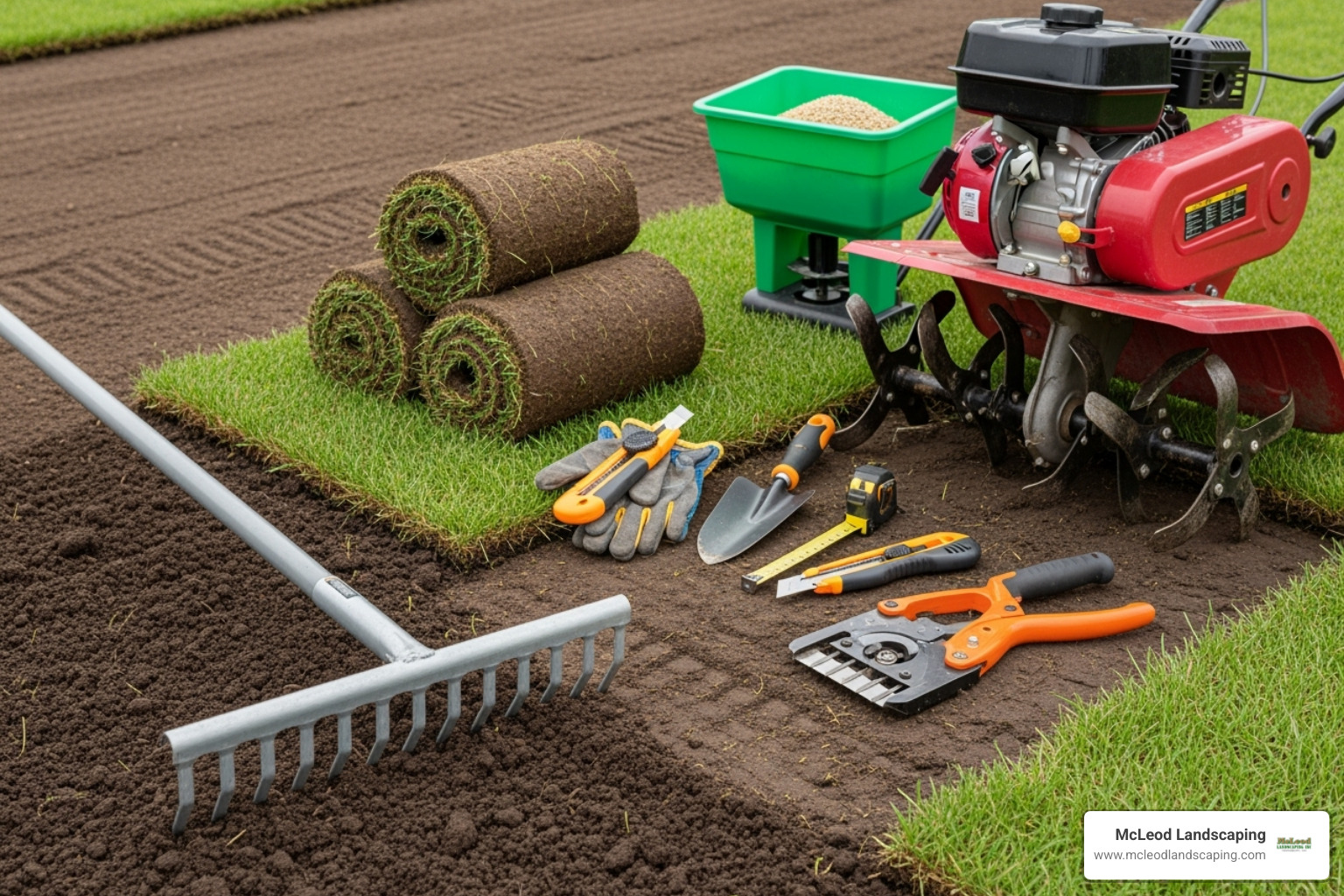
Good preparation is the foundation of a great lawn.
For comprehensive preparation, explore our Hardscape and Landscape services.
In our Northeast climate, cool-season grasses are the best choice for October installation.
Always choose freshly cut sod from a reputable farm. Quality sod should be moist, vibrant green, and harvested within 24 hours of delivery. Avoid bargain sod that has been sitting around. We bring this same commitment to quality to all our projects, including our Commercial Landscape Installations.
Lay your sod within 24 hours of delivery for best results.
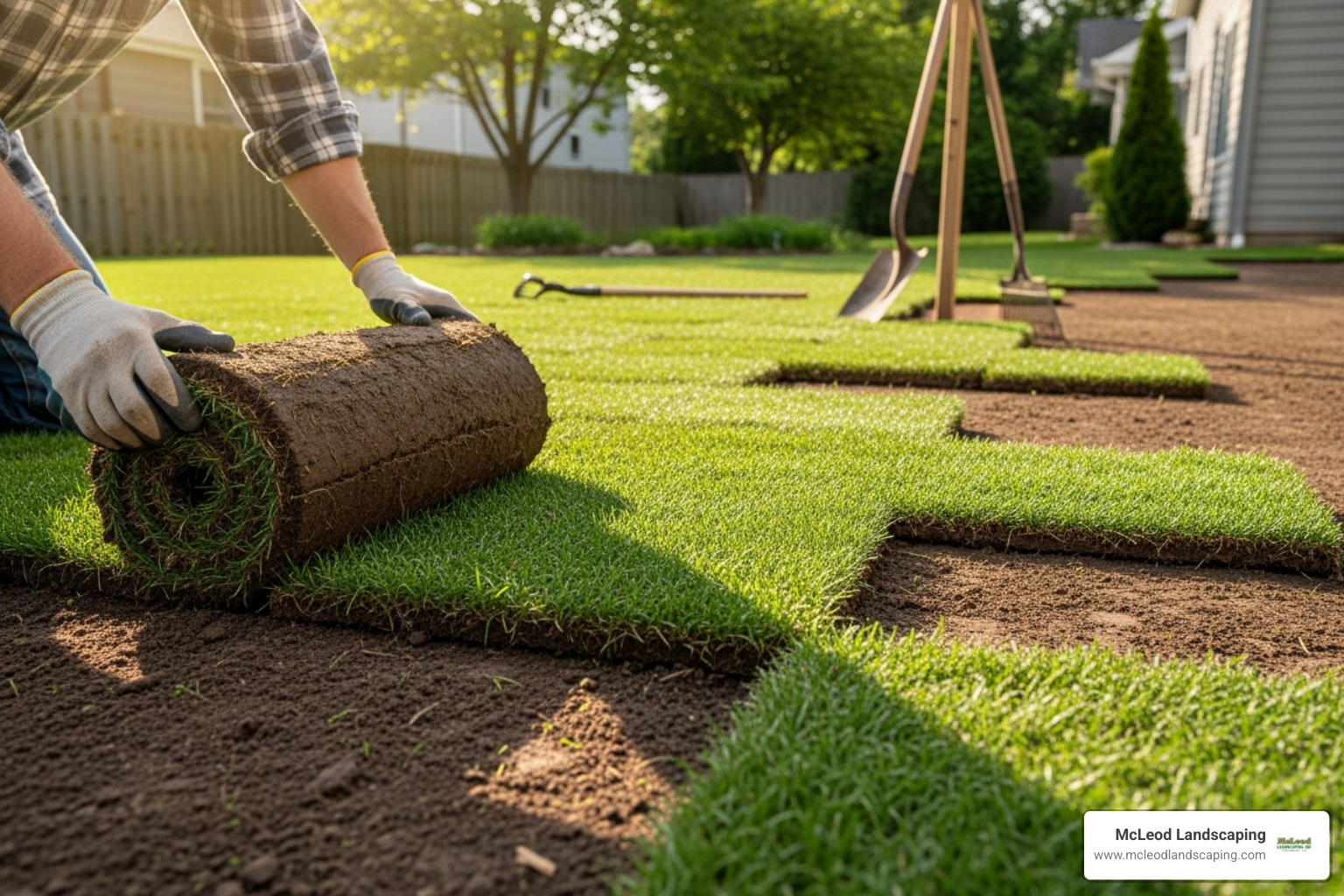
The work isn’t over after installing sod in october. The next 4-6 weeks are critical for root establishment before the ground freezes. This is your lawn’s lifeline for winter survival.
Watering new sod in October is less demanding than in summer, but vigilance is key for the first 14 days.
Your goal is to keep the top 3 inches of soil consistently moist, like a wrung-out sponge. Check moisture by lifting a corner of the sod. After the first two weeks, as temperatures drop, you can gradually reduce watering frequency. Shift to deeper, less frequent watering to encourage deep root growth.
Winter watering needs are minimal. A light watering may be needed during dry, windy spells if the ground isn’t frozen. Once temperatures stay below freezing, you can stop watering until spring. For automated solutions, explore our Irrigation Systems. You can also find helpful guidance in these Late-season Sod Establishment tips.
Fall fertilizing is all about building roots, not green top growth.
Use a starter fertilizer with high phosphorus content to promote strong, deep root development. Potassium is also important, as it helps grass cells resist cold damage. Apply this fertilizer about 4-6 weeks before your area’s average first frost date.
Avoid nitrogen-heavy fertilizers before winter. Nitrogen encourages tender new growth that is vulnerable to frost. Your goal is strong roots now for a gorgeous green lawn later. A second application of starter fertilizer 4-6 weeks after installation can provide an extra boost.
For comprehensive property care, check out our Commercial Property Maintenance services.
While October is ideal for sod installation, it’s not without challenges. Timing is absolutely critical when you’re installing sod in october. You’re in a race against winter, and you need to plan around frost dates and sod availability, as sod farms may have limited inventory in late fall.
When is it time to wait until spring? The key is the minimum establishment window.
Your new sod needs at least 4 weeks of soil temperatures above 55°F to develop roots before the ground freezes solid. In the Merrimack Valley, this usually means finishing your installation by mid-to-late October. A light frost is okay, but a hard freeze (below 28°F) will stop root growth.
Signs it’s too late:
If you miss the window, don’t risk a late installation. Use the time to prepare your soil for an early spring project. For winter planning, consider our Commercial Snow Removal services.
| Feature | October Installation | November Installation | Early Spring Installation |
|---|---|---|---|
| Air Temperature | Cool, ideal for sod | Cold, approaching freezing | Cool, but warming |
| Soil Temperature | Warm, ideal for roots (>55°F) | Cooling, may be near 55°F | Warming, may be below 55°F initially |
| Root Establishment | Excellent (4-6 weeks) | Possible, but slower/risky | Good, once soil warms |
| Watering Needs | Reduced due to natural rainfall | Very low | Moderate, weather dependent |
| Weed Competition | Minimal | Minimal | Moderate, as weeds emerge |
| Spring Appearance | Lush, established, early green-up | Good, if roots established | Good, but later establishment |
| Risk of Frost Damage | Low, if established before hard freeze | Moderate to High, if not rooted | Low |
New sod is vulnerable, and protecting it is key to spring success.
The biggest mistake is walking on frozen sod. Frosted grass blades are brittle and can be crushed, leaving brown spots later. Another threat is desiccation (winter drying), where winter winds and sun pull moisture from the grass when the roots can’t absorb water from the frozen ground.
This is why the 4-6 week establishment window is so crucial—it builds resilience. To protect your investment, ensure the sod is well-watered before a hard freeze, as moist soil retains heat better. A light watering on a mild winter day can also prevent desiccation.

With proper planning, October sod installation remains one of the best decisions for your lawn’s long-term health.
After three decades of installing sod in october throughout the Merrimack Valley, I’ve heard just about every question you can imagine. Let me share the answers to the ones that come up most often – and trust me, these are great questions that show you’re thinking like a smart homeowner!
In October, new sod typically takes 4 to 6 weeks to establish a strong root system before the ground freezes. The combination of cool air and warm soil (above 55°F) encourages the grass to focus its energy on deep root growth rather than top growth, which is exactly what you want for a healthy, resilient lawn.
Yes. A light frost won’t harm newly laid cool-season sod, as these grasses are cold-hardy. The real concern is a hard freeze (below 28°F) that stops root growth or freezes the ground solid before the roots are established. The most important rule is to avoid walking on frosty sod, as the frozen blades are brittle and can easily break.
An October-installed lawn has a significant head start. Because it spent the fall developing a robust root system, it will green up faster and thicker in the spring. This established root network also makes the lawn more mature and better equipped to handle summer stress like heat and drought, outperforming lawns installed the following spring.
It’s clear that installing sod in october is one of the smartest moves for your lawn. You’ll benefit from stronger roots, a healthier spring lawn that greens up early, and less maintenance due to cooler temperatures and natural rainfall. While others are just starting in spring, your lawn will already be a neighborhood showstopper.
The science and timing all point to October as the ideal window for cool-season grasses to establish deep roots before winter. However, a successful installation requires expertise, quality materials, and attention to detail.
For a flawless, professional result that guarantees a beautiful lawn for years to come, consider the expert team at McLeod Landscaping. With over 30 years of experience in the Merrimack Valley, we know how to maximize October’s advantages. We use the right sod varieties for our climate and prepare your soil for perfect root development, ensuring your new lawn is established before winter.
Don’t let another fall pass by. This October could be the start of the lawn you’ve always wanted.
Request an estimate for your Residential Sod Installation today!
Contact McLeod Landscaping today at (978) 640-0957 or click here to schedule a consultation for retaining wall installation. Let our experienced team design and install a functional and visually appealing retaining wall that enhances your landscape.


1881 Main St Unit 1, Tewksbury, MA 01876