
Installing zoysia sod is one of the fastest ways to transform your property into a lush, green paradise that can handle heavy foot traffic while requiring minimal maintenance. This warm-season grass creates an incredibly dense, carpet-like lawn that stays green longer into fall and greens up earlier in spring than many alternatives.
Quick Answer: Installing Zoysia Sod in 5 Steps
Zoysia sod offers incredible benefits that make it worth the investment. It’s drought-tolerant once established, can withstand heavy foot traffic from kids and pets, and creates such a thick lawn that weeds struggle to take hold. Unlike seeding, sod gives you an instant lawn that you can enjoy immediately.
The installation process requires some physical work and attention to detail, but it’s absolutely doable as a DIY project. Most homeowners can complete an average-sized lawn installation in a weekend with the right preparation and tools.
As Scott McLeod, owner of McLeod Landscaping with over 30 years of experience in the Merrimack Valley, I’ve helped countless property managers and homeowners achieve beautiful lawns through installing zoysia sod and other landscaping solutions. My team has seen how proper installation techniques make the difference between a thriving lawn and costly do-overs.
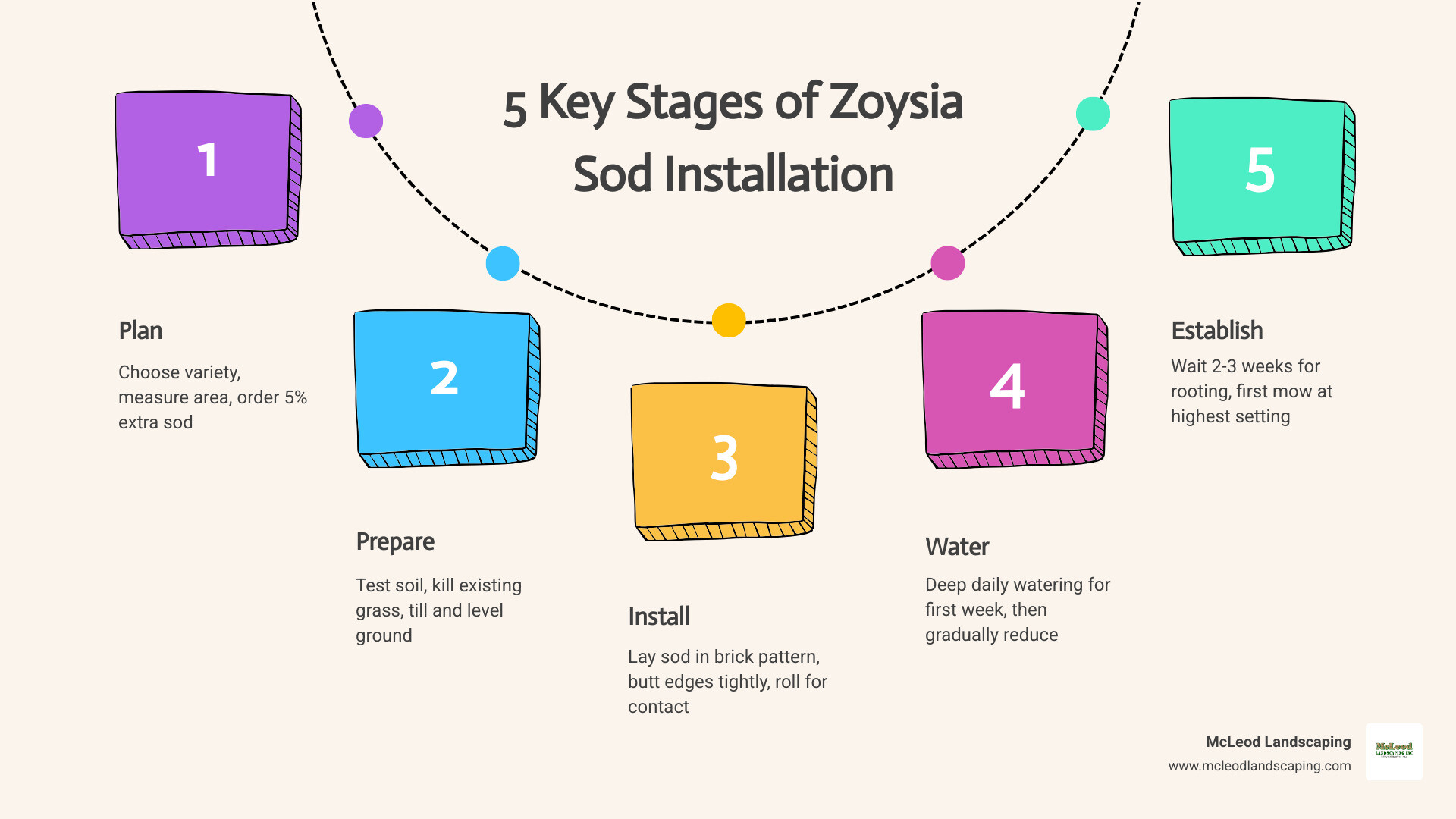
Common installing zoysia sod vocab:
The secret to a gorgeous Zoysia lawn isn’t in the laying – it’s in the planning. Before you even think about unrolling that first piece of sod, taking time to understand what makes Zoysia special and calculating your exact needs will save you headaches (and money) down the road.
Why choose Zoysia? This warm-season grass is like the Swiss Army knife of lawns. Once established, it’s incredibly drought-tolerant, meaning you won’t be out there with the hose every evening during dry spells. Got kids who love to play soccer in the backyard? Perfect. Zoysia handles foot traffic like a champ without turning into a muddy mess.
The real magic happens with its dense growth pattern. This thick, carpet-like lawn naturally crowds out weeds, so you’ll spend less time battling dandelions and more time enjoying your outdoor space. Plus, it’s genuinely low maintenance – no weekly fertilizing schedules or constant fussing required.
For homeowners here in the Merrimack Valley, from Andover to Chelmsford, Zoysia makes perfect sense. It gives you that lush, green look without the constant upkeep that other grass types demand.
Not all Zoysia is created equal. Think of it like choosing between different car models – they’ll all get you where you’re going, but each has its own personality. Here’s what you need to know about the most popular varieties:
| Variety | Leaf Texture | Shade Tolerance | Growth Rate | Cold Hardiness | Key Characteristics |
|---|---|---|---|---|---|
| Zeon | Fine | Good | Slow | Good | Dark green, excellent shade and drought tolerance, often used for golf courses. |
| Meyer (Z-52) | Medium | Moderate | Moderate | Very Good | One of the oldest and most popular, good cold tolerance, spreads faster than some Zoysias. |
| Emerald | Very Fine | Moderate | Slow | Moderate | Attractive, dense, less winter hardiness than Meyer, prone to thatch if over-fertilized. |
| Palisades | Medium-Coarse | Moderate | Moderate | Good | Upright growth habit, allows for wide range of mowing heights, good for sports fields. |
For Massachusetts homeowners, Meyer (Z-52) often wins the popularity contest thanks to its excellent cold hardiness. Since we’re dealing with New England winters, you want a variety that can handle the temperature swings without giving up on you come spring.
Here’s where timing becomes everything. As a warm-season grass, Zoysia is basically solar-powered – it loves heat and grows best when soil temperatures stay consistently between 65-85°F. This means late spring to early summer is your sweet spot for installing zoysia sod.
Why does this matter? Warm soil temperatures during the peak growing season mean your new sod will develop roots quickly and “grab hold” of your prepared soil. It’s like the difference between planting tomatoes in May versus March – timing with the seasons makes all the difference.
Fall installation can work, but it’s riskier. Cooler temperatures mean slower root establishment, and your new lawn might struggle to develop the deep root system it needs before winter dormancy kicks in.
Once you’ve picked your variety and installation window, it’s time for some basic math. Measure your lawn area (length times width for rectangular spaces, or use an online area calculator for irregular shapes). Then add 5% extra to your total – trust me on this one. You’ll need those extra pieces for cutting around sprinkler heads, fitting odd corners, and replacing any damaged pieces.
Most sod comes on pallets covering about 450-500 square feet. So if you’ve got a 2,000 square foot lawn, you’re looking at roughly four pallets plus that extra 5%.
Curious about the investment? Check out more info about the Cost of New Sod Installed to help with your planning budget.
Think of soil preparation like laying the foundation for your dream home – you wouldn’t skimp on that, would you? The secret to a thriving Zoysia lawn isn’t just in the sod itself, but in creating the perfect environment underneath for those roots to flourish.
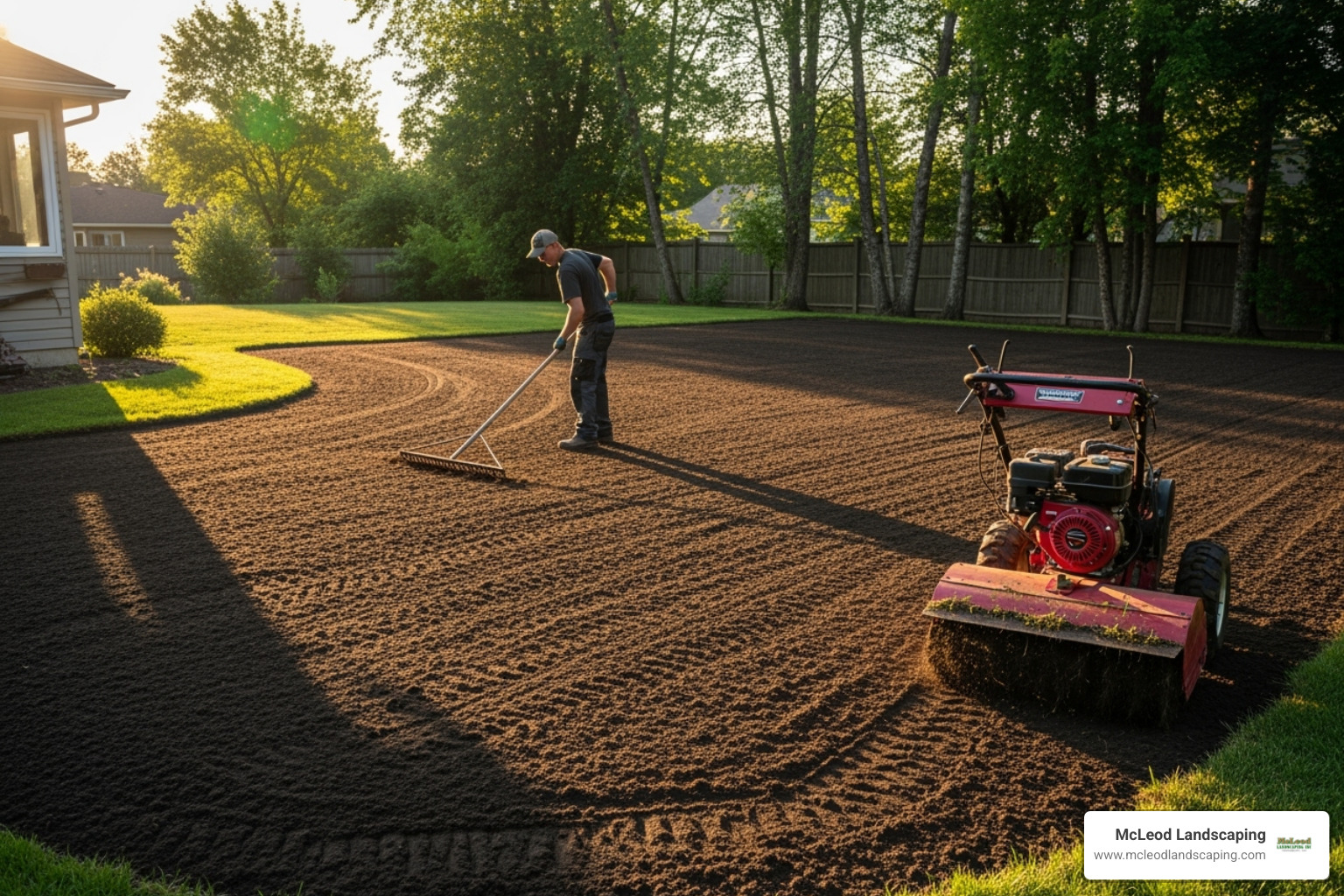
Start with a soil test – it’s like getting a health checkup for your yard. This simple step reveals your soil’s pH level and shows what nutrients might be missing. Zoysia grass is happiest when the pH sits between 6.0 and 7.0, slightly acidic to neutral. When the pH is off, your grass can’t absorb nutrients properly, which means any fertilizer you apply later might just wash away with your money.
Based on average costs from online sources, which are not actual costs for McLeod Landscaping, a professional soil test can range from $20 to $75 or more, depending on the lab and level of detail. It’s a small investment that takes about two weeks to complete. Trust me, it’s worth doing this well before your installing zoysia sod day arrives.
Now comes the fun part – clearing out the old to make room for the new. We need to remove existing grass, weeds, and any debris from the installation area. For stubborn turf that just won’t quit, a non-selective herbicide works wonders. Apply it 10 to 14 days before your planned installation date to ensure everything is thoroughly eliminated. Sometimes tough grass needs a second dose after 3-4 days – don’t worry, persistence pays off.
Once the area is clear, it’s time to break up that compacted soil. Tilling the soil about six inches deep gives your new sod’s roots room to spread and breathe. Don’t let equipment rental intimidate you – renting a rototiller is easier than you might think, and most rental centers will show you exactly how to use it.
Here’s where we really set our lawn up for success: amending the soil with organic matter. Mix in compost or quality topsoil at about 25 to 50 percent by volume. If you’re working the top 3 inches of soil, incorporate 1 to 2 inches of compost. This creates a rich, well-draining foundation that Zoysia roots absolutely love.
The final step is leveling the surface with a landscape rake. Using a landscape rake, remove any rocks, sticks, or dirt clumps that could create bumpy spots in your finished lawn. Think of this as creating a smooth canvas for your green masterpiece – every little bump you smooth out now prevents an uneven spot later.
This preparation work ensures perfect contact between your new sod and the soil underneath. It might seem like a lot of work upfront, but trust me, your future self will thank you when you’re enjoying a lush, healthy lawn for years to come. For more insights into changing your outdoor space, check out more info about Residential Landscaping.
With our soil perfectly prepped, it’s time for the exciting part: laying the sod! This is where we start to see our new lawn take shape. While it’s a physical job, with the right tools and technique, it’s incredibly satisfying.
Before we dive into installing zoysia sod, let’s make sure we have the right tools on hand. A wheelbarrow or wagon will save our backs when hauling sod pieces around the yard. We’ll need a landscape rake for any final soil adjustments, and a sharp utility or garden knife is absolutely essential for cutting pieces to fit around curves and obstacles. Finally, a lawn roller ensures proper contact between the sod and soil – this step makes all the difference in establishment success.
The key to success is timing. We want our sod delivered only when we’re ready to lay it, ideally within 24 to 48 hours of being cut. Sod is a living product, and freshness matters. If we can’t install it immediately, we’ll store it in a shaded area and keep it lightly moistened.
Now for the fun part! We start by lightly watering our prepared soil surface until it’s moist but not saturated. This helps the new sod adhere and prevents it from drying out too quickly during installation.
The laying technique is crucial for a professional-looking result. We always start along a straight edge like a driveway or house foundation. This gives us a clean reference line and helps keep everything aligned as we work across the lawn.
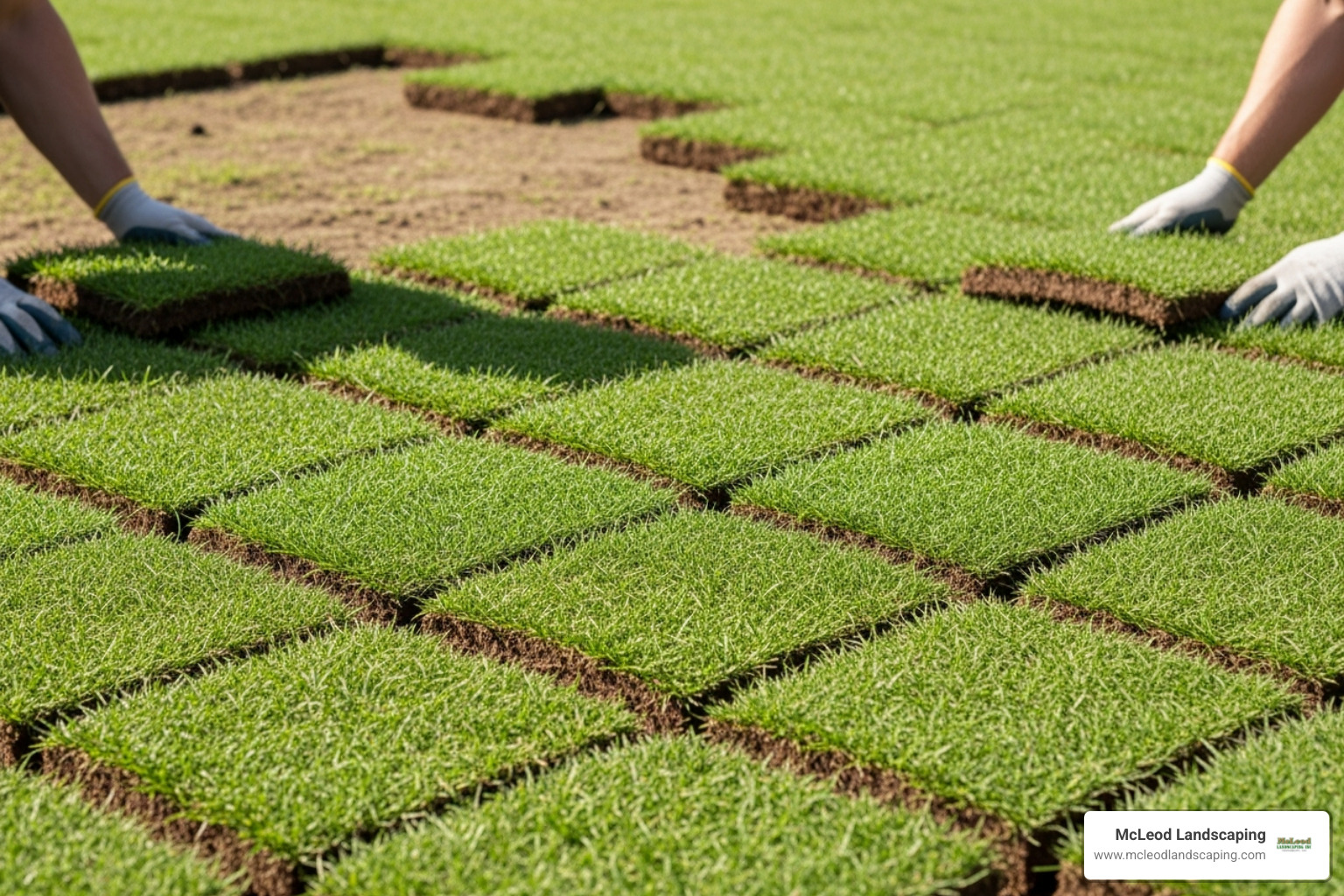
Just like a mason laying bricks, we use a staggered brick pattern when installing zoysia sod. This means the seams in one row don’t line up with the seams in the next row. This technique prevents erosion, especially on slopes, and creates a much more stable and uniform lawn over time.
As we lay each piece, we push the edges together tightly. We want absolutely no gaps between pieces, but also no overlapping. Gaps will create weak spots where weeds can establish, while overlapping leads to uneven growth and unsightly ridges in our finished lawn.
When we encounter curves, sprinkler heads, or other obstacles, we use our utility knife to cut the sod precisely. A quality garden knife for cuts makes this job much easier and gives us clean, professional-looking edges around landscape features.
Here’s where many DIYers skip a crucial step: rolling for contact. Once we’ve laid a section of sod, we go over it with a lawn roller to ensure root-to-soil contact. This eliminates air pockets that can dry out the sod and seriously hinder establishment. Most equipment rental stores offer lawn rollers, and renting a lawn roller is much more cost-effective than buying one for a single project.
We work our way across the lawn methodically, section by section. Lay, fit, roll, repeat. Before we know it, our entire area is covered in beautiful green carpet. The change from bare soil to lush lawn happens in just a few hours – it’s pretty amazing to see!
The sod is laid, the roller has done its job, and our lawn is looking fantastic! But here’s where many DIYers make a crucial mistake – they think the hard work is over. The truth is, the next few weeks are absolutely critical for nurturing our new Zoysia sod. Think of it like bringing home a newborn – it needs constant attention and care to thrive.

Immediate watering is our first priority the moment that last piece of sod touches the ground. We’re not talking about a gentle sprinkle here – we need a deep, thorough soaking that penetrates the soil beneath the sod to a depth of 3-4 inches. I like to check this by gently lifting a corner of the sod (don’t worry, it won’t hurt anything at this stage) or probing with a screwdriver. The soil should feel soft and moist, but not like a swamp.
The watering schedule for the first few weeks follows a simple pattern that gradually encourages deeper root growth. During the first week, we water twice daily – once in the early morning and again in late afternoon – for about 15-20 minutes each session. This keeps the soil consistently moist without creating soggy conditions that can lead to disease problems.
By the second week, our Zoysia is starting to send out those precious white roots, so we can reduce to daily watering. The third week brings us to every other day, which might seem counterintuitive, but this actually encourages the roots to grow deeper as they search for moisture.
Here’s what we’re watching for as signs that our installing zoysia sod project is succeeding: when we gently tug on the sod, it should resist pulling up, and we’ll start seeing small white roots growing into the soil beneath. This magical moment usually happens around day 9 and continues developing over the following weeks.
The first mow is another milestone that requires patience. We wait about 14 days post-installation before even thinking about firing up the mower. Before we cut, we test a few pieces to make sure they’re rooted well enough to withstand the process. When we do mow, we set that blade to the highest setting possible – we’re just giving the grass a gentle trim, not a buzz cut.
Fertilizing new sod gives our grass the nutritional boost it needs during this critical establishment period. A starter fertilizer rich in phosphorus is perfect for promoting strong root growth right from day one. Phosphorus is like a vitamin specifically designed for root development, and our new Zoysia absolutely craves it during these early weeks.
After 6-8 weeks, once our sod has truly settled in and established a deeper root system, we can transition to a more balanced fertilizer approach. This longer-term feeding supports the overall health and density that makes Zoysia such a prized lawn choice.
For homeowners who want to ensure their watering system can handle these critical early weeks and beyond, professional irrigation solutions can make all the difference. You can find more info about Irrigation System Services to explore automated options that take the guesswork out of proper watering schedules.
After helping countless homeowners in towns like Wilmington, Westford, and Concord with their installing zoysia sod projects, we’ve heard just about every question imaginable. Here are the ones that come up most often:
This is probably the most common question we get, and the answer has a few layers. The initial rooting time is surprisingly quick – you’ll typically see your Zoysia start to “tack down” within 2-3 weeks. This means those white roots are beginning to grab hold of the soil beneath.
However, full establishment is a different story entirely. We’re talking about 6-8 weeks for your sod to develop that robust, deeper root system that makes Zoysia so drought-tolerant and resilient. Think of it like this: the first few weeks are when your grass gets its footing, but those next few weeks are when it really digs in and gets comfortable.
Seasonal factors play a huge role here. Sod installed during those optimal late spring and early summer months will establish much faster than fall installations. The warm soil temperatures during peak growing season are like rocket fuel for root development.
Even with the best planning, sometimes things don’t go perfectly. Let’s talk about the most common hiccups and how to sidestep them entirely.
Gaps between sod pieces are probably the biggest headache we see. These spaces dry out faster than you can blink and create those unsightly brown lines that scream “amateur installation.” The fix is simple: always use that proper laying technique with pieces butted tightly together in a staggered brick pattern. No gaps, no overlaps – just snug, perfect seams.
Drying out is another killer, literally. Fresh sod is a living plant that can die if left sitting on pallets too long, especially during hot weather. We always tell homeowners to schedule delivery only when they’re ready to install. If life happens and you need to delay, keep those pallets in shade and lightly misted.
Yellowing sod often panics people, but a slight yellow tinge doesn’t always mean disaster. It usually indicates stress from being harvested and transported. The key is getting it installed and watered quickly – that green color typically bounces back once the roots start doing their job.
Heat stress after installation is where consistent watering becomes crucial. Those edges and seams are the most vulnerable spots, so they need extra attention during those first critical weeks.
On the flip side, overwatering can be just as problematic. Too much water creates soggy conditions that invite disease risk and can actually suffocate the roots. Following our recommended watering schedule and checking soil moisture with a screwdriver helps find that sweet spot.
Once your Zoysia passes that 6-8 week establishment period, you’ll understand why it has such a stellar reputation for being low-maintenance.
Watering needs drop dramatically. An established Zoysia lawn typically needs just 1 inch per week, including whatever Mother Nature provides. We prefer deep, infrequent watering sessions that encourage those roots to grow even deeper.
Mowing height should stay between 1-2 inches for optimal health and appearance. Here’s a pro tip: Zoysia’s dense growth means you’ll need sharp mower blades to get clean cuts. Dull blades will tear the grass and leave brown, frayed edges that look terrible.
Your fertilization schedule can be refreshingly simple. Unlike some grass types that seem to constantly need feeding, Zoysia typically needs about 2.5-3 pounds of nitrogen per 1,000 square feet annually, spread across the growing season. That usually translates to feeding every 6-8 weeks during active growth.
Weed control timing is important, especially for new installations. We always wait until after 3-4 successful mows before applying any weed control products. For established lawns, Zoysia’s natural density is your best friend – it literally crowds out most weeds before they can get started.
For homeowners in areas like Lowell and Burlington who want to enjoy their beautiful lawn without the ongoing maintenance headaches, our comprehensive Full Service Residential Landscaping services handle all these details for you.
Installing zoysia sod transforms your property into something truly special – a thick, resilient carpet of green that handles whatever life throws at it. From kids playing soccer to summer droughts, your new Zoysia lawn will bounce back beautifully while requiring far less maintenance than you might expect.
We’ve covered every step of the journey together, starting with careful planning to choose the right variety and timing, moving through thorough soil preparation that creates the perfect foundation, then precise installation techniques that ensure every piece of sod takes root properly. The diligent aftercare we discussed – especially that crucial watering schedule – makes all the difference in achieving a lawn that will thrive for decades.
The satisfaction of completing a DIY sod installation project is hard to beat. There’s something deeply rewarding about stepping back and admiring a lush, professional-looking lawn that you created with your own hands. Your neighbors will definitely notice the difference!
That said, we completely understand that installing zoysia sod is no small undertaking. It’s physically demanding work that requires the right timing, proper equipment, and careful attention to detail throughout the entire process. Between measuring and ordering, soil prep, the actual installation, and those critical first few weeks of establishment, it’s a significant commitment of time and energy.
For homeowners throughout the Merrimack Valley – whether you’re in Tewksbury, Andover, or any of the surrounding communities – McLeod Landscaping brings over 30 years of expertise to every project. We understand the unique soil conditions and climate challenges in our area, and we know exactly how to ensure your Zoysia sod establishes quickly and thrives long-term.
Ready to enjoy that perfect lawn without the DIY stress? Get a professional quote for your Residential Sod Installation and let our experienced team handle every detail from start to finish.
Contact McLeod Landscaping today at (978) 640-0957 or click here to schedule a consultation for retaining wall installation. Let our experienced team design and install a functional and visually appealing retaining wall that enhances your landscape.


1881 Main St Unit 1, Tewksbury, MA 01876