
If you’re searching for lawn layers near me, you’re looking for help installing or understanding the structure of a healthy lawn. Here’s what you need to know.
Quick Answer: What Are Lawn Layers?
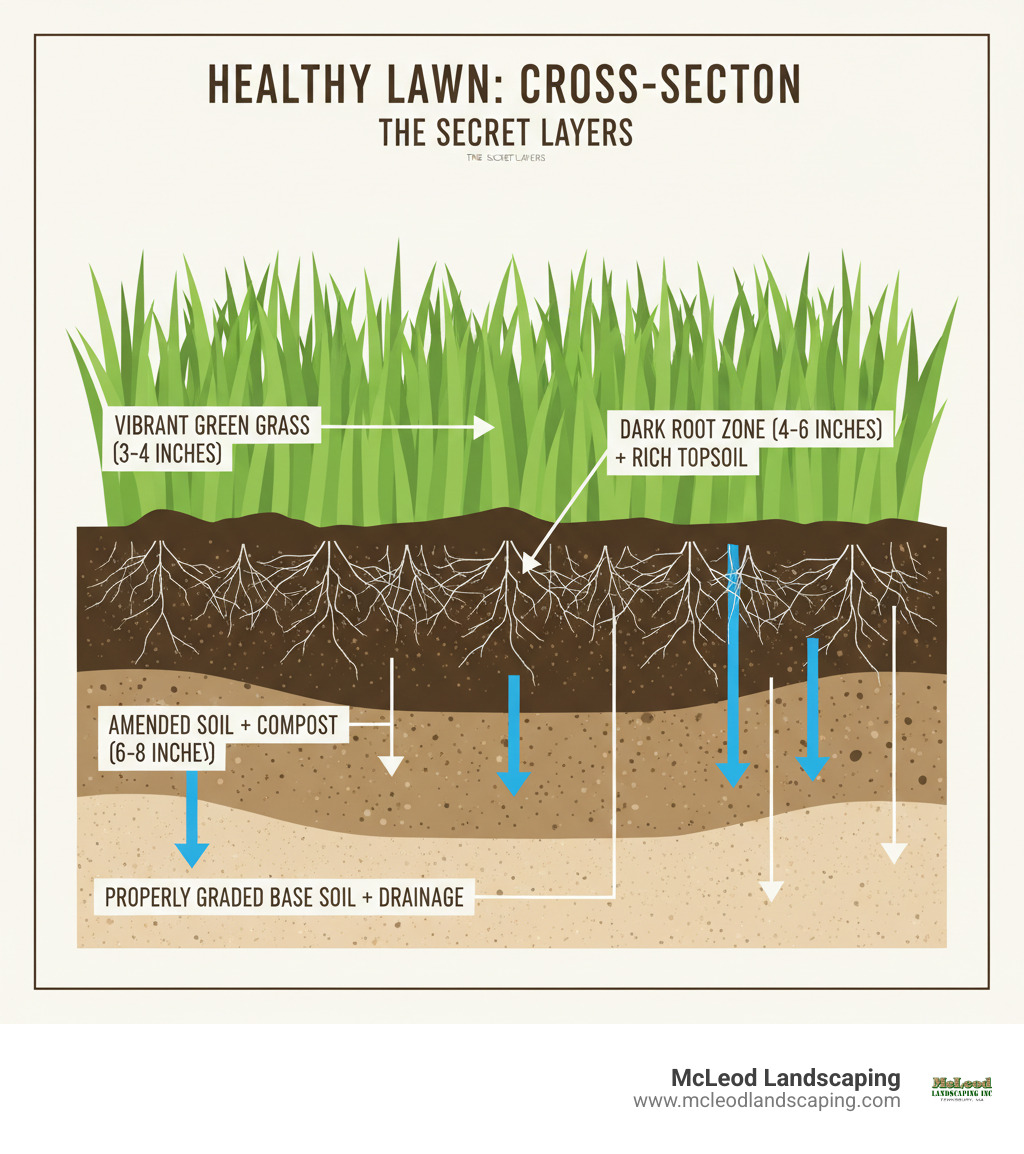
A professionally installed lawn has several critical layers:
The secret to a vibrant lawn isn’t just the grass on top; it’s the carefully constructed layers beneath. While many homeowners focus on the turf, professionals know that proper soil preparation, grading, and layering are what separate a struggling yard from one that thrives for years.
Whether you’re considering sod for instant results or seeding for a budget-friendly approach, understanding these layers is key. This guide breaks down the entire process, from soil prep to choosing the right grass.
I’m Scott McLeod, owner of McLeod Landscaping, and for over 30 years I’ve helped property owners in the Merrimack Valley implement proper lawn installation techniques, including the critical soil layers that make lawns thrive. When searching for lawn layers near me, work with professionals who understand your local soil and climate.
Relevant articles related to lawn layers near me:
When establishing a new lawn, you have two main options: sod installation and grass seeding. Each has a different timeline, budget, and result. In the Merrimack Valley, we help homeowners weigh these options daily, as the best choice depends on your priorities.
Sod installation is the “instant gratification” option. We deliver a mature, weed-free lawn in rolls, complete with an established root system. This transforms your yard from bare dirt to a lush green carpet in just a day or two. You can walk on it lightly within a few weeks, making it ideal for quick curb appeal. This convenience comes at a higher price. For a detailed walkthrough, see our Sodding a Yard Complete Guide.
Grass seeding is more budget-friendly and offers a wider variety of grass types, allowing for a custom lawn. The tradeoff is patience; it can take six to twelve months for the lawn to fully establish. During the early months, you’ll need to be vigilant with watering and weed control, as young seedlings are vulnerable. For larger areas where cost is a factor, seeding is an excellent choice. Our Grass Seed Installation page covers the process in depth.
A third option is hydroseeding, which involves spraying a slurry of seed, mulch, and fertilizer. The mulch protects the seeds and retains moisture, often improving germination. It’s faster than traditional seeding and more economical than sod for large areas, especially on slopes. Learn more on our Hydroseed Lawn page.
Here’s a quick comparison:
Sod Installation: Installed in 1-2 days, ready for light use in 2-3 weeks. Higher upfront cost. Can be installed nearly year-round. Arrives weed-free. Limited to commercially grown varieties.
Grass Seeding: Takes weeks for germination, 6-12 months for full establishment. Most affordable. Early fall is ideal for New England. More susceptible to weeds. Widest variety of grass types.
Picking the right grass for your lawn is critical in New England, with our cold winters and humid summers. Cool-season grasses are your best bet in the Merrimack Valley, as they thrive in the moderate temperatures of spring and fall. Common varieties include Kentucky Bluegrass, Perennial Ryegrass, and Fine Fescues.
Your yard’s sun exposure is a major factor. Does your lawn get full sun, or is it mostly shaded? Kentucky Bluegrass needs at least 6-8 hours of direct sun, while Fine Fescues are shade-tolerant, needing only 3-4 hours. Many lawns benefit from a blend that performs well in mixed sun and shade.
For high-traffic areas with kids or pets, you need a durable grass. Perennial Ryegrass is known for its toughness and ability to recover from wear and tear. It establishes a dense, durable turf quickly.
Maintenance is another consideration. Some grasses require frequent mowing and fertilization, while others are more low-maintenance. We always discuss your lifestyle before recommending a grass type.
Some homeowners ask about Installing Zoysia Sod, a warm-season grass. While it’s drought-tolerant, it establishes slowly in our climate and turns brown in winter. We can help determine if it’s suitable for your property’s microclimate.
To estimate material needs, you can use this Sod Calculator to estimate your needs. However, we always recommend a professional consultation for precise measurements and personalized advice.
Achieving a lush lawn is a multi-step process that goes far beyond scattering seeds. Our meticulous approach ensures every layer is prepared for a healthy, long-lasting result.

This is the most crucial step, setting the foundation for your entire lawn. We start by clearing the area of old grass, weeds, and debris. Next, we perform soil tests to understand its composition and nutrient needs. Based on the results, we amend the soil with nutrient-rich compost or high-quality topsoil to improve fertility and create a healthy root zone. Proper grading is essential to ensure water slopes away from your home’s foundation, preventing pooling and root rot. Finally, we level the surface to create a smooth, even bed for the new grass, which is a key principle of good What is Landscape Design.
Once the ground is prepared, we begin the installation. For sod, we lay each roll in a staggered, brick-like pattern with tight seams to prevent drying and ensure uniform growth. We then use a roller to press the sod firmly against the soil, ensuring vital root-to-soil contact. For seeding or hydroseeding, we apply the seed mix evenly with professional equipment. Immediately after installation, the area receives a thorough, deep watering to settle the soil and kick-start the establishment process.
A typical residential lawn installation in the Merrimack Valley takes one to two days. Our guide on Installing New Grass Sod provides more details.
Your new lawn’s long-term health depends on proper care during the initial weeks.

Proper irrigation is paramount. We can help install or check your Lawn Sprinkler Systems to ensure efficient watering. Our article on The Importance of Proper Irrigation Tips for Efficient Watering offers more insights.
Hiring the right professional makes all the difference between a lawn that thrives and one that struggles. In the Merrimack Valley, it’s invaluable to work with experienced lawn layers near me who understand our region’s unique climate and soil.
Your search starts with knowing where to look. Online searches for terms like “sod installation Lowell MA” or “grass seeding Chelmsford MA” will find local companies. Look for businesses with professional websites that showcase their work.
Local online directories and review platforms can also be helpful, as they often include verified customer ratings.
Word-of-mouth recommendations are one of the most reliable methods. Ask neighbors in Concord or Tewksbury with beautiful lawns who they hired. Friends and family can provide honest insights.
Before committing, verify their credentials. A legitimate company must be licensed and insured to protect you from liability. We at McLeod Landscaping will gladly provide this documentation. Also, ask to see a portfolio of completed projects to get a sense of their work quality.
Finally, read online reviews on platforms like Google or Facebook. Look for patterns in feedback regarding reliability and customer service. Our reputation as one of the leading Residential Landscaping Companies in the area is built on 30 years of quality work.
Once you have a shortlist, use these questions to vet potential installers. When you’re looking for a Landscaper Near Me, the right questions separate professionals from amateurs.
Investing in a professionally installed lawn is about more than just grass; it’s an investment in your home’s aesthetics, function, and value. The benefits of hiring a professional often outweigh the initial cost for long-term satisfaction.
A pristine lawn offers numerous advantages:

The cost of lawn installation varies widely, but understanding the key factors can help you budget effectively.
Disclaimer on Costs: Please note that the price of lawn installation can vary significantly. While internet data may suggest a typical average cost, the true range is much wider, from approximately $1,500 to $12,000 or more. The high end of this range, which can be at least three times the average cost, reflects complex projects with extensive site preparation. It is important to note these figures are based on general internet data and are not actual costs for McLeod Landscaping. We provide a detailed, customized quote after assessing your specific needs. For more on this topic, see our guide on the Cost of New Sod Installed.
We often hear similar questions from homeowners in the Merrimack Valley about new lawn installation. Here are answers to the most common ones.
For our climate, the best times to install a new lawn are early spring and early fall.
We advise against installation in peak summer or deep winter due to extreme temperatures.
A properly installed and maintained sod lawn doesn’t have a fixed lifespan; it can last indefinitely. Its longevity depends on the quality of the installation and, most importantly, ongoing maintenance. Regular aeration, proper fertilization, consistent watering, and managing pests or diseases are key to ensuring your lawn thrives for decades.
Professional installers do more than just lay grass; we solve underlying problems to transform struggling yards. Common issues we address include:
Our Full Service Residential Landscaping approach means we look at the whole picture to ensure your lawn is both beautiful and sustainable.
Achieving a stunning lawn involves more than just laying down grass; it’s a layered process requiring expertise in soil science, grading, and horticulture. From the invisible layers of amended soil and robust root systems to the visible, vibrant blades of grass, every component plays a vital role in the overall health and beauty of your outdoor space.
By understanding the difference between sod and seed, the detailed steps of professional installation, and how to hire a qualified expert, you are well on your way to creating a beautiful and lasting outdoor space. When you search for lawn layers near me in the Merrimack Valley, you’re looking for a partner who can translate your vision into a thriving reality.
For homeowners in Andover, Billerica, Burlington, Carlisle, Chelmsford, Concord, Lowell, Tewksbury, Westford, and Wilmington, MA, McLeod Landscaping offers comprehensive services to bring your vision to life. With over 30 years of experience, we pride ourselves on our meticulous approach, ensuring every layer of your lawn is perfectly established for years of enjoyment. Contact us today to learn more about our residential sod installation services and let us help you achieve the lawn of your dreams.
Contact McLeod Landscaping today at (978) 640-0957 or click here to schedule a consultation for retaining wall installation. Let our experienced team design and install a functional and visually appealing retaining wall that enhances your landscape.


1881 Main St Unit 1, Tewksbury, MA 01876